A volcano and its people
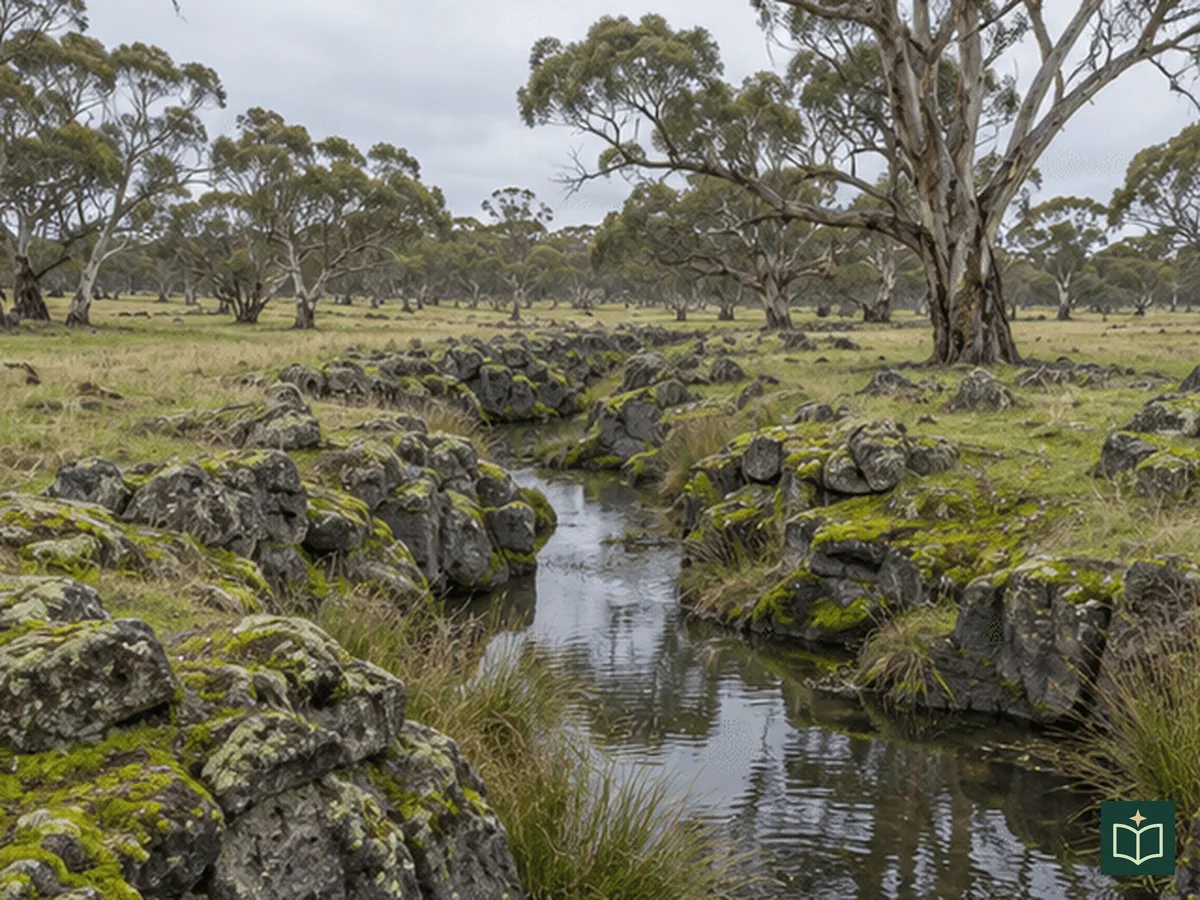
Budj Bim is a volcano in south-west Victoria, Australia, on the Country of the Gunditjmara people. More than 30,000 years ago it erupted, sending a long lava flow towards the coast. For the Gunditjmara, Budj Bim is also an ancestral creator being, revealed in the landscape, and the eruption is part of their traditional knowledge. As the lava cooled, it created an uneven surface of rock, hollows and channels, which filled with water to form wetlands, lakes and swamps. These became rich habitats for the short-finned eel, called kooyang by the Gunditjmara, and the basis for one of the world’s oldest known aquaculture systems.
How the system works
Kooyang have a remarkable life cycle. They breed far out in the Coral Sea, and young eels travel thousands of kilometres to rivers and wetlands in south-eastern Australia, where they grow for years before returning to the ocean to spawn. The Gunditjmara took advantage of these migrations. They moved basalt rocks to build stone-walled channels, cut new channels through the lava and constructed weirs to divert and hold seasonal floodwaters. As water flowed through the network, eels swam into the channels and ponds, where they could be held alive or caught in woven traps made from plant fibre, placed at gaps in stone barriers.
Older than the pyramids
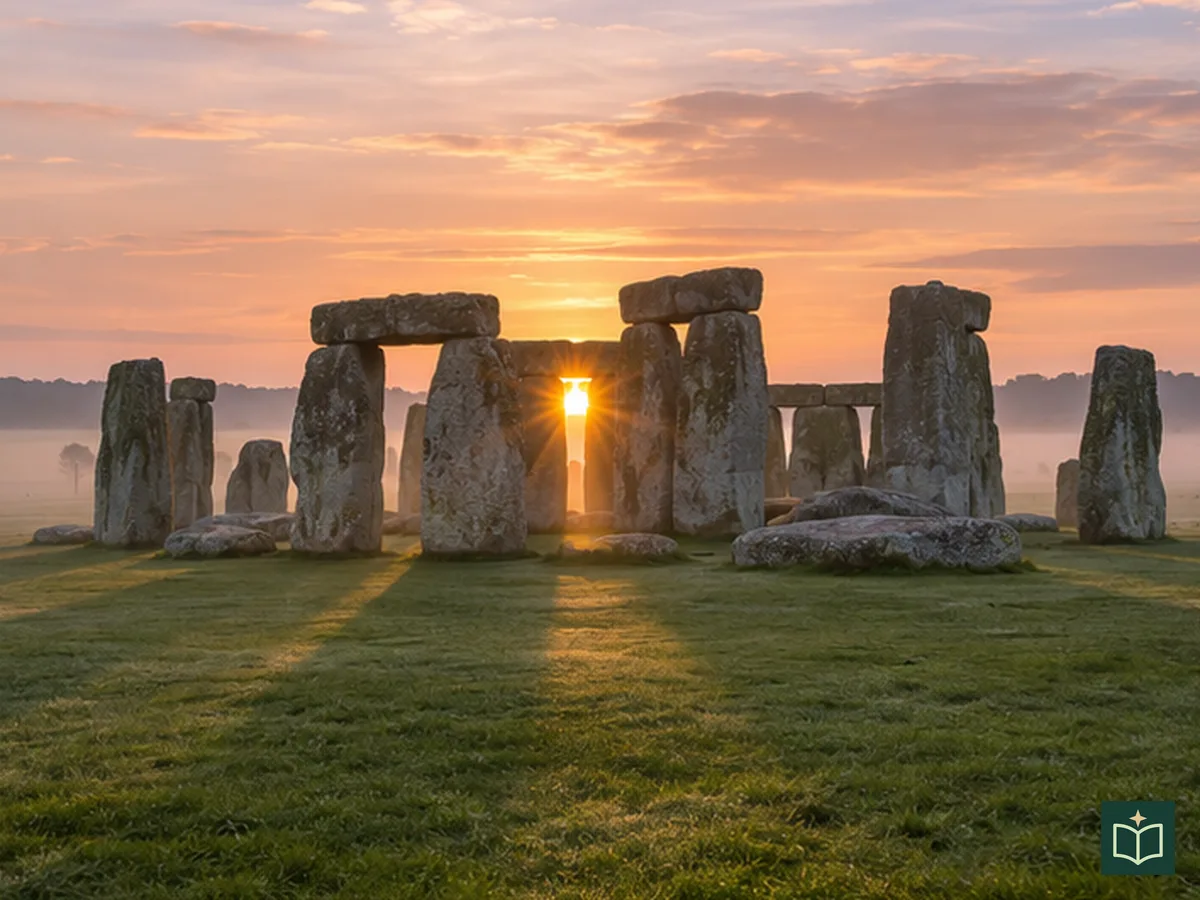
The system was built and extended over thousands of years. Researchers have dated one part of it, in a complex of traps near Lake Condah, known as Tae Rak, to about 6,600 years ago. That is more than 2,000 years older than the Great Pyramid of Giza, completed around 2560 BC, and older than the first stage of Stonehenge. The network covers a large area, with channels running for hundreds of metres in places. Alongside the waterworks are the remains of circular stone foundations, thought by many researchers to be the bases of huts, which suggest people lived in settled communities here rather than moving constantly.
Food, trade and community
The eel harvest produced more than a family could eat at once. Gunditjmara knowledge and early colonial accounts describe eels being preserved by smoking, allowing them to be stored and traded with neighbouring groups. The system supported a relatively large population and complex social life, challenging an old and mistaken colonial stereotype that all Aboriginal Australians lived only as mobile hunter-gatherers with no lasting structures. Managing the channels required detailed knowledge of water levels, seasons and eel behaviour, passed down through generations. Eels remain central to Gunditjmara culture, and the community still harvests and shares them in ways that link people to their ancestors.
Dispossession and resistance
When European colonists moved into the region in the 1830s and 1840s, they took over Gunditjmara land for sheep and cattle grazing. The Gunditjmara fought back in a long series of conflicts known as the Eumeralla Wars. Later, many people were moved onto the Lake Condah Mission, established in 1867. In the twentieth century, much of Lake Condah was drained, damaging the wetlands on which the eel system depended. Through decades of advocacy, the Gunditjmara regained recognition of their rights, including a native title determination in 2007. In 2010 a weir was built to restore water levels in Lake Condah, bringing the wetlands, and the eels, back.
A World Heritage landscape
In 2019 UNESCO listed the Budj Bim Cultural Landscape as a World Heritage Site. It was the first place in Australia to be listed solely for its Aboriginal cultural values. The site is managed by Gunditjmara Traditional Owners together with government agencies, and visitors can see channels, ponds and stone structures with Gunditjmara guides. When bushfires swept through parts of the area in late 2019, they burned away vegetation and revealed previously unrecorded channels and ponds. Budj Bim offers a striking example of how people adapted to and shaped a volcanic landscape over millennia, and of the living knowledge that has sustained that relationship.
Sources & further reading
Figures are rounded and widely published; check the linked organisations for the latest editions. These organisations do not endorse this website.