Two kinds of density
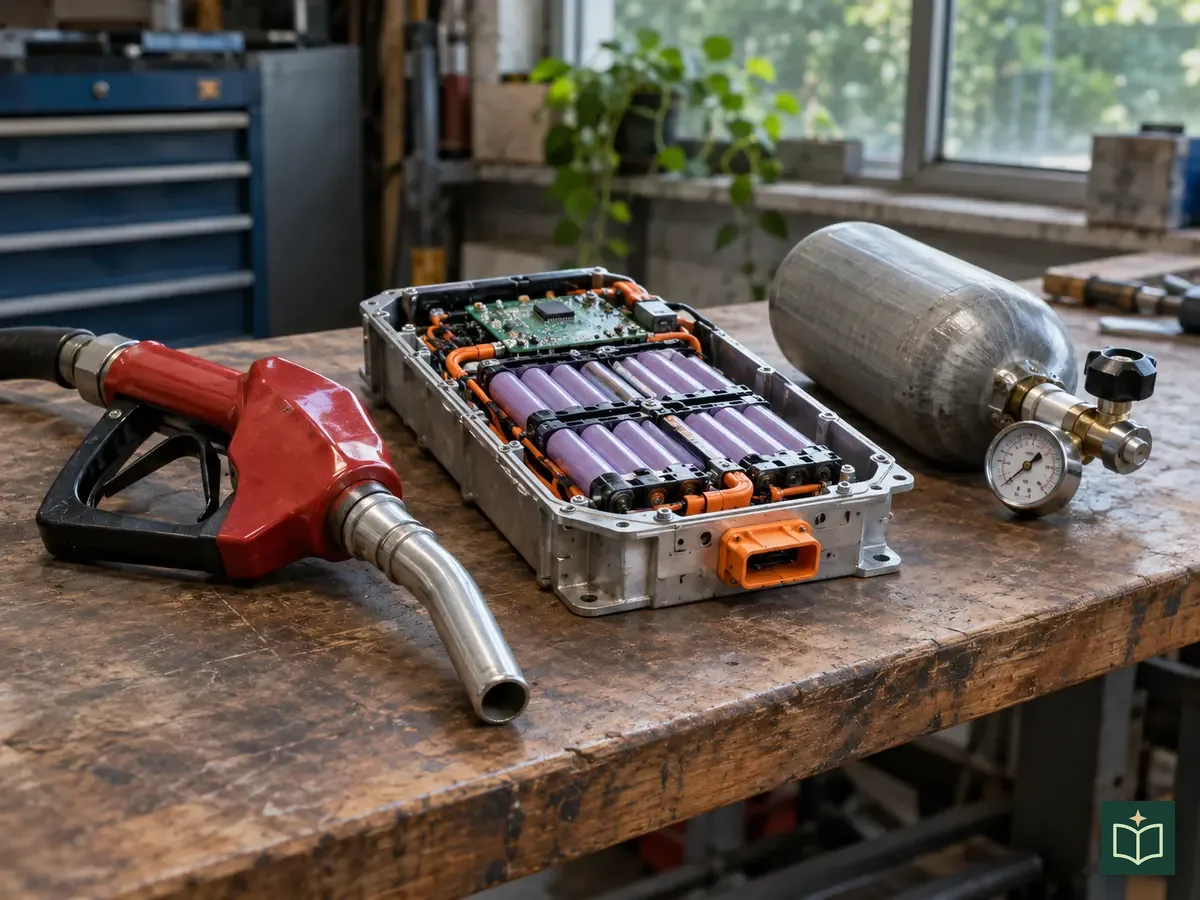
Energy density can be measured by weight or by volume. Gravimetric density, expressed in megajoules per kilogram or watt-hours per kilogram, matters when every kilogram must be lifted, as in an aircraft or a phone. Volumetric density, in megajoules per litre, matters when space is limited, as in a car’s fuel tank or a ship’s hull. A material can be excellent on one measure and poor on the other. Hydrogen is the clearest example: it stores about 120 megajoules per kilogram, nearly three times as much as petrol, yet even compressed to 700 times atmospheric pressure it takes up several times more space than petrol for the same energy.
The liquid fuel advantage
Hydrocarbons such as petrol, diesel and jet fuel store about 43 to 46 megajoules per kilogram and around 32 to 36 megajoules per litre. They are also liquid at room temperature, easy to pump and stable for long periods, and they draw the oxygen they need from the air, so the vehicle does not carry it. This combination explains why oil came to dominate transport in the twentieth century. A 50-litre fuel tank holds roughly 1,700 megajoules, or about 470 kilowatt-hours, of chemical energy. Refuelling it takes a few minutes, which corresponds to an energy flow of several megawatts through the nozzle.
Where batteries stand
A good lithium-ion battery cell stores about 250 watt-hours per kilogram, roughly 0.9 megajoules. That is about one-fiftieth of petrol by weight, and complete battery packs, with casings and cooling, are lower still. Yet electric cars work because their drivetrains are far more efficient. An electric motor turns most of its energy into motion, while a combustion engine wastes most as heat. A 60 kilowatt-hour battery delivers roughly as many kilometres as a petrol tank holding several times as much energy. Battery density has improved steadily over the past decade, while pack costs have fallen sharply, which together explain the rapid growth of electric car sales.
Extremes at both ends
At the high end, nuclear fuel is in a class of its own. Fission of uranium-235 releases millions of times more energy per kilogram than burning any chemical fuel, which is why a large reactor uses only tens of tonnes of fuel a year, while a coal plant of similar size burns millions of tonnes. At the low end, a lead-acid car battery holds about 30 to 40 watt-hours per kilogram, and lifting water uphill in a pumped-storage reservoir stores only about 1 kilojoule per kilogram for every 100 metres of height. Low density is acceptable when the store is stationary and space is available.
Why aircraft are hard
Aviation shows why density matters so much. An airliner on a long-haul flight may carry around 100 tonnes of fuel, a large fraction of its take-off weight. Replacing that with batteries of today’s density would make the aircraft too heavy to fly the same distance. That is why battery-electric aircraft are being developed mainly for short routes with small planes, and why the industry’s decarbonisation plans rely heavily on sustainable aviation fuels, chemically similar to kerosene. Hydrogen aircraft are studied too, but the tanks needed for its bulk are a major design challenge. Ships face similar trade-offs, though they are more tolerant of weight and can use bulkier fuels such as ammonia or methanol.
Reading the comparisons
Comparisons of energy density are often quoted without context. Three adjustments make them fairer. First, compare whole systems, including tanks, packs and cooling, not just the fuel or cells. Second, account for conversion efficiency, because a kilowatt-hour in a battery does more work than a kilowatt-hour in a fuel tank. Third, consider the full chain, including the energy needed to make the fuel or charge the battery. Density is not the only criterion: cost, safety, refuelling time and emissions also matter. But it remains one of the strongest forces shaping which energy carriers suit which jobs, from phones to supertankers.
Sources & further reading
- US Energy Information Administration · Units and calculators ↗
- US Department of Energy · Alternative Fuels Data Center ↗
Figures are rounded and widely published; check the linked organisations for the latest editions. These organisations do not endorse this website.