The idea in one line
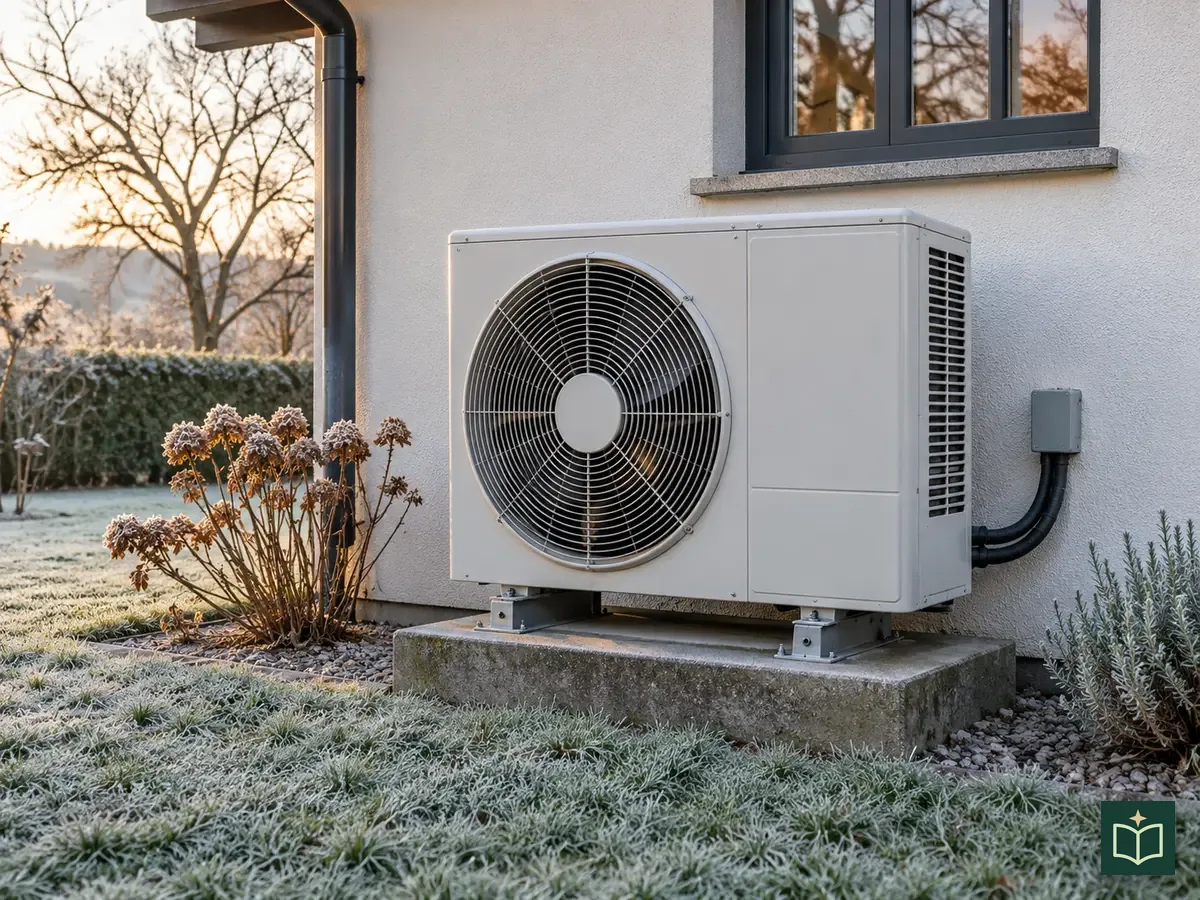
A refrigerator keeps food cold by pumping heat out of its interior and releasing it from coils at the back. A heat pump does the same thing for a whole building, choosing which side is ‘inside’. In heating mode, it extracts heat from outdoor air, the ground or a body of water and releases it indoors. Even air at zero degrees Celsius contains a great deal of thermal energy compared with absolute zero. Because the electricity is used to move heat rather than create it, a heat pump can deliver more heat energy than the electrical energy it consumes. That ratio is called the coefficient of performance, or COP.
The refrigeration cycle
Inside the heat pump, a refrigerant circulates in a closed loop. In the outdoor unit, the refrigerant is colder than the surrounding air, so it absorbs heat and evaporates. A compressor then squeezes the vapour, raising its temperature well above room temperature. In the indoor unit, the hot vapour releases its heat and condenses back to liquid. Finally, an expansion valve drops its pressure and temperature, and the cycle repeats. A reversing valve lets the same machine run backwards to cool the building in summer. In fact, the split air conditioners found in most Gulf homes are heat pumps operating permanently in cooling mode.
Efficiency in numbers
An electric resistance heater, such as a fan heater, converts each kilowatt-hour of electricity into one kilowatt-hour of heat, a COP of 1. A modern air-source heat pump in mild conditions typically achieves a COP of 3 to 4, meaning one kilowatt-hour of electricity delivers three or four of heat. A condensing gas boiler converts around 90 per cent of its fuel energy into heat. Even after accounting for power station losses, heat pumps usually cut total energy use and emissions compared with boilers, and the advantage grows as electricity grids add more low-carbon generation. Ground-source heat pumps, drawing on steadier underground temperatures, can do better still.
When it gets cold
A heat pump’s efficiency depends on the temperature gap it must bridge. The colder the outside air and the hotter the water it must produce, the harder the compressor works and the lower the COP. Older designs struggled in severe cold, but modern cold-climate models can keep heating at temperatures well below minus 20 degrees Celsius, as shown by their wide use in Norway and Finland. Installers can improve results by using larger radiators or underfloor heating, which need lower water temperatures, and by improving insulation first. Poor installation and wrong sizing are among the most common reasons for disappointing performance and higher bills.
Refrigerants and costs
Heat pumps rely on refrigerants, some of which are potent greenhouse gases if they leak. International rules, including the Kigali Amendment to the Montreal Protocol, are phasing down hydrofluorocarbons, and manufacturers are moving to alternatives such as propane and carbon dioxide. Upfront cost is the other barrier: a heat pump usually costs more to buy and install than a gas boiler, though running costs can be lower depending on electricity and gas prices. In Europe, many governments offer grants. Global sales grew strongly in the early 2020s, although growth has varied from year to year with energy prices, interest rates and policy changes.
A Gulf angle
In the Gulf, the question is less about heating homes and more about cooling them efficiently, which uses exactly the same physics. The efficiency of an air conditioner is measured in the same way, as heat moved per unit of electricity, often labelled as an energy efficiency ratio. The UAE and Saudi Arabia use energy labels and minimum efficiency standards to push out the least efficient units. Heat pumps also heat water in some Gulf hotels and hospitals, sometimes using heat rejected from cooling systems. Whether warming a Scandinavian house or cooling a Dubai flat, the principle is the same: moving heat is cheaper than making it.
Sources & further reading
Figures are rounded and widely published; check the linked organisations for the latest editions. These organisations do not endorse this website.