What district cooling is
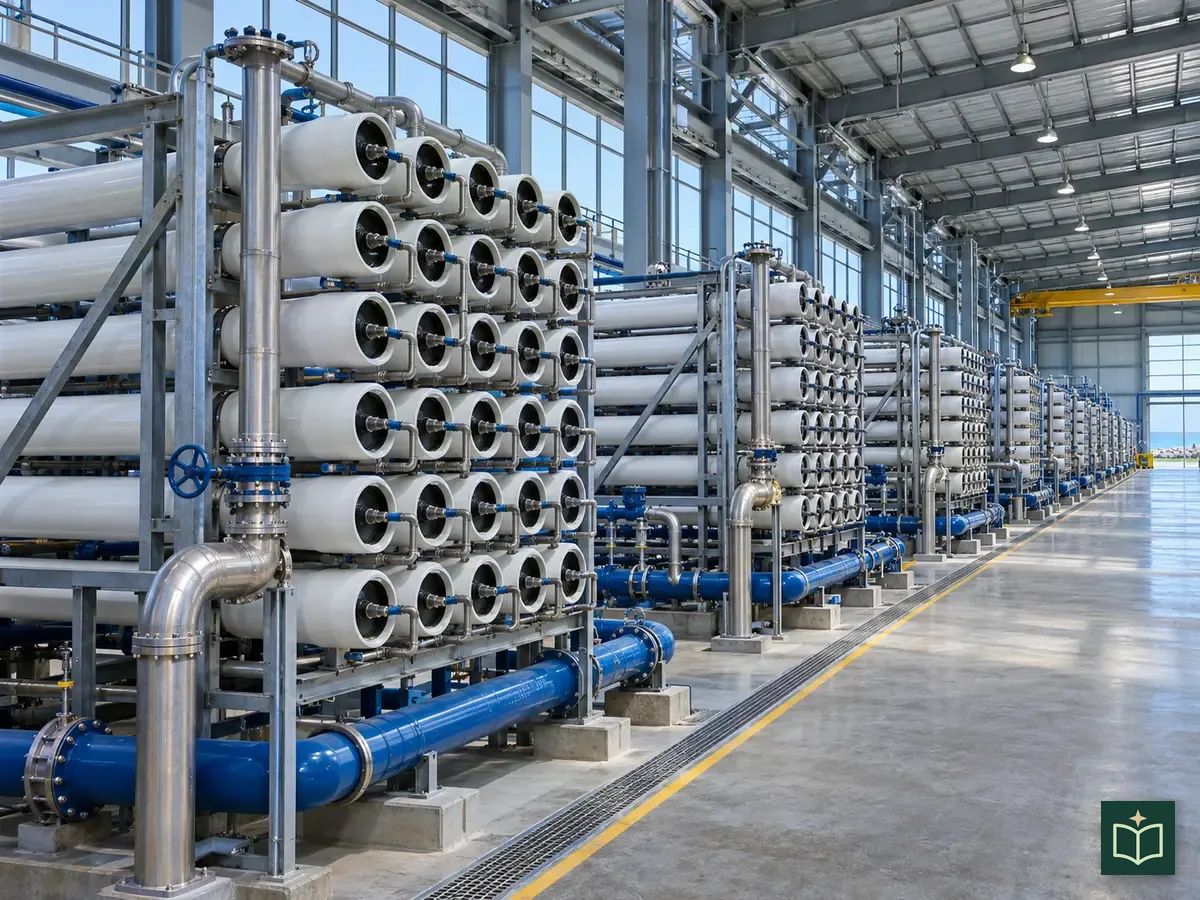
In most homes, each air conditioner has its own compressor, which removes heat from indoor air and dumps it outside. District cooling works differently. A central plant produces chilled water and pumps it through a network of insulated pipes beneath the streets to many buildings. Inside each building, the chilled water passes through a heat exchanger at an energy transfer station, cooling the building’s own water loop, which in turn feeds air-handling units and fan coils. The warmed water, typically returning at around 12 to 14 degrees Celsius, flows back to the plant. The customer buys cooling, measured in refrigeration ton-hours, rather than running its own chillers.
Why it saves electricity
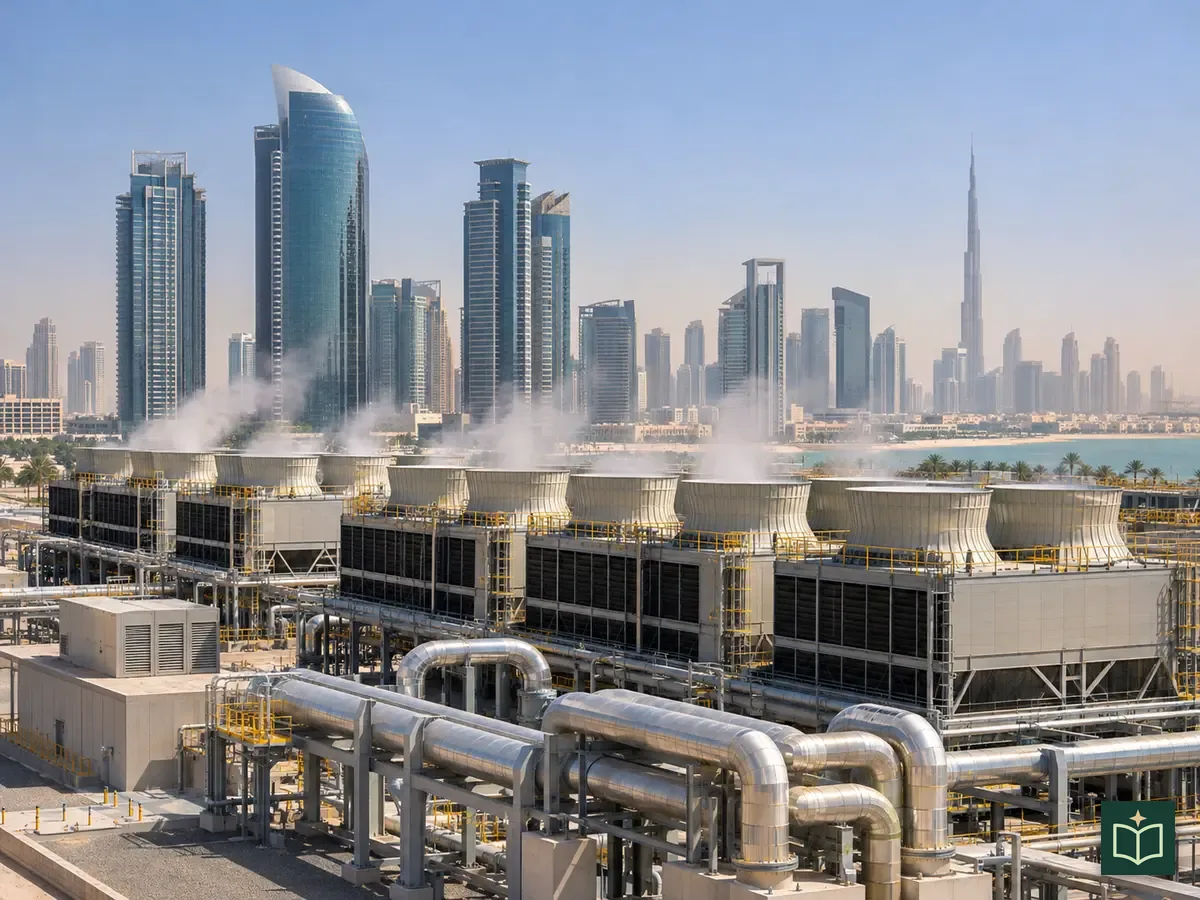
Large central chillers are more efficient than many small units, especially the air-cooled machines commonly found on rooftops. District plants usually reject heat through cooling towers that evaporate water, which works better in hot weather than blowing air over hot coils. Operators can run the most efficient chillers first, maintain them professionally and match output to demand. Industry estimates commonly put electricity savings at roughly 40 to 50 per cent compared with conventional air-cooled systems, although actual savings depend on design and operation. Because cooling is often the largest part of Gulf electricity demand in summer, those savings also reduce the generating capacity utilities must build.
Gulf cities lead
The Gulf has become one of the world’s largest district cooling markets. In the UAE, networks serve dense developments such as Downtown Dubai, Dubai Marina, Business Bay and parts of Abu Dhabi, as well as airports and malls. Dubai-based Empower describes itself as the world’s largest district cooling provider by connected capacity, and Qatar’s Pearl Island and Lusail City rely heavily on district systems. Large projects were built during the construction booms of the 2000s and 2010s, when high-rise districts were planned from scratch. In such master-planned areas, laying cooling pipes at the same time as roads and utilities is far cheaper than retrofitting them later.
Storage and water
Many plants include thermal energy storage: large tanks of chilled water or ice, charged at night when electricity demand is lower and discharged during the afternoon peak. This shifts electricity use away from the hours that strain the grid. Water is the other major input. Cooling towers evaporate large volumes, and in the Gulf that water would otherwise come from energy-intensive desalination. Operators increasingly use treated sewage effluent or seawater instead of potable water for cooling towers. Some systems use seawater directly to absorb heat. These choices link district cooling to the wider water-energy system that defines life in desert cities.
Limits and trade-offs
District cooling is not ideal everywhere. It suits dense areas with high, steady demand; in low-rise suburbs, long pipes and small loads make it uneconomic. Networks are expensive to build and lock customers into a single supplier, so pricing and regulation matter. In Dubai, the Regulatory and Supervisory Bureau oversees district cooling, and residents sometimes question capacity charges that apply regardless of use. Poorly designed systems can lose efficiency if return water is not warm enough, a problem known as low delta-T. As with any network, the benefits depend as much on management and building-side equipment as on the central plant itself.
Why it matters
Air conditioning is what makes year-round life and work possible in the Gulf’s summer, and global demand for cooling is rising as incomes grow and temperatures climb. The IEA has described cooling as one of the fastest-growing uses of electricity in buildings. District cooling offers one way to meet that demand with less energy and lower peak loads, especially when combined with better insulation, efficient building design and storage. For residents, it is mostly invisible: a cool lobby and a separate line on a bill. For planners, it is a reminder that infrastructure decisions made when a district is built shape its energy use for decades.
Sources & further reading
Figures are rounded and widely published; check the linked organisations for the latest editions. These organisations do not endorse this website.