A sheltered inlet
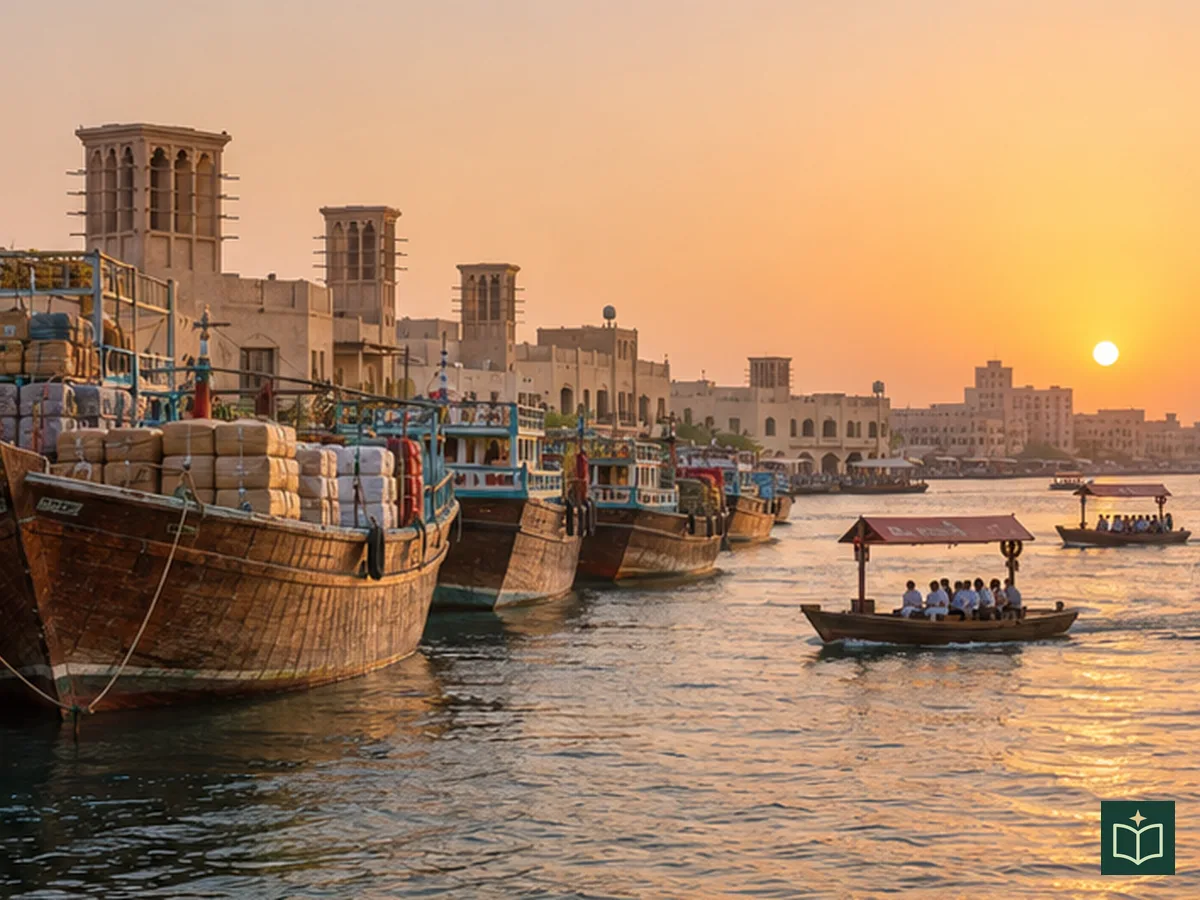
Dubai Creek, known in Arabic as Khor Dubai, is a saltwater inlet that winds inland for about 14 km from the Gulf. In a coastline of open beaches and shallow water, it offered rare shelter for boats. Small fishing and pearling communities lived around it for centuries. The creek also divided the settlement into two parts: Bur Dubai on the western side, including the Shindagha district near the mouth, and Deira on the eastern side. Before bridges and tunnels, people crossed by small wooden ferry boats called abras, which still carry passengers today and remain one of the cheapest rides in the city.
The settlement of 1833
Modern Dubai's political history begins in 1833. That year, around 800 members of the Al Bu Falasah, a section of the Bani Yas tribal confederation, left Abu Dhabi and settled at the mouth of the creek. They were led by Maktoum bin Butti and Obaid bin Saeed, and the Al Maktoum family has ruled Dubai ever since. The new community lived mainly from pearling, fishing and small-scale trade. Like other coastal towns in the region, Dubai was tied to the pearling season, when much of the male population worked on the oyster banks during the hot summer months, and to the dates and goods of the interior.
Opening the port
Dubai's rulers soon saw trade as the key to growth. Around the turn of the twentieth century, Sheikh Maktoum bin Hasher, who ruled from 1894 to 1906, offered tax exemptions and protection to foreign merchants. At the same time, the Persian government raised customs duties at the port of Lingeh, on the Iranian coast, which had been the region's main trading hub. In the early 1900s many merchants moved from Lingeh to Dubai, bringing capital, contacts and building styles. The Al Fahidi district, also called Al Bastakiya after the Persian town of Bastak, preserves their wind-tower houses beside the creek. Indian traders also settled and prospered.
Hard times and new trade
The 1930s brought hardship. The global depression and the spread of cheaper Japanese cultured pearls caused the Gulf's natural pearl industry to collapse, and many families fell into poverty. Dubai survived partly through re-export trade: goods arrived by sea, were stored in creek-side warehouses and then shipped on to markets around the Gulf, Persia and India. Gold later became a major part of this trade. The souks of Deira and Bur Dubai, including the spice and gold markets that still operate today, grew up around this business. Low taxes and a reputation for easy dealings kept merchants coming even when times were difficult.
Dredging the creek
By the 1950s, the creek was silting up, making it hard for larger vessels to enter. Sheikh Rashid bin Saeed Al Maktoum, who governed Dubai from the 1950s and became ruler in 1958, decided on a bold investment: dredging the creek to deepen and widen it. The work, carried out around 1959 to 1961, was financed partly with borrowed money, including a loan from Kuwait, at a time when Dubai had no oil revenue. Larger ships could now unload directly, and trade grew rapidly. The Al Maktoum Bridge, opened in 1963, linked the two banks by road. The gamble set Dubai's pattern of building infrastructure ahead of demand.
From creek to global hub
Oil was found offshore in 1966 and exports began in 1969, but Dubai's oil was always modest compared with Abu Dhabi's. Instead, oil income was invested to extend the trading model. Port Rashid opened in 1972, and the much larger Jebel Ali port in 1979, followed by a free zone. Air and later tourism links built on the same idea. The creek itself remains busy with wooden dhows loading goods for Iran, East Africa and the Indian subcontinent. In 2016 the Dubai Water Canal linked the creek to the sea. The historic creek district has been placed on the UAE's tentative list for World Heritage status.
Sources & further reading
Figures are rounded and widely published; check the linked organisations for the latest editions. These organisations do not endorse this website.