A name from the clay tablets
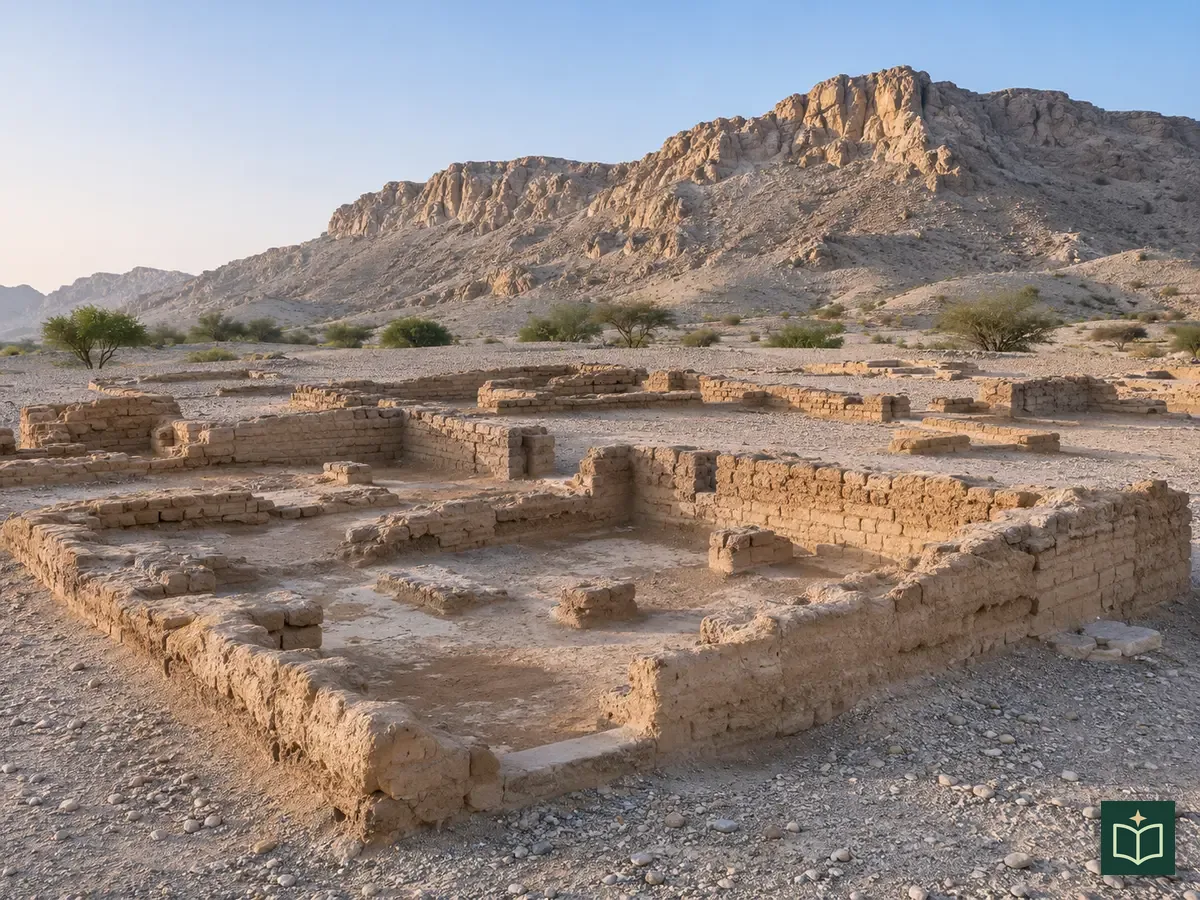
Dilmun first appears in cuneiform texts from Mesopotamia, written more than four thousand years ago. Sumerian poems describe it as a pure and blessed land, and administrative records list it as a source of copper, precious stones and timber. For a long time scholars debated where it lay. Excavations from the 1950s onwards, especially at Qal’at al-Bahrain, settled most of the argument: the heartland of Dilmun was the island of Bahrain, with influence along the nearby coast of eastern Arabia and on the island of Failaka, off modern Kuwait. Its greatest prosperity came roughly between the late third and the middle of the second millennium BCE.
Why Bahrain, of all places
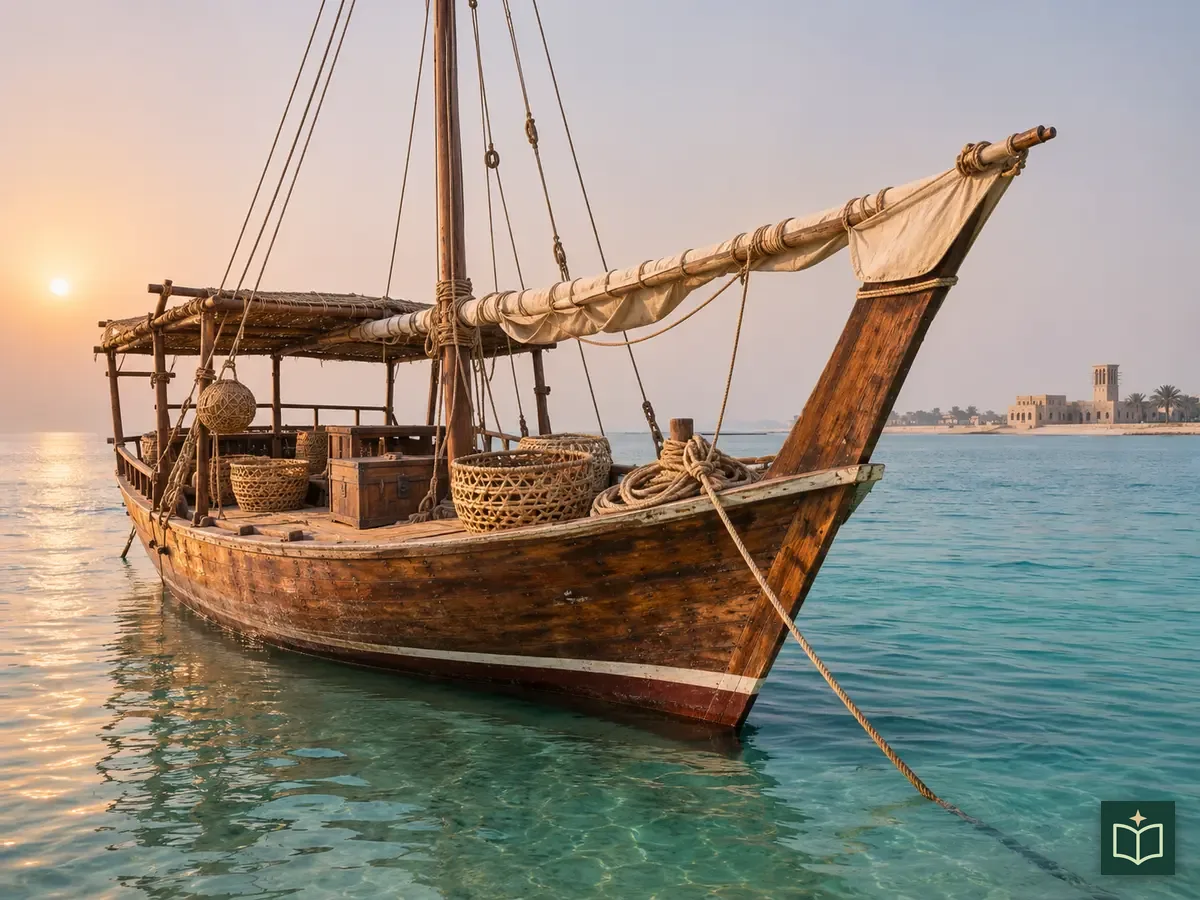
The answer is water. Bahrain sits on a large aquifer, and fresh water once bubbled up in springs on land and even on the seabed, where sailors could collect it. In a hot sea bordered by desert, that made the island an obvious place to rest, repair boats and trade. It also lies roughly midway along the sailing route between southern Mesopotamia and the Strait of Hormuz. Ships carrying goods from Magan, in today’s UAE and Oman, and from Meluhha, usually identified with the Indus Valley, could meet buyers from Ur and other Sumerian cities there. Location and water together turned a small island into a market.
How the trade worked
Dilmun acted as a broker. Mesopotamia had fertile land but few metals or hard stones, so it exported barley, textiles and oil and imported raw materials. Copper from the mountains of Magan was the most important. Texts from Ur record merchants who financed voyages to Dilmun and returned with copper ingots. One famous tablet, from around 1750 BCE, is a customer’s angry complaint to a copper dealer about poor-quality metal, a reminder that this was ordinary commerce. Dilmun also developed its own round stamp seals, used to mark goods and agreements, which archaeologists have found across the Gulf. Weights and measures helped strangers agree on value.
A landscape of mounds
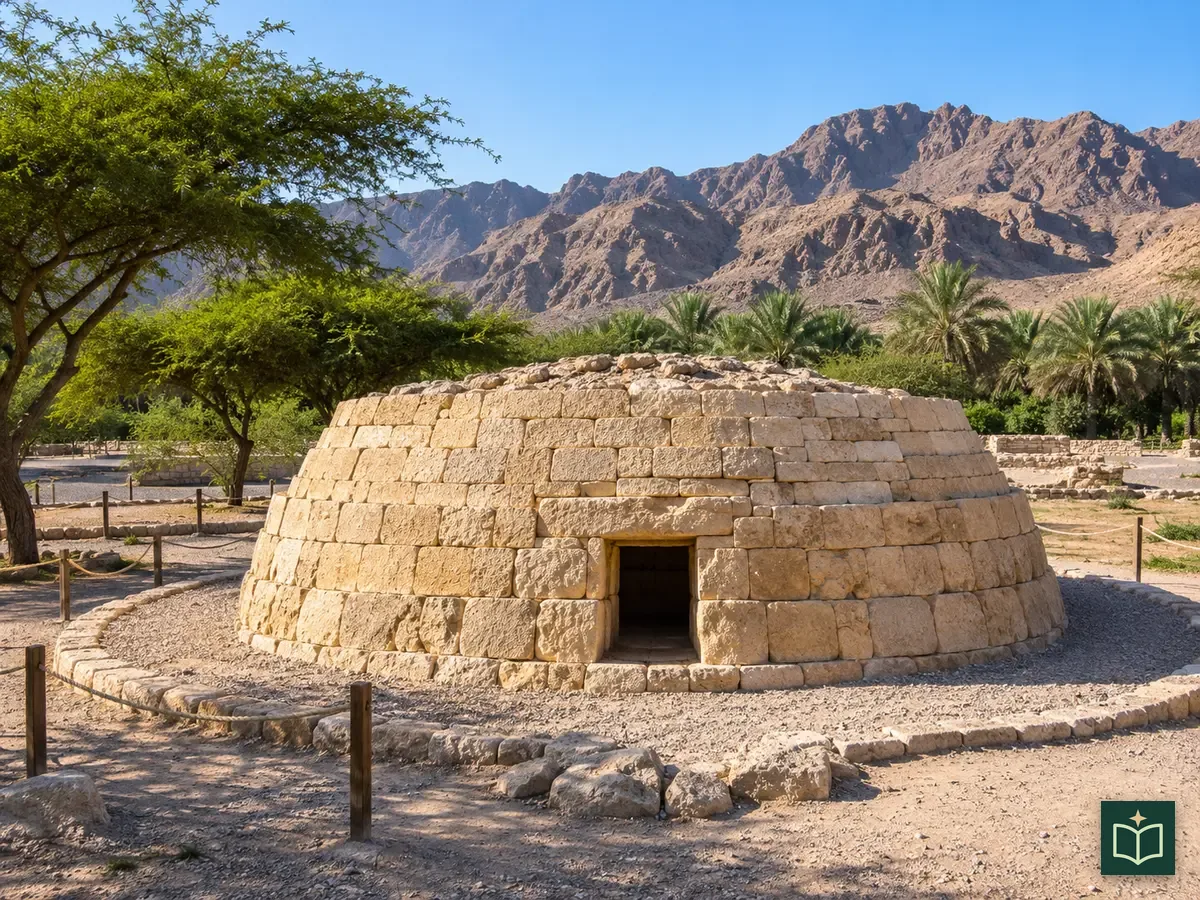
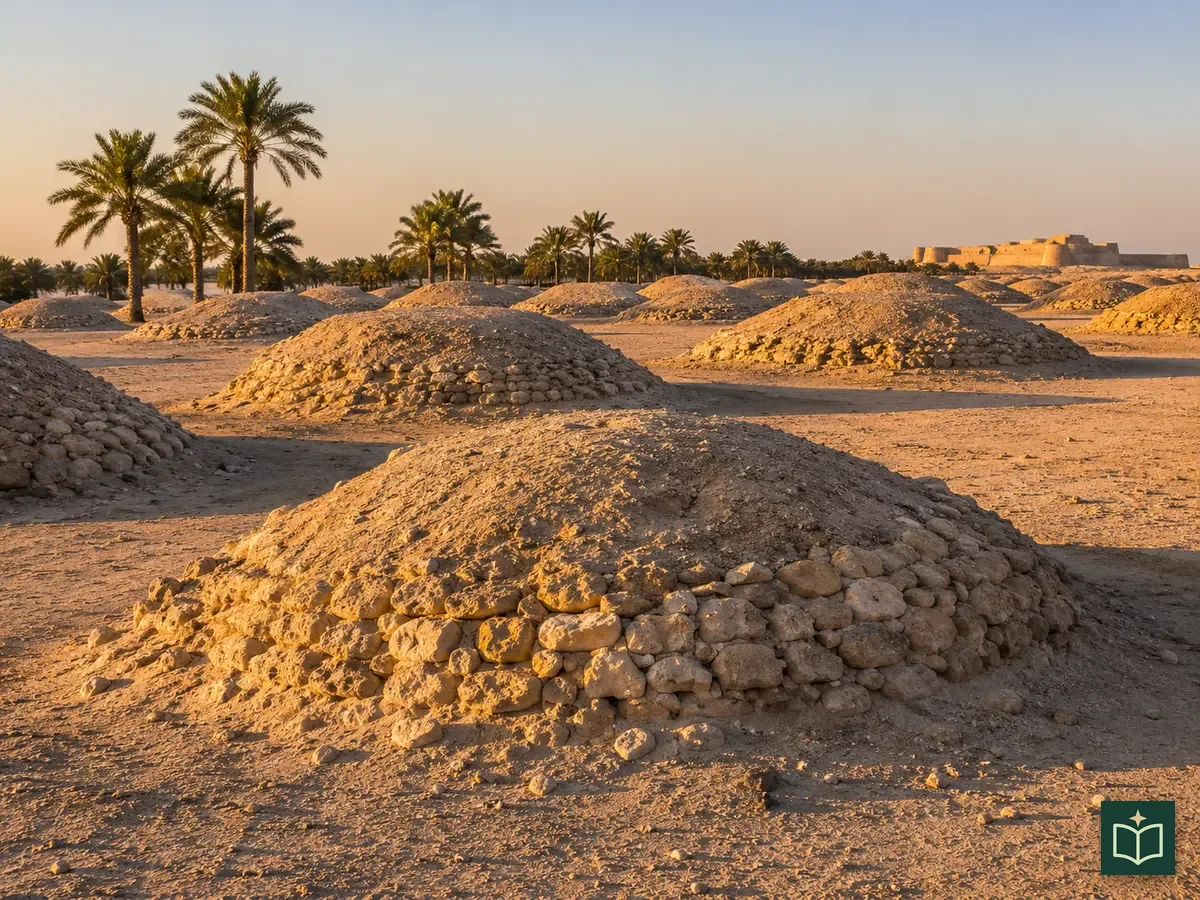
The most striking legacy is funerary. Across northern Bahrain, thousands of earth-and-stone burial mounds were raised, mostly between about 2200 and 1750 BCE. Most are modest, but a few large royal mounds near the village of A’ali stand several metres high. Urban growth has removed many, yet substantial fields survive, and UNESCO inscribed a selection as a World Heritage Site in 2019. Together with the city mound at Qal’at al-Bahrain, where layers of occupation stretch from the Bronze Age to a later fort, they show a society wealthy and organised enough to invest heavily in honouring its dead. Excavated graves have yielded pottery, seals and jewellery.
What we do not know
It is tempting to imagine Dilmun as a unified kingdom with clear borders, but the evidence is patchier than that. Much of what we know comes from Mesopotamian writers, who described Dilmun from the outside and sometimes in mythical terms. The local population left seals and buildings but few long texts of their own. Its political structure, the size of its population and the exact reach of its influence on the Arabian mainland are still debated. Dilmun’s importance also rose and fell: as Mesopotamian demand changed and other routes developed, the island’s role as a central broker faded. Later, the name survived mainly in memory and myth.
Why it still matters
Dilmun shows that the Gulf has been a crossroads of long-distance trade for more than four millennia. The pattern is familiar today: a small territory with limited land uses its location, harbour and services to profit from flows of goods between larger economies. Bahrain’s museums and archaeological sites now present Dilmun as a cornerstone of national history, and research continues on its links with the Indus and with the copper workers of Magan. For visitors, the burial mounds and the harbour fort at Qal’at al-Bahrain offer a rare chance to stand on the ground of a civilisation known first from ancient tablets.
Sources & further reading
Figures are rounded and widely published; check the linked organisations for the latest editions. These organisations do not endorse this website.