A port that moved
Julfar is the name given in medieval Arabic, Persian and Portuguese sources to a port on the northern coast of what is now the UAE, near the modern city of Ras Al Khaimah. It is mentioned from the early Islamic period, but its greatest prosperity came later, from about the fourteenth to the seventeenth century. Archaeologists have found that Julfar was not a single fixed spot. Its centre seems to have shifted along the coast over time, as lagoons silted up and creeks moved. Excavations at sites such as Kush, Al Nudud and Al Mataf have revealed different phases of the town.
Excavating the layers
From the 1960s onwards, archaeological teams from Britain, Iraq, Germany, Japan and elsewhere have worked at Julfar. Excavations at Al Mataf revealed houses, streets and a mosque that had been rebuilt several times on the same spot, with each version laid over the last. Houses were built first of palm-frond and later of mud brick and coral stone. A fortification wall and evidence of fishing, date cultivation and craft production show a busy community. The most useful finds for dating, however, are not buildings but broken pottery, which accumulated in vast quantities as households used, broke and discarded everyday vessels over generations.
Pottery from across Asia
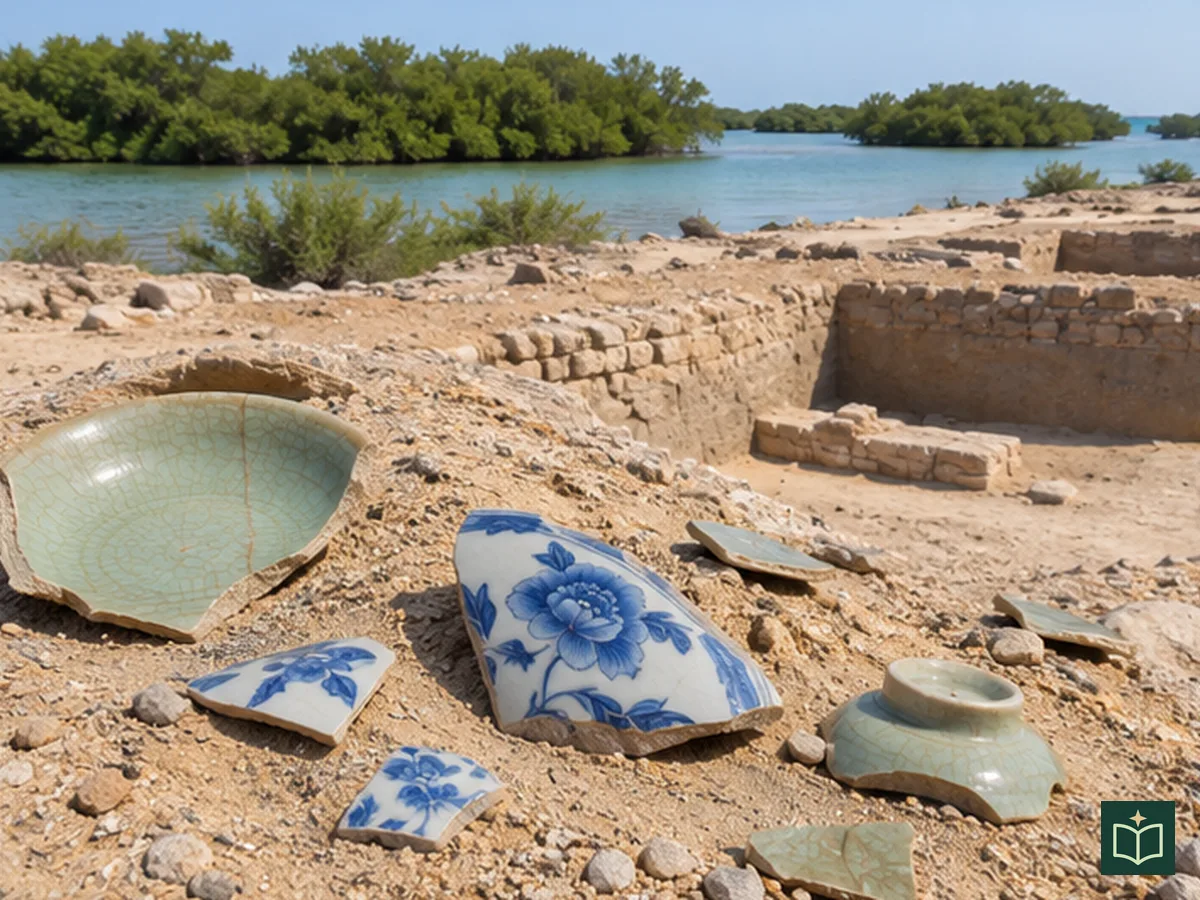
Julfar's layers contain ceramics from a remarkable range of places. There is Chinese celadon, with its green glaze, and later blue-and-white porcelain, as well as stoneware from Thailand and Vietnam, glazed wares from Iran, and pottery from India. Because the dates when these styles were made are well known, they help archaeologists date each layer. Their presence shows that ships connected Julfar to a trading network reaching from China to East Africa. Alongside these imports is a local red earthenware, often called Julfar ware, made in kilns in the nearby hills and itself traded widely around the Gulf and beyond, reaching sites along the coasts of Oman and Arabia.
Pearls and seaborne trade
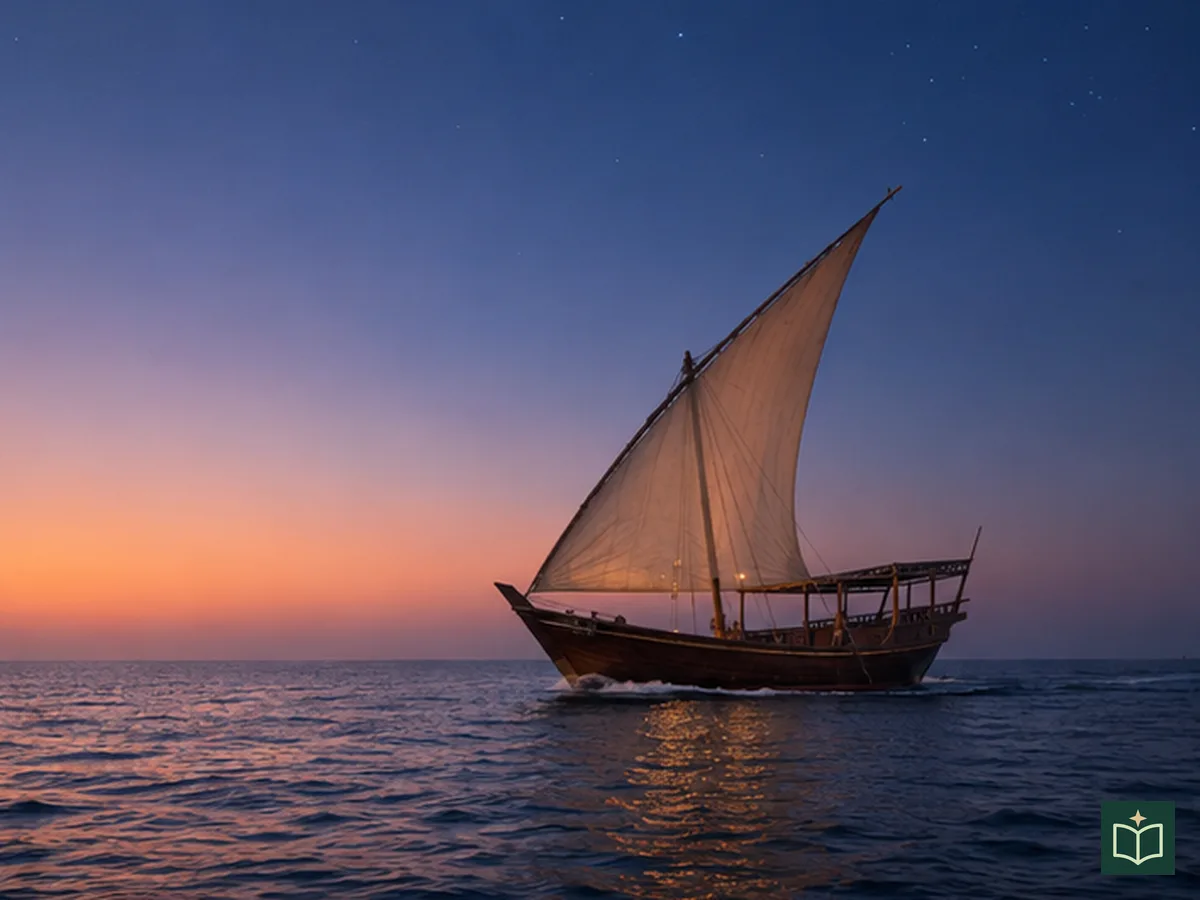
Pearls were central to Julfar's wealth. The Gulf's oyster banks produced some of the finest natural pearls in the world, and early sixteenth-century Portuguese accounts mention a pearl fishery at Julfar and the merchants who traded its pearls. Boats from the port carried pearls, dates and dried fish, and brought back rice, textiles, spices, metalwork and ceramics. Julfar's position near the Strait of Hormuz placed it within the sphere of the Kingdom of Hormuz, the great island entrepôt that dominated Gulf trade in this period. Local rulers often paid tribute to Hormuz while running their own commerce and collecting their own dues from passing ships.
Navigators and outsiders
Julfar is also linked with the celebrated navigator Ahmad ibn Majid, born in the fifteenth century into a family of sailors, and usually associated with the town. His manuals reflect the deep maritime knowledge of the Gulf's seafarers. From the early sixteenth century, the Portuguese controlled much of the Gulf's trade, and they maintained a presence in the area for about a century. After Persian and English forces took Hormuz in 1622, power in the region shifted again. Over the following century, the focus of settlement moved to the site of modern Ras Al Khaimah, and the name Julfar gradually fell out of use.
Why Julfar matters
Julfar shows that long before the oil era, the coast of the UAE was part of a vast commercial world. Its ceramics tie it to China and Southeast Asia, its pearls to the markets of India and Persia, and its sailors to routes across the Indian Ocean. For archaeologists it also offers a rare sequence of layers that can be dated closely, making it a reference site for the medieval Gulf. Finds from Julfar are displayed at the National Museum of Ras Al Khaimah. Work continues to map the full extent of the town, much of which lies under sand, mangroves and modern development.
Sources & further reading
Figures are rounded and widely published; check the linked organisations for the latest editions. These organisations do not endorse this website.