An ingredient and a material
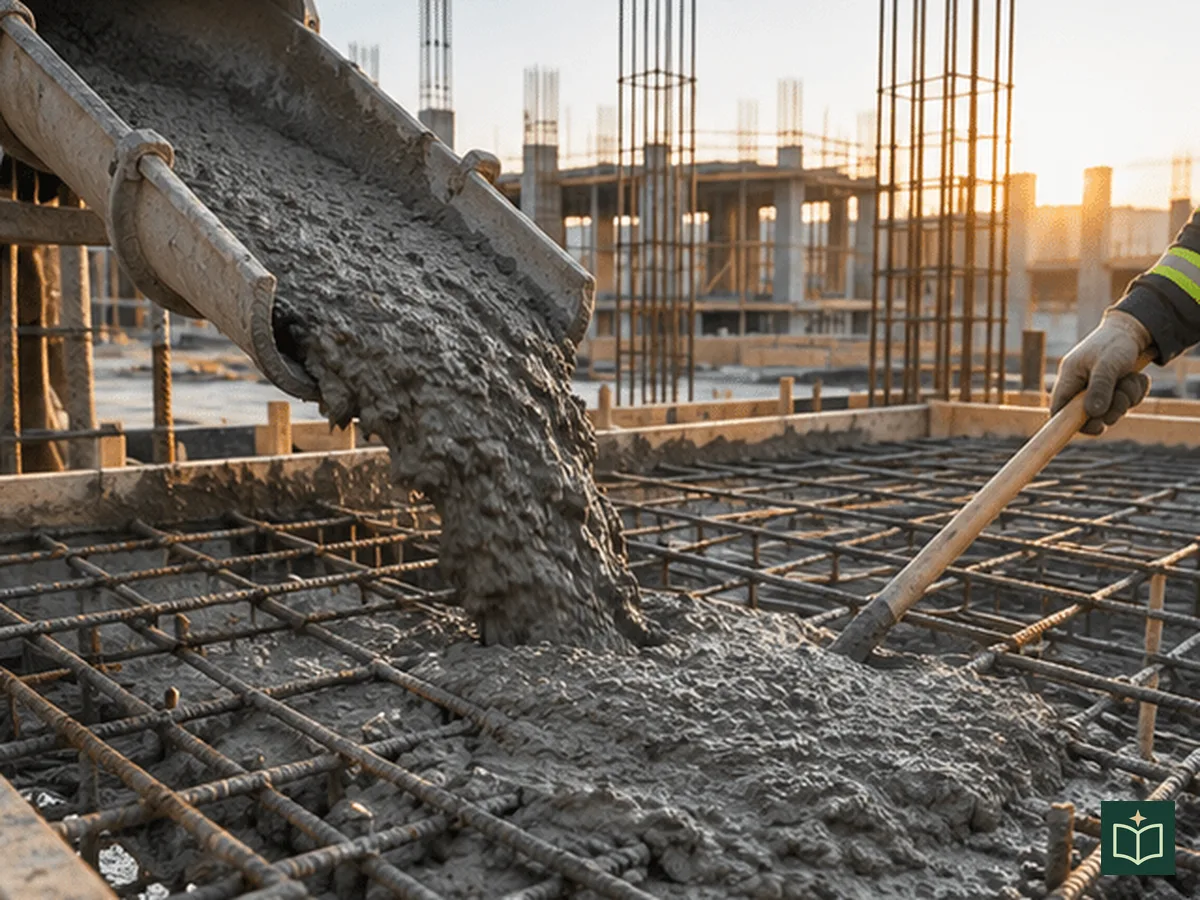
People often speak of cement pavements or cement buildings, but in nearly every case they mean concrete. Cement is a fine grey powder, a binder. On its own it has little use in construction; it becomes strong only when mixed with water. Concrete is the composite material made by combining cement and water with aggregates: sand as the fine aggregate and gravel or crushed stone as the coarse aggregate. The cement and water form a paste that coats every grain and stone, then hardens to lock them together. Mortar, used to bind bricks and blocks, is another mix of cement, sand and water, but it lacks the coarse stone that gives concrete its strength.
How cement is made
Most cement today is Portland cement, named in 1824 by the English builder Joseph Aspdin because it resembled Portland stone. Its production starts with limestone, a source of calcium, and clay or shale, sources of silica, alumina and iron. These are crushed, blended and fed into a long rotating kiln, where they are heated to around 1,450°C. The heat drives carbon dioxide out of the limestone and fuses the minerals into hard lumps called clinker. After cooling, the clinker is ground with a little gypsum, which controls how fast the cement sets, into the familiar powder. Many modern cements also blend in fly ash, slag or other materials to reduce the amount of clinker.
What happens when it sets
Concrete does not harden by drying out, a common misconception. It hardens through hydration, a chemical reaction between cement minerals and water that produces tiny interlocking crystals, mainly calcium silicate hydrate. The reaction continues for weeks, which is why concrete must be kept moist while it cures, and why engineers often test its strength at 28 days. The proportions matter greatly. A typical mix is mostly aggregate, roughly 60 to 75% by volume, with cement making up only around 10 to 15% and water the rest. Adding extra water makes concrete easier to pour, but weakens the result, so the water-to-cement ratio is one of the most closely controlled numbers on a building site.
Concrete in Gulf heat
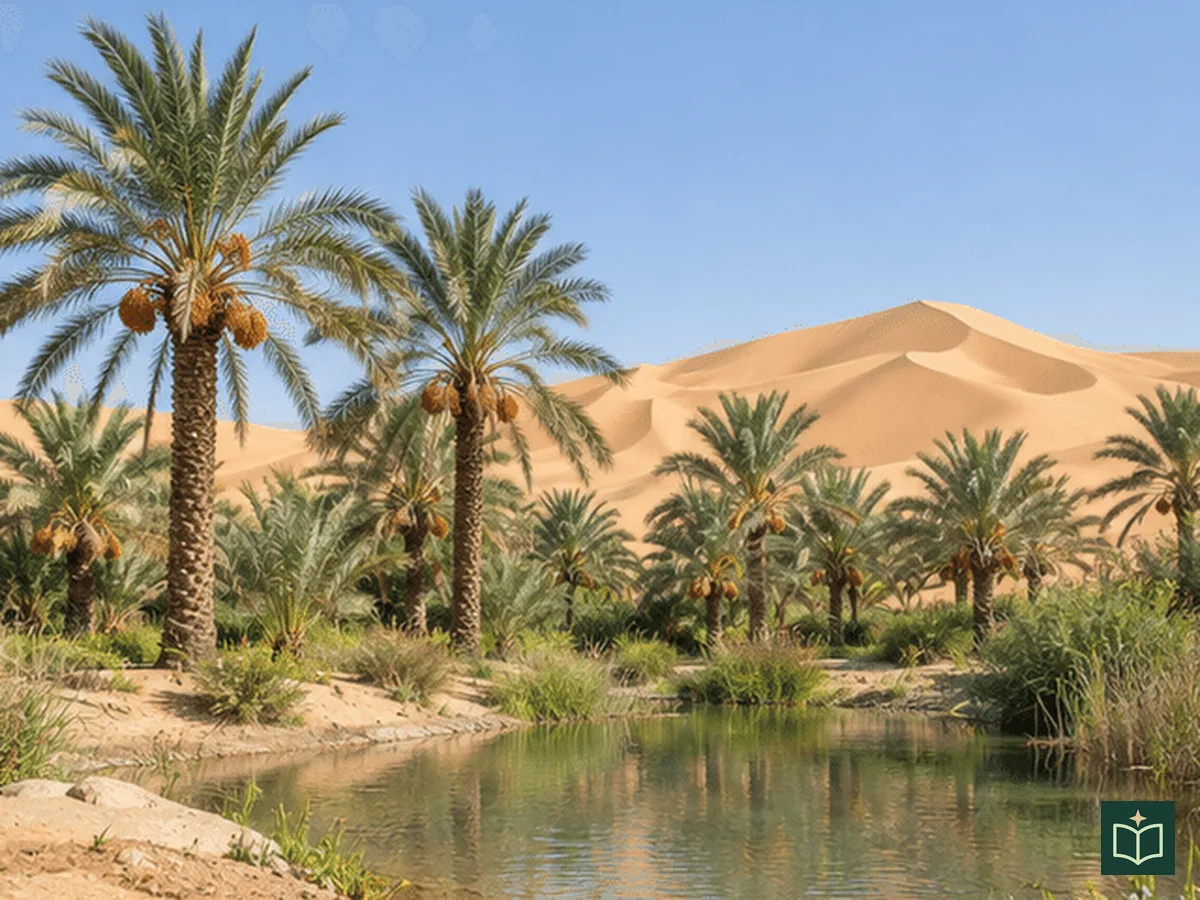
Building in the Gulf brings particular challenges. High temperatures speed up hydration, so concrete can stiffen before it has been placed and compacted, and rapid evaporation can cause cracks. Contractors respond by using chilled water or crushed ice in the mix, shading aggregates, adding chemicals that slow setting and pouring at night or in the early morning. Salty groundwater and sea air carry chlorides and sulphates that can attack concrete and corrode the steel reinforcement inside it, so codes specify denser mixes and protective cover. The Burj Khalifa in Dubai, for example, used high-strength concrete pumped to record heights, with careful mix design and pours timed to avoid the hottest hours.
From Rome to reinforced
Concrete is ancient. The Romans made a durable form from lime and volcanic ash, known as pozzolana, mixed with rubble. Their Pantheon in Rome, completed in the second century AD, still has the largest unreinforced concrete dome in the world. Much of that knowledge was lost after Rome's decline and revived only in the eighteenth and nineteenth centuries. The decisive modern step was reinforcement. Concrete is very strong when squeezed but weak when stretched, so in the 1800s builders began embedding steel bars inside it. Reinforced concrete combines the compressive strength of concrete with the tensile strength of steel, and it made modern bridges, dams and high-rise towers possible.
The carbon problem
Concrete is the most widely used manufactured material on Earth, and by volume people use more of it than anything except water. That scale gives cement a large climate footprint. Making clinker releases carbon dioxide in two ways: from the fuel burned to heat the kiln and, even more, from the chemical breakdown of limestone itself, which cannot be avoided simply by switching fuels. Together these make cement responsible for roughly 8% of global emissions. Solutions under study include replacing part of the clinker with other materials, capturing carbon at cement plants, designing buildings that need less concrete and recycling old concrete as aggregate. Calling it by the right name is a small first step.
Sources & further reading
Figures are rounded and widely published; check the linked organisations for the latest editions. These organisations do not endorse this website.