A different kind of solar
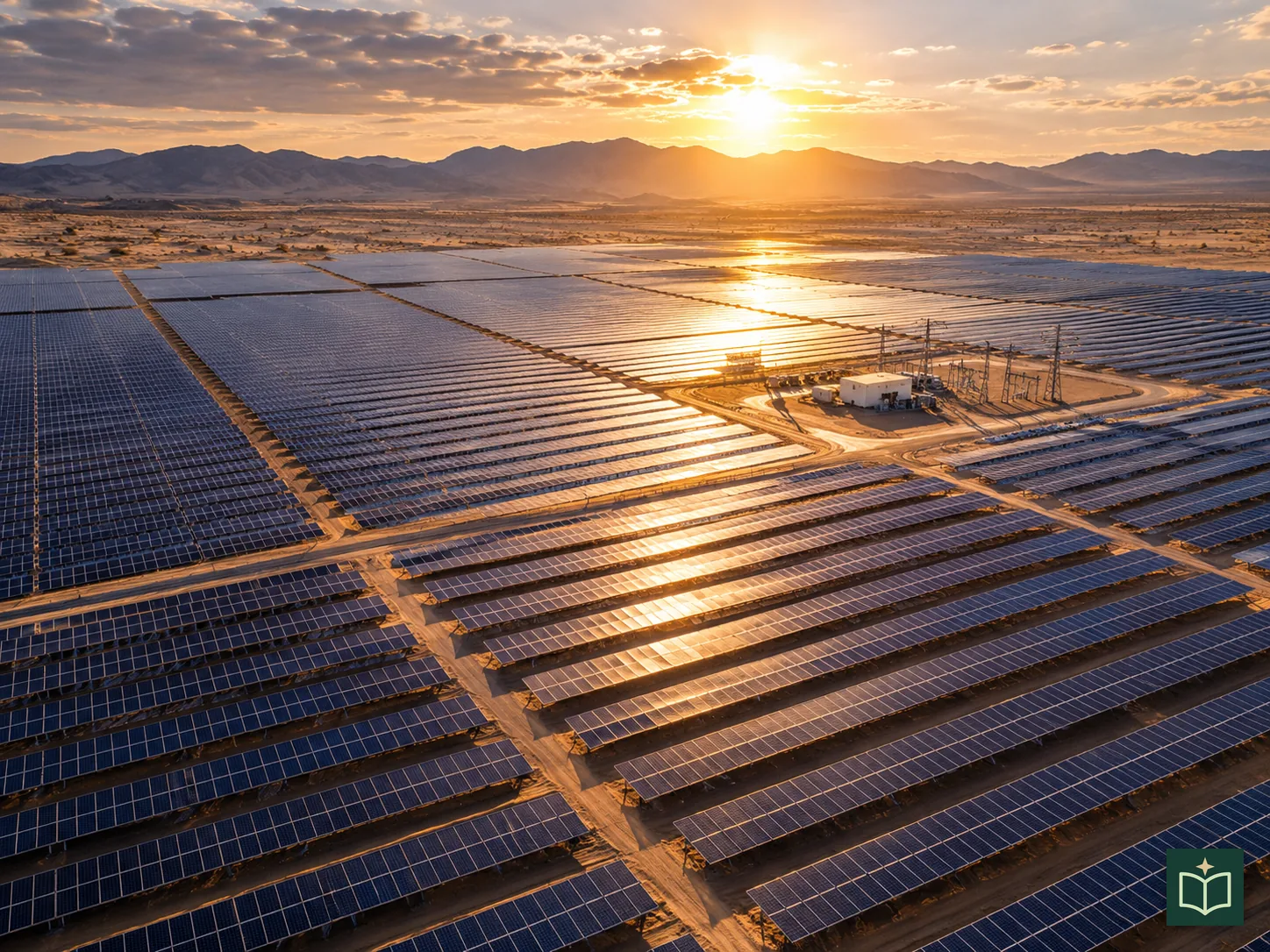
There are two main ways to make electricity from sunlight. Photovoltaic panels convert light directly into electricity using semiconductors. Concentrated solar power, or CSP, instead uses mirrors to focus sunlight and produce intense heat, which then drives a conventional steam turbine, much as in a fossil-fuelled power station. Because it works with heat, CSP can store energy relatively cheaply in insulated tanks and generate electricity hours after the sun has set. It requires strong direct sunlight, not diffuse light through clouds or haze, so it works best in clear deserts such as those of the Middle East, North Africa, Chile, Spain, South Africa and the south-western United States.
Troughs, towers and dishes
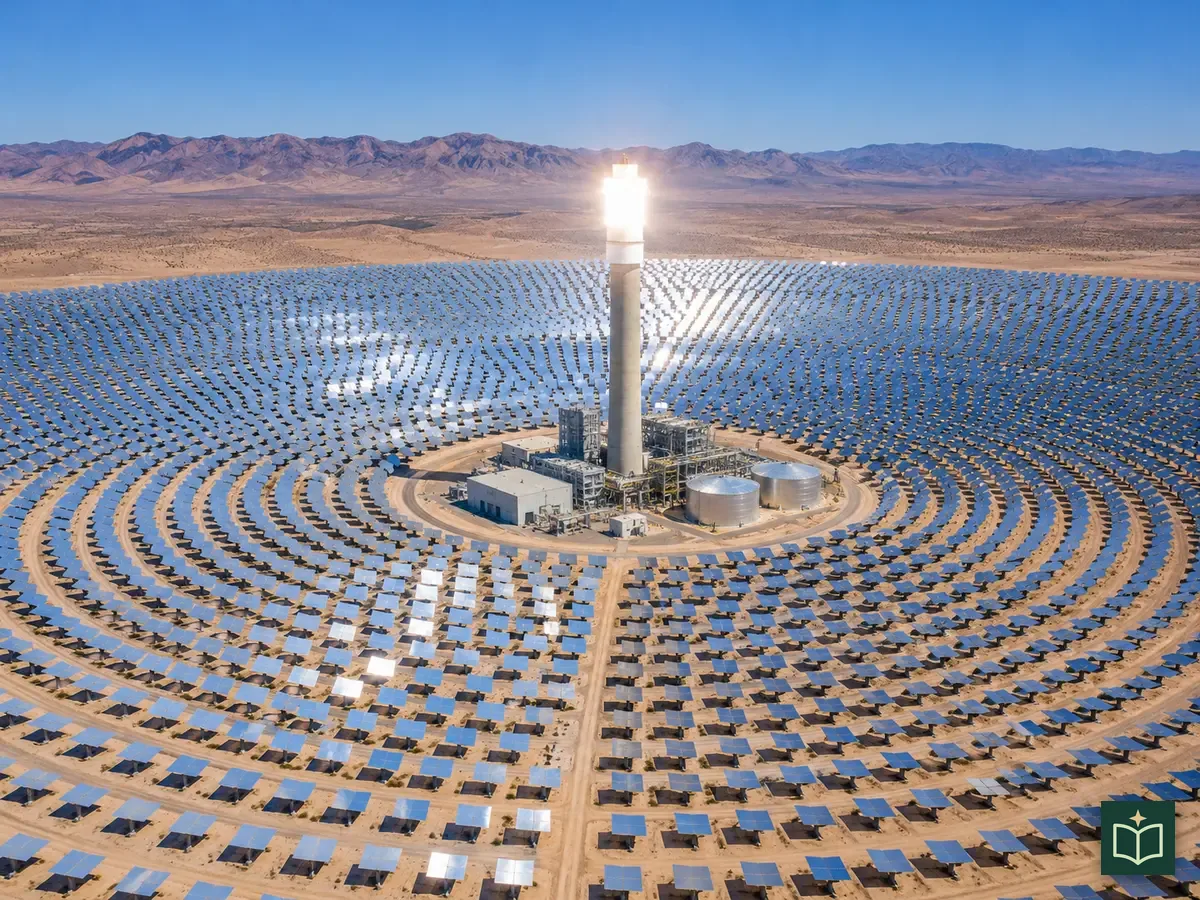
The most common designs are parabolic troughs and power towers. Parabolic troughs are long, curved mirrors that focus sunlight onto a pipe running along their focal line, heating an oil or salt fluid. Power towers use thousands of flat, sun-tracking mirrors called heliostats to concentrate light onto a receiver at the top of a tall tower, reaching higher temperatures that improve efficiency. Linear Fresnel systems use flat mirror strips, and dish-Stirling systems focus light on an engine at the dish’s focal point, though these are rare. Towers and troughs typically use molten salt, a mixture of sodium and potassium nitrates, to store heat.
Dubai’s giant
The Gulf hosts some of the world’s largest CSP projects. Noor Energy 1, part of the Mohammed bin Rashid Al Maktoum Solar Park in Dubai, combines 700 megawatts of CSP with 250 megawatts of photovoltaic panels. Its central tower, about 262 metres tall, is described as the world’s tallest solar tower, surrounded by tens of thousands of heliostats, alongside parabolic trough fields. Thermal storage lets the plant supply electricity long into the night, which matters because cooling demand in Dubai remains high after sunset. Earlier, Abu Dhabi’s Shams 1, a 100-megawatt parabolic trough plant opened in 2013, was one of the first large CSP plants in the region.
History and setbacks
Concentrated solar ideas are old: inventors in the late nineteenth and early twentieth centuries built solar-powered engines, including a solar pumping plant near Cairo in 1913. Commercial CSP began with the SEGS trough plants in California’s Mojave Desert in the 1980s. Spain led a boom in the late 2000s, supported by generous tariffs, and Morocco built the large Noor Ouarzazate complex. However, CSP costs fell far more slowly than those of photovoltaic panels, which became much cheaper during the 2010s. Some projects, including towers in the United States, faced performance problems. Global CSP capacity remains small, measured in single-digit gigawatts, compared with over a thousand gigawatts of photovoltaics.
CSP versus PV plus batteries
CSP’s main selling point is storage. Molten salt tanks can store heat for many hours at lower cost than equivalent lithium-ion batteries, and the plant uses conventional turbines that support grid stability. But photovoltaic panels combined with batteries have become very competitive, and battery costs have fallen rapidly. Several Gulf tenders now favour PV with battery storage for evening supply. CSP also uses water for cleaning mirrors and, in some designs, for cooling, though dry cooling can reduce this. Its future may depend on long-duration storage needs, industrial heat applications and whether further cost reductions can be achieved through larger and simpler designs.
Industrial heat and beyond
Beyond electricity, concentrated sunlight can supply high-temperature heat directly to industry, which accounts for a large share of global energy use. Applications include desalination, food processing, enhanced oil recovery and producing steam for chemical plants. In Oman, the Miraah solar steam project was built to generate steam for oilfield operations using enclosed troughs inside greenhouses. Researchers are also exploring CSP for producing hydrogen and synthetic fuels at very high temperatures. Whether CSP becomes a significant part of the energy system depends on costs and the value of storage, but in sun-rich regions like the Gulf, it remains an option for round-the-clock solar energy.
Sources & further reading
- US Department of Energy · Concentrating solar-thermal power ↗
- NREL · Concentrating solar power ↗
- Dubai Electricity and Water Authority ↗
Figures are rounded and widely published; check the linked organisations for the latest editions. These organisations do not endorse this website.