Same tree, different words
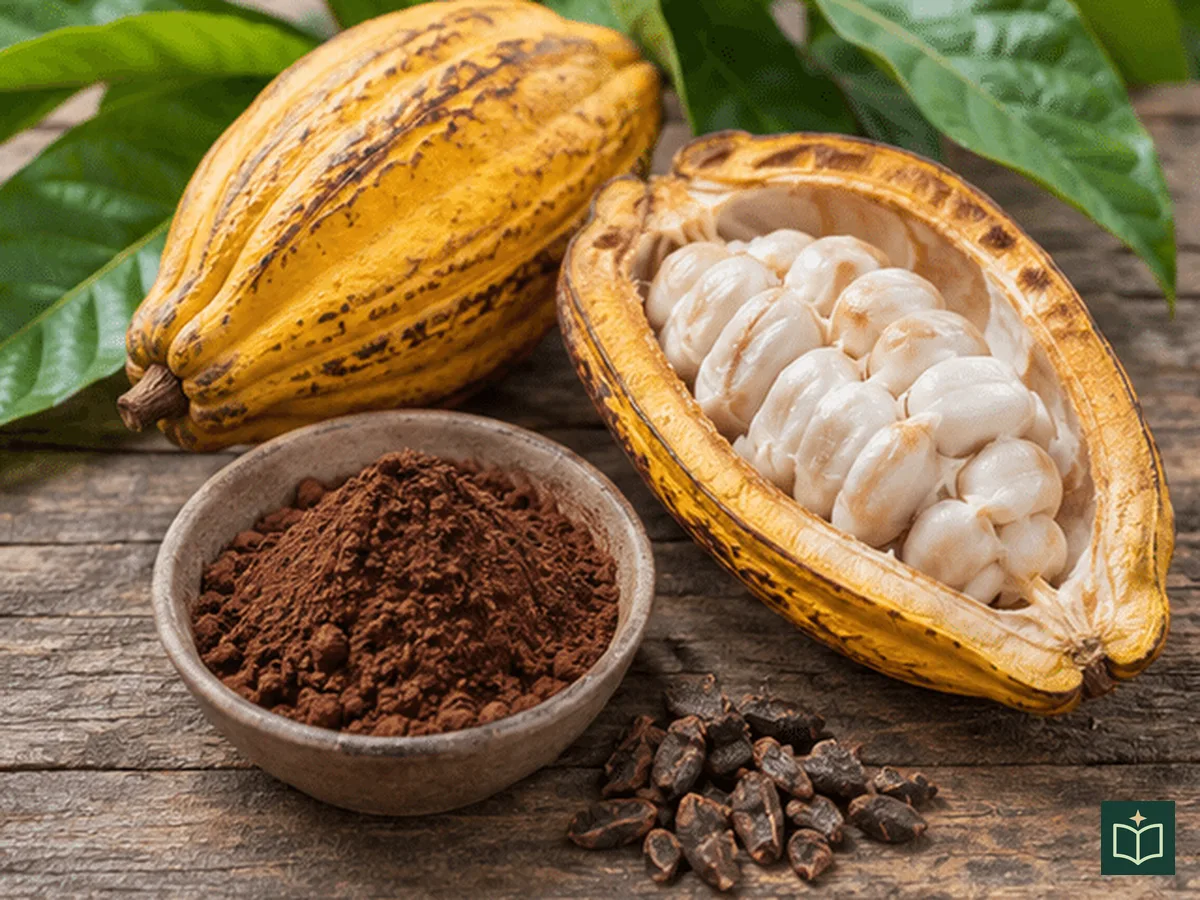
Cacao and cocoa both come from Theobroma cacao, a small tropical tree first domesticated in the Americas. Its name means 'food of the gods' in Greek. The tree grows large pods directly from its trunk and branches, each holding around 20 to 50 seeds embedded in a sweet white pulp. Botanists and growers call the tree, pods and beans cacao. The word cocoa developed in English as a variation and became the usual term for the roasted, ground products sold to consumers, especially powder and the hot drink. In many languages, including Spanish, there is only one word. The difference in English is therefore one of convention and marketing, not two separate crops.
From pod to bean
The flavour of chocolate does not exist in a fresh cacao seed, which is bitter, astringent and pale purple. It is created by processing. After harvest, farmers scoop out the beans and pulp and leave them in heaps or boxes, often covered with banana leaves, for about five to seven days. Yeasts and bacteria ferment the sugary pulp, the temperature rises, and chemical changes inside the beans produce the precursors of chocolate flavour. The beans are then dried, usually in the sun, until they are light and stable enough to ship. Most cacao is grown on small family farms, and fermentation and drying are typically done on the farm or in the village.
Roasting, pressing and powder
At factories, the dried beans are roasted, which develops the familiar chocolate aroma, then cracked and winnowed to separate the shell from the inner pieces, called nibs. Ground nibs form a thick paste known as cocoa mass or cocoa liquor, though it contains no alcohol. This paste is roughly half fat. Pressing it squeezes out cocoa butter, a pale fat used in chocolate and cosmetics, and leaves a cake of cocoa solids that is milled into cocoa powder. Chocolate is made by recombining mass, extra cocoa butter, sugar and sometimes milk. The percentage on a dark chocolate bar refers to everything from the bean, mass and butter together, not the solids alone.
What alkalising does
In 1828 the Dutch chemist Coenraad van Houten patented a press to separate cocoa butter, and his family's process of treating cocoa with alkaline salts became known as Dutching. Alkalising neutralises the natural acidity of cocoa, makes the powder darker, gives it a milder, rounder taste and helps it disperse in liquids. Dutch-processed cocoa is common in drinks and many commercial products. Natural cocoa powder, which has not been alkalised, is lighter in colour and more acidic, and bakers use it in recipes where it reacts with baking soda. Research has found that heavy alkalising reduces the flavanols, a group of plant compounds in cocoa that are studied for possible health effects.
What 'cacao' on a label means
In recent years cacao has become a marketing term for less processed products. Cacao nibs are simply the roasted or unroasted pieces of bean before grinding. Products sold as raw cacao are typically fermented beans that have been dried and processed at lower temperatures than usual, rather than roasted. Their supporters say this keeps more flavanols and minerals, and that is plausible for some compounds, but the word raw has no single legal definition and practices vary. The health benefits of cocoa are often overstated: the quantities of flavanols used in research are far higher than in a typical chocolate bar, which also contains sugar and fat.
A global chain
Cacao is grown within about 20 degrees of the equator, from West Africa to Latin America and Southeast Asia. Côte d'Ivoire and Ghana dominate, together producing about three fifths of the world's beans. Much of the processing into cocoa and chocolate, however, takes place in Europe, North America and increasingly Asia, which is where most of the value is added. The Gulf is part of this chain as a fast-growing market for chocolate and as a trade and re-export hub. Issues of farmer incomes, child labour and deforestation are central to the industry, and certification schemes and new European rules on deforestation-free supply chains aim to address them.
Sources & further reading
Figures are rounded and widely published; check the linked organisations for the latest editions. These organisations do not endorse this website.