What an IP address does
Every device that sends data across the internet, from phones to servers, needs an address so that routers know where to deliver packets. These addresses are defined by the Internet Protocol, IP. Version 4, IPv4, was standardised in 1981 and still carries a large share of internet traffic. An IPv4 address is a 32-bit number, usually written as four decimal numbers separated by dots, such as 192.0.2.1. Version 6, IPv6, was published in the 1990s as its successor. Its addresses are 128 bits long and are written in hexadecimal, in eight groups separated by colons, such as 2001:db8::1. There was a version 5, but it was experimental and never deployed.
The arithmetic of scarcity
A 32-bit address allows 2 to the power of 32 combinations, which is about 4.3 billion. In the early 1980s, when the internet linked a few hundred research computers, that seemed limitless. But by the 2000s, the world had billions of people online, each with a phone, a computer and increasingly smart televisions, cameras and appliances. Some address blocks were also reserved or assigned inefficiently in early years. The central pool managed by the Internet Assigned Numbers Authority ran out of free blocks in 2011, and the regional registries that distribute addresses, including RIPE NCC, which serves Europe, the Middle East and Central Asia, ran out of their normal supplies in the following years.
How the gap was patched
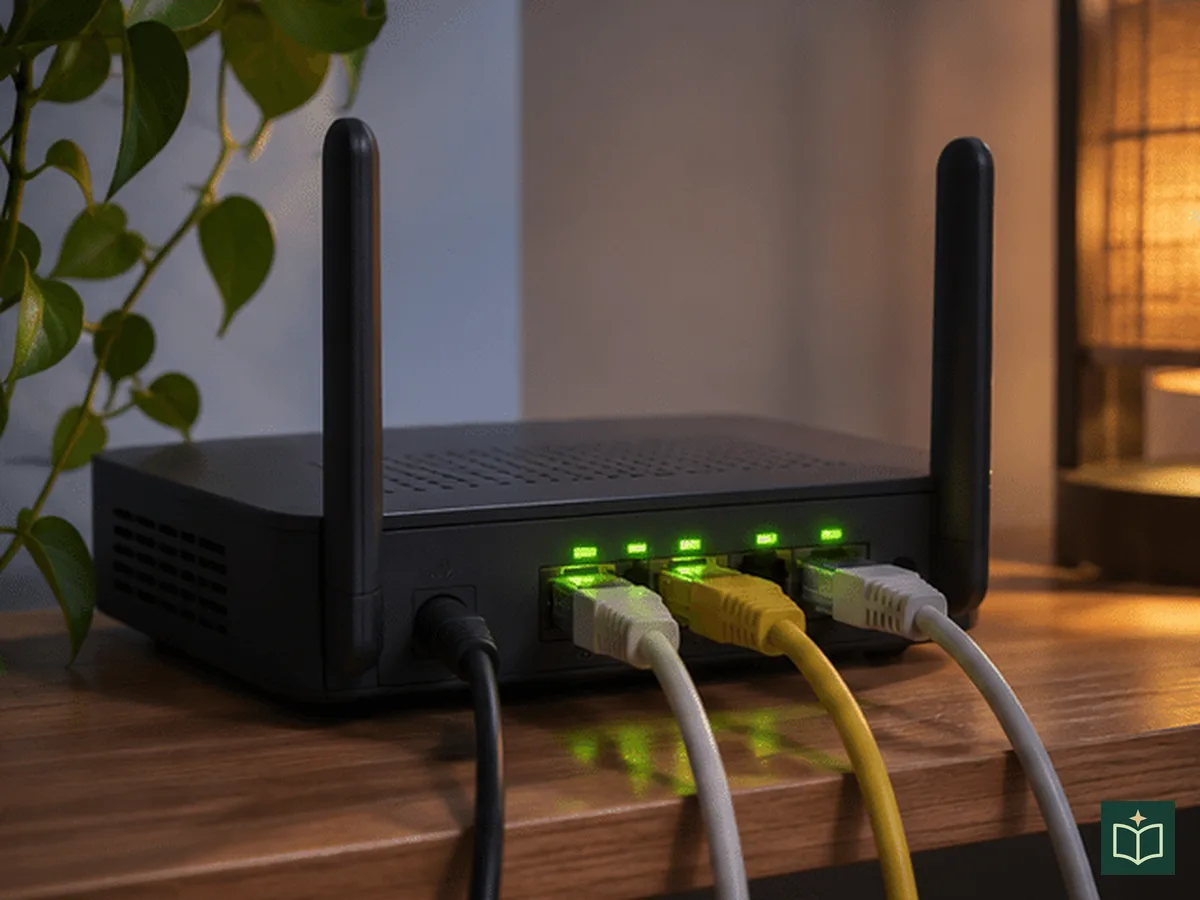
The internet did not stop growing, because engineers stretched IPv4 with a technique called network address translation, or NAT. A home router, for example, has one public IPv4 address and gives each device inside the house a private address. When devices go online, the router translates their traffic so that it all appears to come from the single public address. Mobile operators do the same on a much larger scale, sharing one address among many customers. NAT works, but it complicates direct connections between devices, adds equipment and can make some games, calls and security tools harder to run. IPv4 addresses have also become a traded asset, bought and sold between organisations.
What IPv6 changes
IPv6 addresses are 128 bits long, allowing 2 to the power of 128 combinations, about 340 undecillion, or 3.4 followed by 38 zeros. That is enough to give every device its own globally unique address many times over, removing the need for NAT. IPv6 also simplifies some parts of the protocol. Devices can configure their own addresses automatically, routers handle packets more efficiently, and features for security and mobile devices were designed in from the start. However, IPv6 is not backward compatible: a device that speaks only IPv4 cannot talk directly to one that speaks only IPv6. That single fact explains why the transition has taken decades rather than years.
Living side by side
Most networks today run both protocols at once, a setup called dual stack. Phones, computers and major websites can usually reach each other over IPv6 when both sides support it and fall back to IPv4 when they do not. Measurements published by large technology companies show that the share of users reaching their services over IPv6 grew steadily through the 2010s and 2020s, approaching half in some datasets, with large differences between countries. Mobile networks, including operators in the Gulf, have often led adoption because they connect huge numbers of devices. Many corporate networks and older systems still rely on IPv4, so both are likely to coexist for years.
Why it matters to users
For most people the switch is invisible. IPv6 does not by itself make connections faster, though avoiding layers of address translation can slightly improve performance and reliability. It does matter for the growth of connected devices, from smart meters to industrial sensors, which would be awkward to support with scarce shared addresses. For businesses, the cost of buying IPv4 addresses and maintaining translation equipment is a strong incentive to move. For network engineers, running two protocols means twice the configuration and security work. The likely future is a long, gradual fade of IPv4 rather than a single switch-off date, much as older mobile networks have been retired step by step.
Sources & further reading
Figures are rounded and widely published; check the linked organisations for the latest editions. These organisations do not endorse this website.