Two clocks in the sky
People have always measured time by the sky, and the two most obvious clocks are the Sun and the Moon. The Sun gives the year: Earth takes about 365.24 days to complete its orbit and return to the same season, a period called the tropical year. The Moon gives the month: the cycle from one new moon to the next, the synodic month, averages about 29.53 days. Unfortunately for calendar makers, these numbers do not divide neatly into each other. Every calendar in history has had to choose which cycle to follow closely and how to deal with the leftover fractions. That choice produces the three main families: solar, lunar and lunisolar.
The arithmetic of the gap
Twelve lunar months add up to about 354.37 days. Subtract that from the solar year of about 365.24 days and the difference is roughly 10.9 days, usually rounded to 11. A thirteenth month would overshoot by more than 18 days. So a calendar of twelve lunar months slips about 11 days earlier against the seasons each year. After about 33 solar years, the slippage adds up to a full year, and the lunar calendar has counted about 34 years. This is why a person's age can differ by a year depending on which calendar is used, and why lunar dates move steadily backwards through the familiar months of the solar calendar.
Solar: the Gregorian example
The Gregorian calendar, used worldwide for civil purposes, is purely solar. Its months no longer match the Moon at all; they are simply convenient divisions of the year. To keep the seasons fixed, it adds a leap day every four years, but skips it in century years not divisible by 400, so 1900 was not a leap year but 2000 was. This gives an average year of 365.2425 days, very close to the tropical year. The calendar was introduced in 1582 by Pope Gregory XIII to correct drift in the older Julian calendar, and was adopted by different countries over the following centuries, Britain in 1752 and by Saudi Arabia for government payroll and budgets in 2016.
Lunar: the Hijri calendar
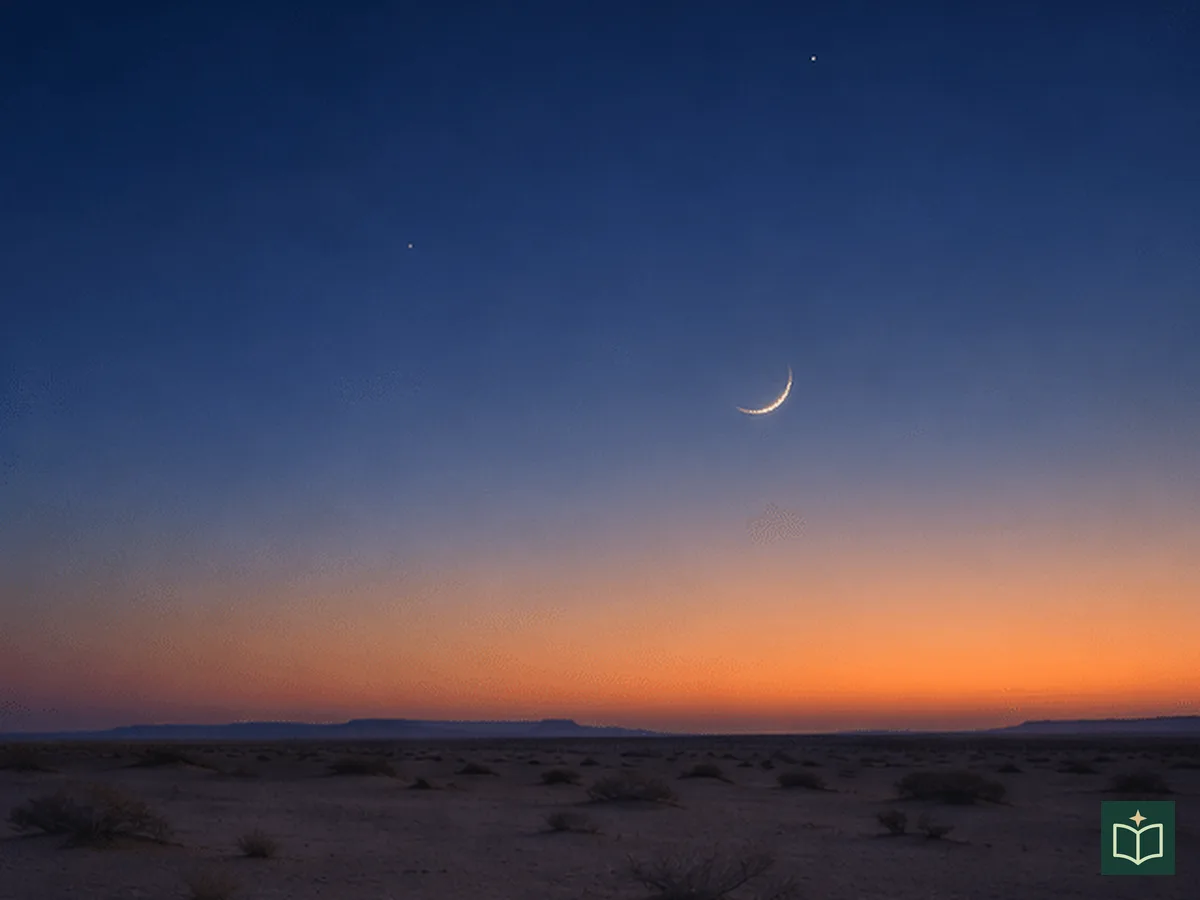
The Islamic Hijri calendar is purely lunar. Each of its twelve months begins with the new crescent moon, and months last 29 or 30 days. Its year is therefore about 11 days shorter than the solar year, so Ramadan, the Hajj and Eid fall about 11 days earlier each Gregorian year. Over roughly 33 years, Ramadan moves through every season, from the long, hot days of a Gulf summer to the shorter, cooler days of winter. Traditionally, each month begins with the sighting of the crescent, which is why dates can be confirmed only shortly beforehand and may differ between countries. Calculated versions, such as the Umm al-Qura calendar, are used for administrative purposes.
Lunisolar: the compromise
Many cultures wanted both: months that follow the Moon and festivals that stay in the same season. Their solution is the lunisolar calendar, which uses lunar months but inserts an extra, or intercalary, month roughly every two or three years. The most common scheme rests on the Metonic cycle, named after a Greek astronomer: 19 solar years contain almost exactly 235 lunar months, so adding seven leap months in every 19 years keeps the calendars aligned. The Hebrew calendar follows this pattern, which keeps Passover in spring. The traditional Chinese calendar also adds leap months, by a different astronomical rule, so the Lunar New Year always falls between late January and mid-February.
Why the choice matters
Each system suits different needs. A solar calendar is ideal for agriculture, taxes and school years, because the seasons stay fixed. A lunar calendar ties time to something everyone can see, needing no instruments, and gives every season its turn at religious occasions. The UAE, like many countries, uses both side by side: the Gregorian calendar for business, government and school terms, and the Hijri calendar for religious events and some public holidays. Their interplay explains practical puzzles, such as why public holiday dates shift each year and why planning for Ramadan working hours changes from one year to the next. Understanding the 11-day gap makes those shifts predictable.
Sources & further reading
Figures are rounded and widely published; check the linked organisations for the latest editions. These organisations do not endorse this website.