Why ordinary steel rusts
Plain carbon steel is mostly iron, and iron left in damp air slowly turns into rust, a mix of hydrated iron oxides. Rust is loose and porous, so it flakes away and exposes fresh metal underneath, and corrosion keeps going. Paint, oil or a zinc coating can slow this, but each is a separate layer that can be scratched through. Stainless steel works differently. It carries its protection inside the alloy, so the surface repairs itself. The key ingredient is chromium, a hard, silvery metal that by itself reacts with oxygen readily, yet forms an oxide that is dense and tightly bonded rather than flaky.
The passive film
When steel contains at least about 10.5% chromium, the chromium atoms at the surface combine with oxygen from air or water to form a layer of chromium oxide only one to three nanometres thick. Metallurgists call it a passive film. It is transparent, which is why stainless steel still looks metallic. A two-nanometre film is about 35,000 times thinner than a human hair 70 micrometres across, yet it blocks water and oxygen from reaching the iron. If the surface is scratched or cut, chromium in the newly exposed metal reacts with oxygen within moments, and the film re-forms. That self-healing property is what separates stainless steel from coated steel.
What the grade numbers mean
Stainless steels come in families. The most common is austenitic, usually non-magnetic, of which grade 304 is the workhorse: roughly 18% chromium and 8% nickel, hence the label ‘18/8’ on cutlery. A one-kilogram 304 saucepan therefore contains about 180 grams of chromium and 80 grams of nickel. Grade 316 adds two to three per cent molybdenum, which greatly improves resistance to chlorides, so it is often called marine grade. Ferritic grades such as 430 contain chromium but little or no nickel; they are cheaper and magnetic. Martensitic grades have more carbon and can be hardened for knives. Duplex steels mix structures for strength and corrosion resistance.
Comparing resistance
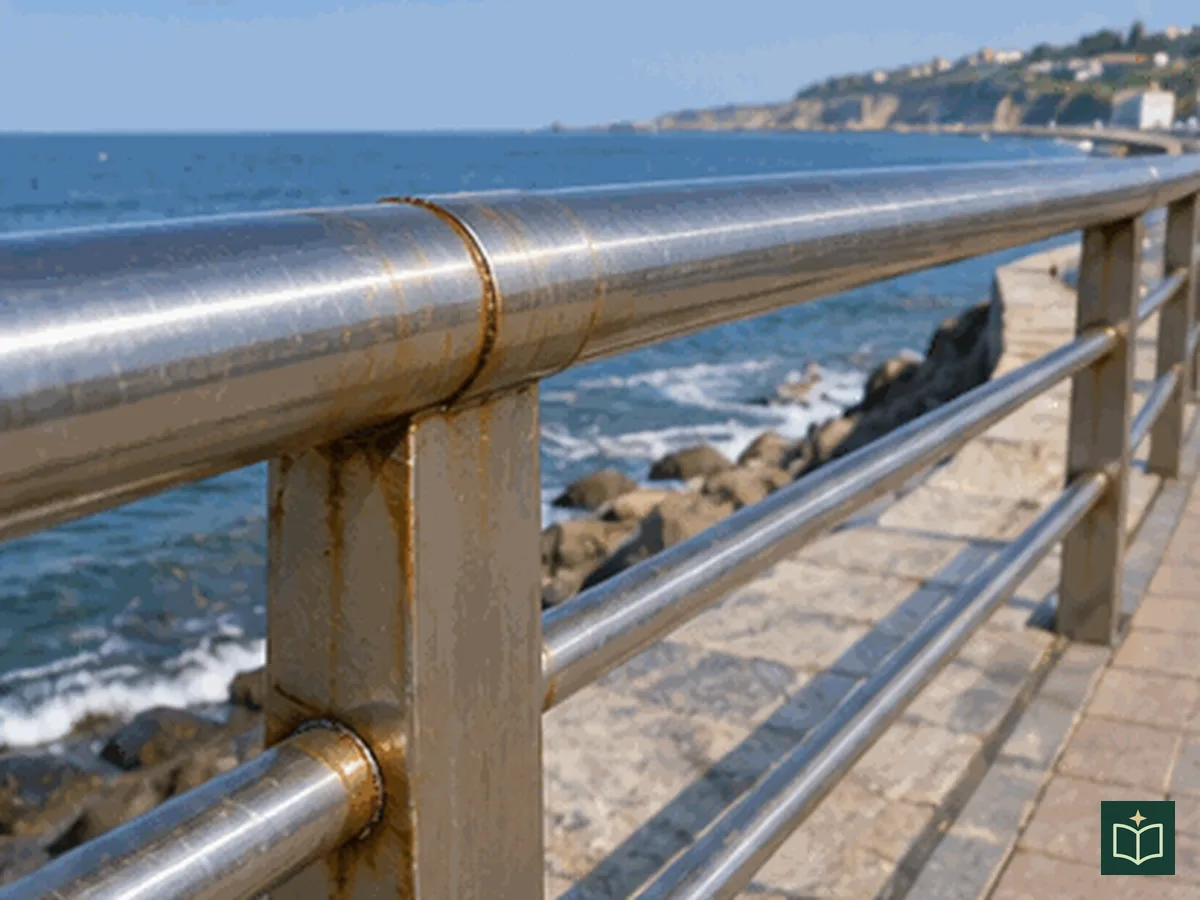
Engineers rank resistance to pitting with a rough index called PREN, the pitting resistance equivalent number. It is calculated as the chromium percentage plus 3.3 times the molybdenum percentage, plus 16 times the nitrogen percentage. For grade 304, with about 18% chromium and no molybdenum, PREN is roughly 18. For grade 316, with about 17% chromium and 2% molybdenum, it is about 17 plus 6.6, or roughly 24. That jump explains why 316 is preferred for coastal railings, boat fittings and food plants that use salty brines. For seawater itself, such as in desalination plants, engineers often specify super duplex or high-alloy grades with PREN above 40.
Why stainless still stains
The passive film has weaknesses. Chloride ions from sea spray, swimming pools or cleaning products can punch tiny holes through it, causing pitting. In tight gaps such as under washers or deposits, oxygen runs short and the film cannot heal, leading to crevice corrosion. Brown ‘tea staining’ on coastal steel is usually surface corrosion where salt deposits are not washed off by rain. Rust spots can also come from contamination: particles of ordinary steel from grinding or wire brushes embed in the surface and rust there. Welding can draw chromium into carbides at grain boundaries, leaving thin zones short of chromium, which is why low-carbon ‘L’ grades exist.
Keeping it stainless
The story began in 1913, when Harry Brearley in Sheffield cast a steel with about 12.8% chromium that resisted etching acid, while German metallurgists at Krupp were developing chromium-nickel steels at much the same time. Today stainless steel is used in kitchens, hospitals, buildings, chemical plants and cars. Keeping it bright mostly means helping the film do its job: choose a grade suited to the environment, design out crevices, rinse off salt and dirt regularly, and avoid tools that leave carbon steel particles behind. Specialist treatments called passivation remove free iron and thicken the oxide. In salty, humid coastal air, the grade choice matters more than any polish.
Sources & further reading
- Britannica · Stainless steel ↗
- worldstainless (International Stainless Steel Forum) ↗
- British Stainless Steel Association ↗
Figures are rounded and widely published; check the linked organisations for the latest editions. These organisations do not endorse this website.