A state deep in debt
By the 1780s, the French monarchy was in severe financial trouble. Decades of war, including the Seven Years' War and support for the American War of Independence, had been financed largely by borrowing rather than taxation. By the late 1780s, servicing the debt consumed roughly half of royal spending, and lenders were growing reluctant to provide more. France was not a poor country, and its overall tax burden was not unusually high compared with Britain's. The problem was that the crown could not tap the country's wealth efficiently or fairly. When borrowing reached its limits in 1786, the government had to find a new source of revenue.
An unequal tax system
French society was formally divided into three estates. The clergy formed the First Estate and the nobility the Second; everyone else, roughly 97 per cent of the population, belonged to the Third. The first two estates enjoyed extensive privileges, including exemption from the main direct tax, the taille. Peasants paid royal taxes, church tithes and dues to lords, while many wealthy nobles paid comparatively little. Taxes also varied greatly between regions, and collection was farmed out to private financiers. This system was not only resented; it was inefficient. Any serious reform meant taxing the privileged, which they and their allies in the courts resisted.
Reform attempts fail
In 1786 the finance minister, Charles-Alexandre de Calonne, proposed a land tax payable by all, regardless of rank. To win support, he summoned an Assembly of Notables in 1787, a hand-picked group of nobles, clergy and officials. They refused to approve the plan, arguing that only a representative body could agree new taxes. The regional high courts, the parlements, also resisted royal decrees. Facing deadlock and an empty treasury, the government agreed in 1788 to summon the Estates-General, the old assembly of the three estates, for May 1789. It had not met since 1614, and nobody was certain how it should work.
Bread and hunger
Economic hardship sharpened the political crisis. A severe hailstorm in July 1788 destroyed crops across northern France, and the following winter was bitterly cold. Grain became scarce and bread prices soared, peaking in the summer of 1789. For urban workers, bread could take more than half of their wages even in normal times, so a sharp rise meant hunger. Unemployment also rose as textile industries suffered. Riots over food broke out in towns and countryside. Many people blamed hoarders, speculators and officials, and some suspected a deliberate plot to starve the people. This anger gave political arguments in Versailles and Paris a powerful popular force.
New ideas about power
Enlightenment writers had questioned traditional authority for decades. Montesquieu argued for separating powers, Rousseau wrote of the general will and popular sovereignty, and Voltaire attacked privilege and religious intolerance. These ideas spread through salons, cafés, pamphlets and newspapers. The American Revolution, which France had helped finance, showed that a people could create a new government based on rights. In January 1789 the Abbé Sieyès published a pamphlet asking what the Third Estate was: everything, he argued, yet politically nothing. Across France, communities drew up lists of grievances, called cahiers de doléances, which gave millions of people a voice in national debate.
From assembly to revolution
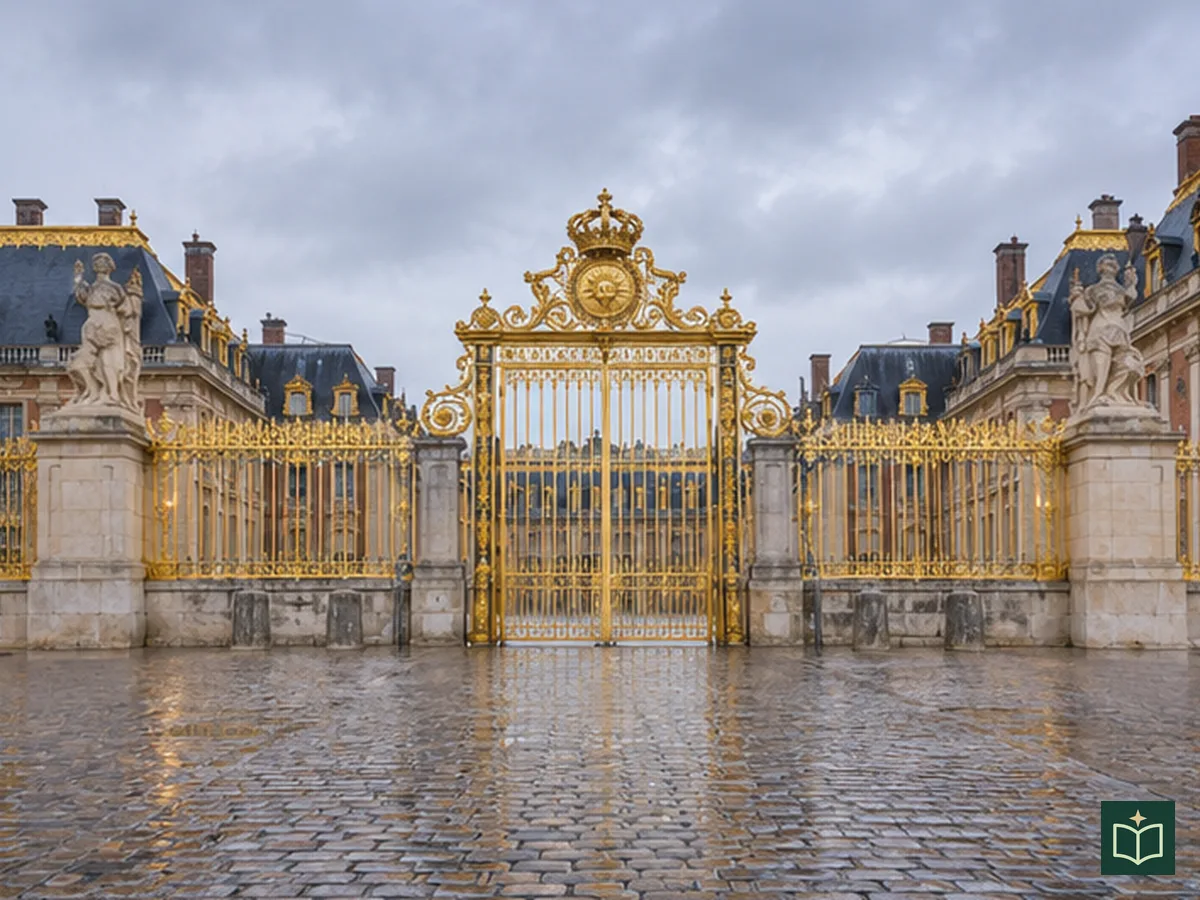
When the Estates-General met at Versailles in May 1789, a dispute erupted over voting. Voting by estate would let the clergy and nobility outvote the Third Estate, even though its deputies had been doubled. On 17 June the Third Estate declared itself the National Assembly, claiming to represent the nation. Three days later, locked out of their hall, deputies swore the Tennis Court Oath not to disperse until France had a constitution. When the king dismissed the popular minister Jacques Necker on 11 July, Parisians feared a crackdown. On 14 July crowds stormed the Bastille, and royal authority began to collapse.
Sources & further reading
- Britannica · French Revolution ↗
- Liberty, Equality, Fraternity: Exploring the French Revolution (George Mason University) ↗
Figures are rounded and widely published; check the linked organisations for the latest editions. These organisations do not endorse this website.