Buildings use a lot of energy
Heating, cooling, lighting, hot water and appliances make buildings one of the largest energy users in any economy. The IEA estimates that operating buildings accounts for about 30 per cent of global final energy consumption, and more when the energy used to make cement, steel and glass for construction is included. In hot Gulf countries, the share of electricity is even higher, because air conditioning runs for much of the year and dominates summer peaks. Equipment matters, but the building itself, its shape, orientation and envelope, determines how much heat the equipment has to remove in the first place. That demand is locked in for the life of the building.
How heat gets in
Heat moves into a building in three main ways. Solar radiation passes through windows and is absorbed by roofs and walls. Conduction carries heat through solid materials from the hot outside surface to the cooler inside. Infiltration brings in hot, humid air through gaps around doors, windows and service openings. In the Gulf, humidity adds another burden: air conditioners must remove moisture as well as heat, which takes extra energy. Each pathway has a matching remedy. Engineers measure insulation with the U-value, the rate of heat flow through a square metre of wall or window per degree of temperature difference; lower is better.
Glass, shade and colour
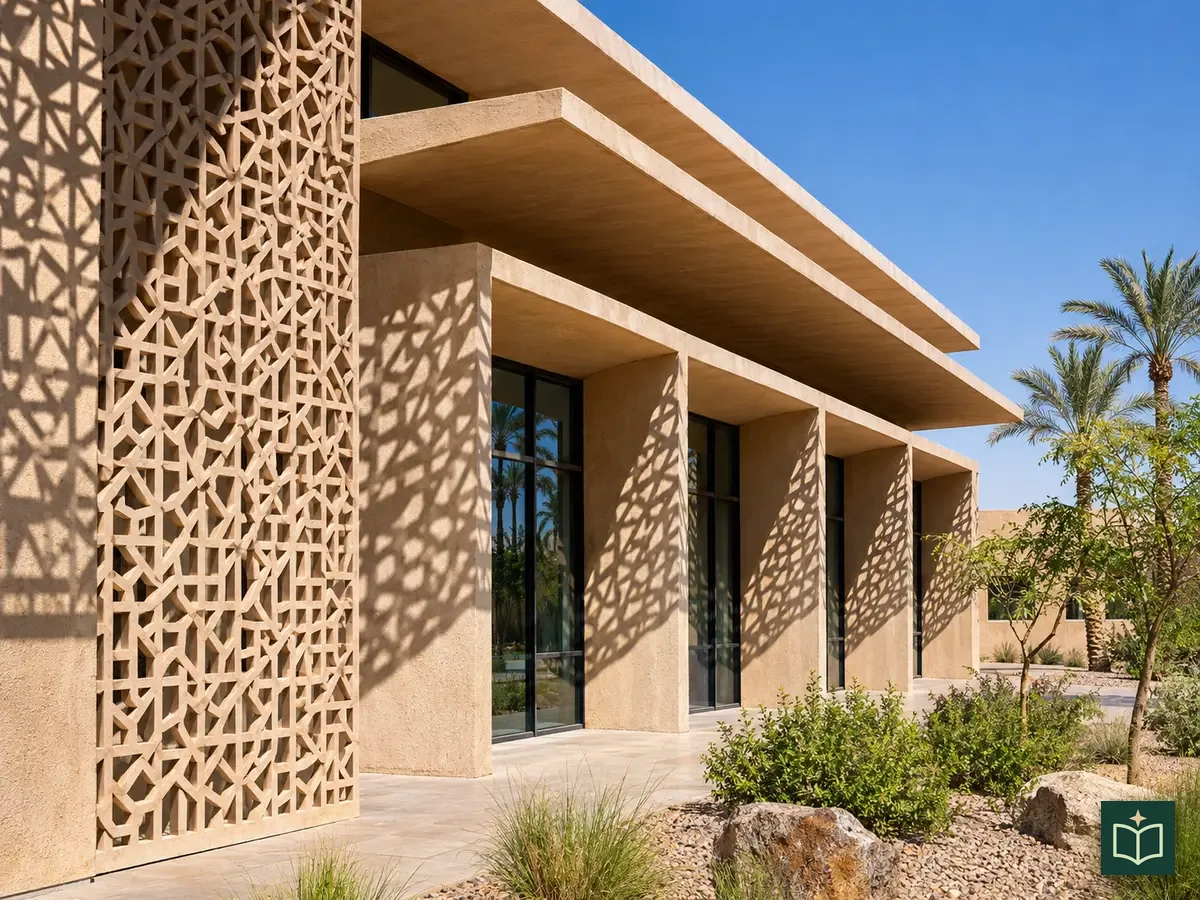
Large glass facades are popular in modern skylines, but glass lets in a lot of solar heat. High-performance glazing uses thin metal-oxide coatings that admit visible light while reflecting much of the infrared, and double or triple glazing reduces conduction. External shading is even more effective, because it stops sunlight before it reaches the glass. Traditional Gulf architecture offers examples: thick walls, small openings, shaded courtyards and the latticed mashrabiya screens. Wind towers, or barjeel, seen in Dubai’s Al Fahidi district, helped ventilate homes before electricity. Light-coloured ‘cool roofs’ reflect sunlight and can lower roof surface temperatures considerably on summer afternoons.
Rules and ratings
Building codes increasingly set minimum standards for insulation, glazing and airtightness. Dubai’s green building regulations, known as Al Sa’fat, and Abu Dhabi’s Estidama Pearl Rating System set requirements and rating levels for new developments. Saudi Arabia and other GCC states have introduced energy conservation requirements in their building codes. Internationally, voluntary schemes such as LEED and the German Passivhaus standard push further, with Passivhaus aiming for very low heating and cooling demand through super-insulation and airtightness. Codes mostly affect new buildings, so the far larger stock of existing buildings, many of them decades old, depends on retrofits, which are slower and more expensive.
Misconceptions
Several common beliefs are only partly true. Thick insulation alone does not guarantee comfort if windows are unshaded and gaps let air leak. Sealing a building without providing controlled ventilation can cause stale air and moisture problems, so airtight buildings need mechanical ventilation, ideally with heat or energy recovery. Green labels do not guarantee low energy use, because occupants’ behaviour, maintenance and thermostat settings matter. And a highly efficient chiller cannot fully compensate for a poorly designed envelope. The most cost-effective approach is usually to reduce demand through the envelope first, then size smaller, more efficient equipment to meet what remains.
Why it matters
Buildings last for 50 years or more, so design decisions made today shape energy demand for decades. Global floor area is expected to keep growing quickly, especially in Asia and Africa, much of it in hot climates where cooling demand will rise. Getting the envelope right at construction is far cheaper than retrofitting later. For residents, a better envelope means lower bills, quieter interiors and more comfort during power cuts or heatwaves. For governments, it reduces peak electricity demand and the need for new power plants. The wall, roof and window may look passive, but together they are among the most important energy devices we own.
Sources & further reading
Figures are rounded and widely published; check the linked organisations for the latest editions. These organisations do not endorse this website.