An island gives its name
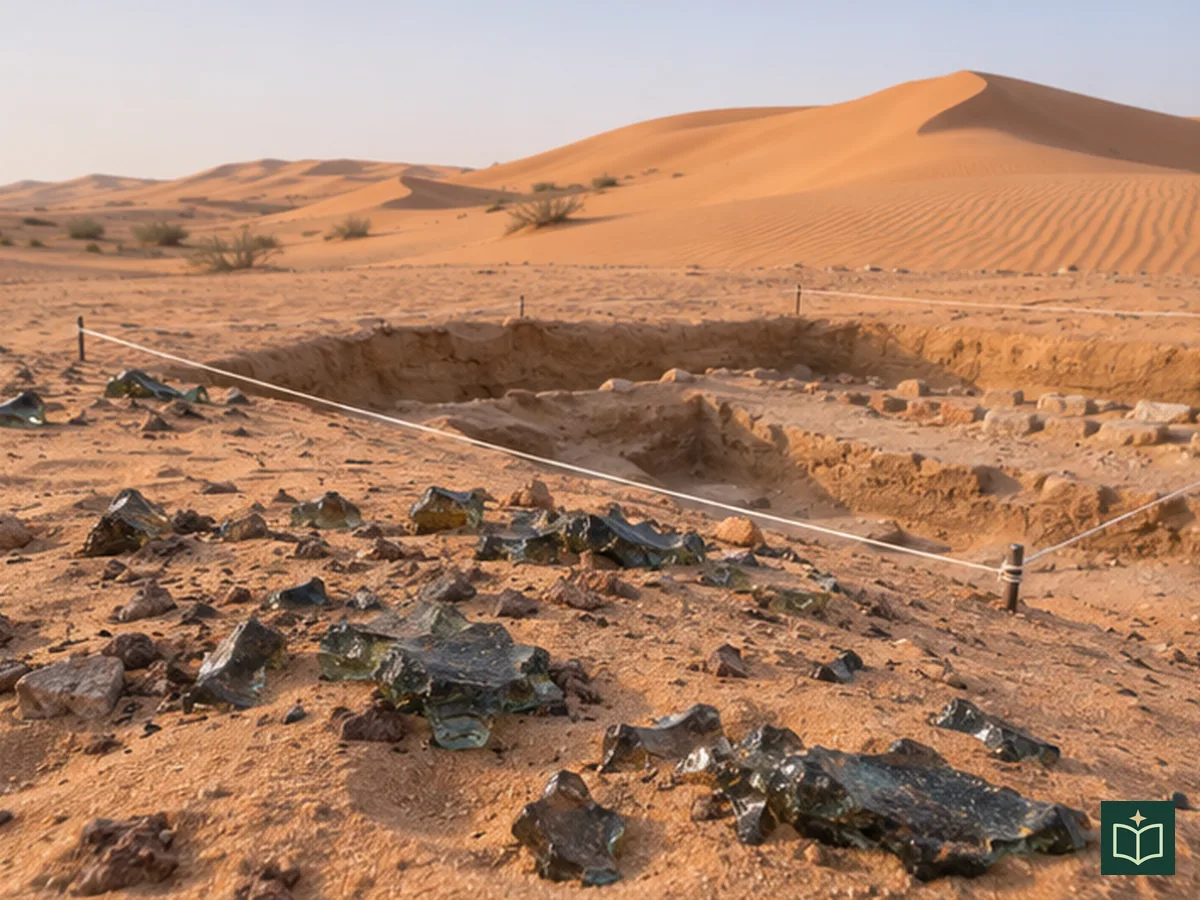
Umm an-Nar is a small island just off Abu Dhabi, now largely occupied by industrial facilities. In 1959 a Danish expedition began excavating low mounds there and found the remains of a Bronze Age settlement and some fifty stone tombs unlike anything known before. Archaeologists later found the same tomb style and pottery across the UAE and northern Oman, so the island's name was given to a whole period, roughly 2600 to 2000 BC. It followed the Hafit period, when people built small beehive-shaped cairns on ridges, and preceded the Wadi Suq period. Umm an-Nar is regarded as the high point of Bronze Age society in south-east Arabia.
How the tombs were built
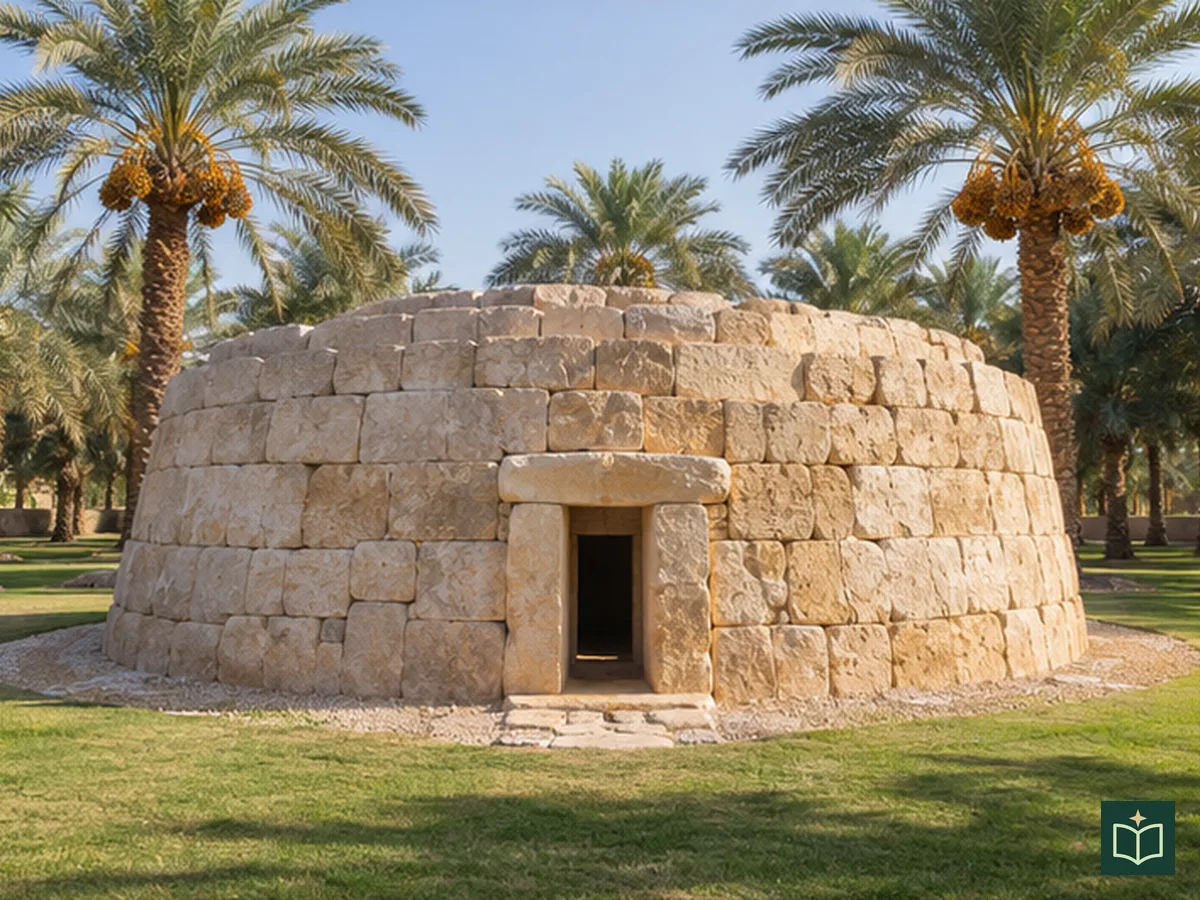
Umm an-Nar tombs are circular, typically between about six and fourteen metres across. Their outer walls were faced with carefully cut and fitted limestone blocks, giving a smooth, rounded finish, while the core was filled with rougher stone. Inside, walls divided the space into several chambers reached through small doorways. Some tombs had two storeys. The most famous example, the Grand Tomb at Hili in Al Ain, has been restored and shows carved reliefs beside its entrances, including human figures and animals such as oryx. Building these tombs required quarrying, transport and skilled masonry, which implies organised communities able to pool labour.
Burial as a shared act
These were collective tombs. Rather than one grave per person, communities placed the dead together in the same structure over generations, sometimes hundreds of individuals in a single tomb. Bones were often moved aside as new burials were added. Grave goods included pottery, beads of carnelian and other stones, copper objects and shell ornaments. Studies of the skeletons point to a varied diet and to hard physical work, as well as to illnesses common in early farming societies. Archaeologists read collective burial as a sign of strong kinship ties: belonging to the group continued after death, and the tomb stood as a visible monument to the community.
Towers, oases and the sea
The people of the Umm an-Nar period lived in settlements built around large round towers of stone or mud brick, often with a well at the centre. Examples survive at Hili in Al Ain and at Bat in Oman, both now UNESCO World Heritage Sites. Inland, they cultivated date palms and cereals with the help of wells. On the coast, as on Umm an-Nar island itself, they fished, hunted dugong and turtle, and gathered shellfish. The towers may have been defensive, storage or status buildings; their exact use is debated. They show a society investing heavily in permanent places at a time when oasis farming was expanding.
A trading crossroads
South-east Arabia was rich in copper from the Hajar mountains, and Mesopotamian texts refer to a copper-producing land called Magan, generally identified with this region. Umm an-Nar sites contain pottery from Mesopotamia and from Iran, and objects linked to the Indus Valley civilisation, including distinctive weights, beads and pottery. Boats carried goods along the Gulf coast between these regions, with Dilmun in Bahrain as another hub. The coast of Abu Dhabi was therefore not remote but part of an exchange network linking some of the world's earliest cities. Imported goods in local tombs show that ordinary communities shared in that trade.
Why it ended and why it matters
Around 2000 BC the Umm an-Nar way of life changed. Tombs became smaller and different in form, settlements shifted, and long-distance trade patterns altered as cities in Mesopotamia and the Indus Valley went through their own upheavals. Archaeologists debate the roles of climate, trade and social change. The legacy is clearest in stone: restored tombs at Hili Archaeological Park and finds in museums in Al Ain and Abu Dhabi let visitors see Bronze Age craftsmanship first-hand. They show that settled, connected societies flourished in the UAE more than four thousand years ago, long before the region's later fame for pearls and oil.
Sources & further reading
- UNESCO · Cultural Sites of Al Ain (Hafit, Hili, Bidaa Bint Saud and Oases Areas) ↗
- UNESCO · Archaeological Sites of Bat, Al-Khutm and Al-Ayn ↗
Figures are rounded and widely published; check the linked organisations for the latest editions. These organisations do not endorse this website.