A heavy metal with a soft side
Bismuth sits next to lead in the periodic table, with atomic number 83, and is nearly as dense. Most heavy metals near it, such as lead, mercury and thallium, are notoriously toxic. Bismuth is the striking exception: its compounds are poorly absorbed by the body and have low toxicity, which has given the metal an unusual career in medicine and consumer goods. It is brittle, pinkish-silver and a poor conductor of heat and electricity. It also expands by about 3% when it freezes, like water, a rare property among metals. And it is the most strongly diamagnetic element, weakly repelled by a magnet.
Why the staircases form
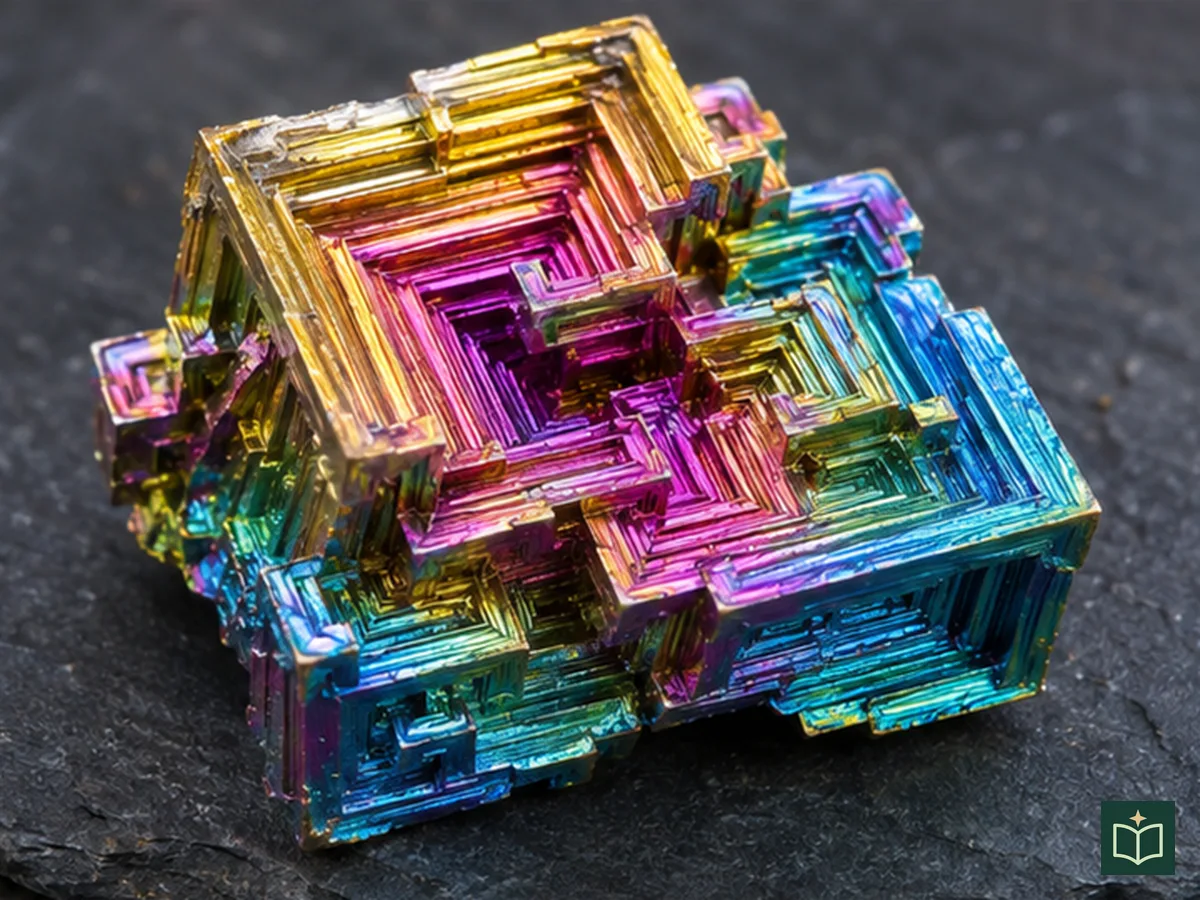
When molten bismuth cools, crystals begin to grow. Bismuth atoms arrange themselves in a regular lattice, and new atoms attach most readily at the edges and corners of a growing crystal, where they are exposed to more of the surrounding melt. The edges therefore race ahead while the centre of each face lags behind. The result is a hopper crystal: a square spiral of stepped terraces around a hollow centre, like a staircase descending into a box. The same effect produces hopper crystals of salt and of some other minerals. Natural bismuth rarely forms such perfect shapes; most of the spectacular specimens on sale are grown in laboratories or workshops.
Colour from a thin film
Freshly broken bismuth is silvery grey. The rainbow colours appear because the hot surface reacts with air to form a very thin layer of bismuth oxide, only tens of nanometres thick. Light reflects both from the top of this layer and from the metal beneath it. The two reflections interfere, reinforcing some wavelengths and cancelling others, so the colour depends on the oxide’s thickness. Thinner films look gold and yellow; thicker ones shift through magenta and blue to green. This is the same physics that colours soap bubbles, oil on a wet road and the blue tint on heat-treated steel screws. No pigment is involved.
Almost, but not quite, stable
For most of the twentieth century bismuth-209, its only natural isotope, was regarded as the heaviest stable atom. In 2003 French researchers detected that it does decay, emitting alpha particles, with a half-life of about 20 billion billion years. That is more than a billion times the age of the universe. The activity is minuscule. A gram of bismuth contains about 2.9 billion trillion atoms, and at that half-life only about 100 of them decay in an entire year. By comparison, the potassium naturally present in an adult human body produces thousands of radioactive decays every second. Bismuth is, for every practical purpose, stable.
Medicines, shot and sprinklers
Bismuth’s low toxicity explains many of its uses. Bismuth subsalicylate is the active ingredient in some familiar pink remedies for upset stomachs and diarrhoea, and can temporarily darken the tongue harmlessly. Other bismuth compounds are used with antibiotics against the stomach bacterium Helicobacter pylori. Because it is dense, about 86% as heavy as lead for the same volume, bismuth replaces lead in shotgun pellets for waterfowl hunting, fishing weights and some solders. Its low melting alloys, some of which melt below 100 °C, act as fuses in fire sprinklers. Bismuth oxychloride gives a pearly shimmer to cosmetics such as eye shadow and nail varnish.
Where bismuth comes from
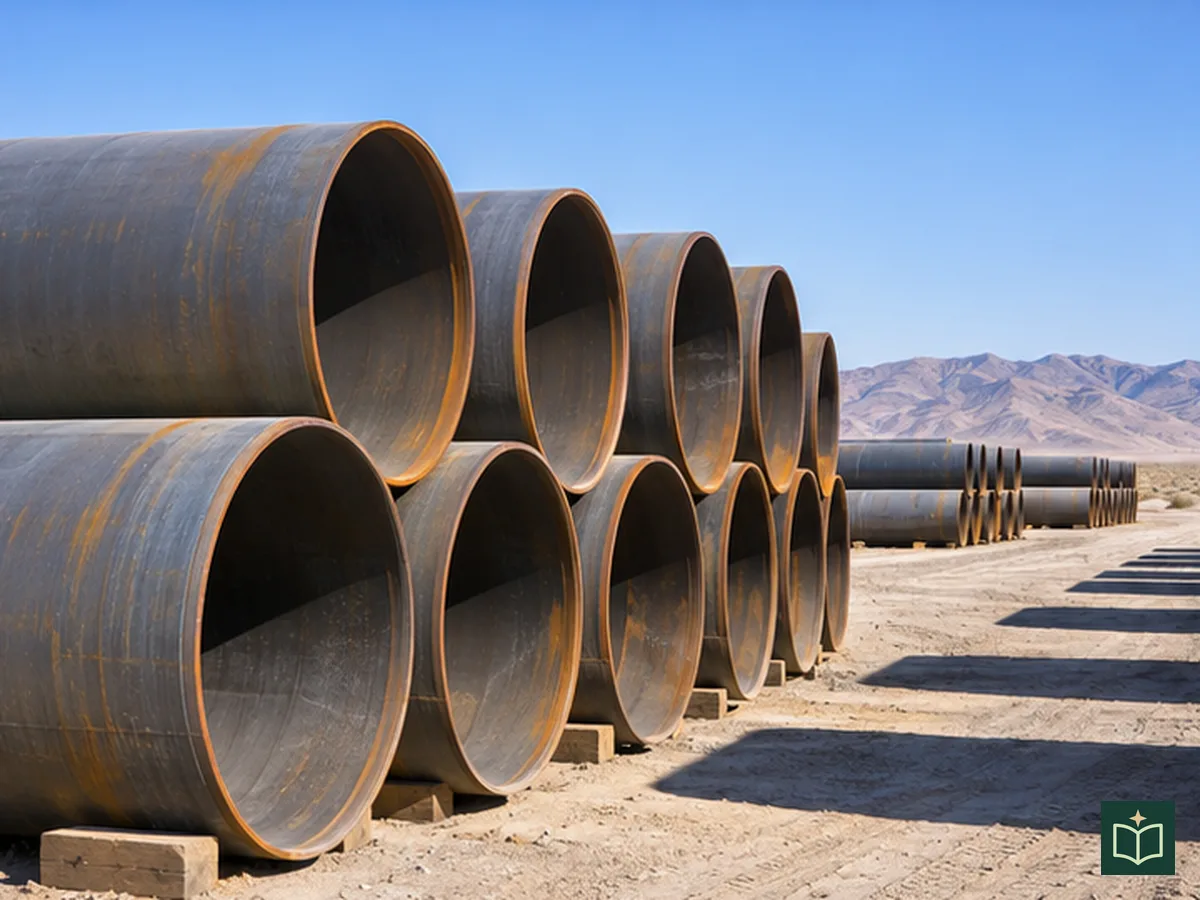
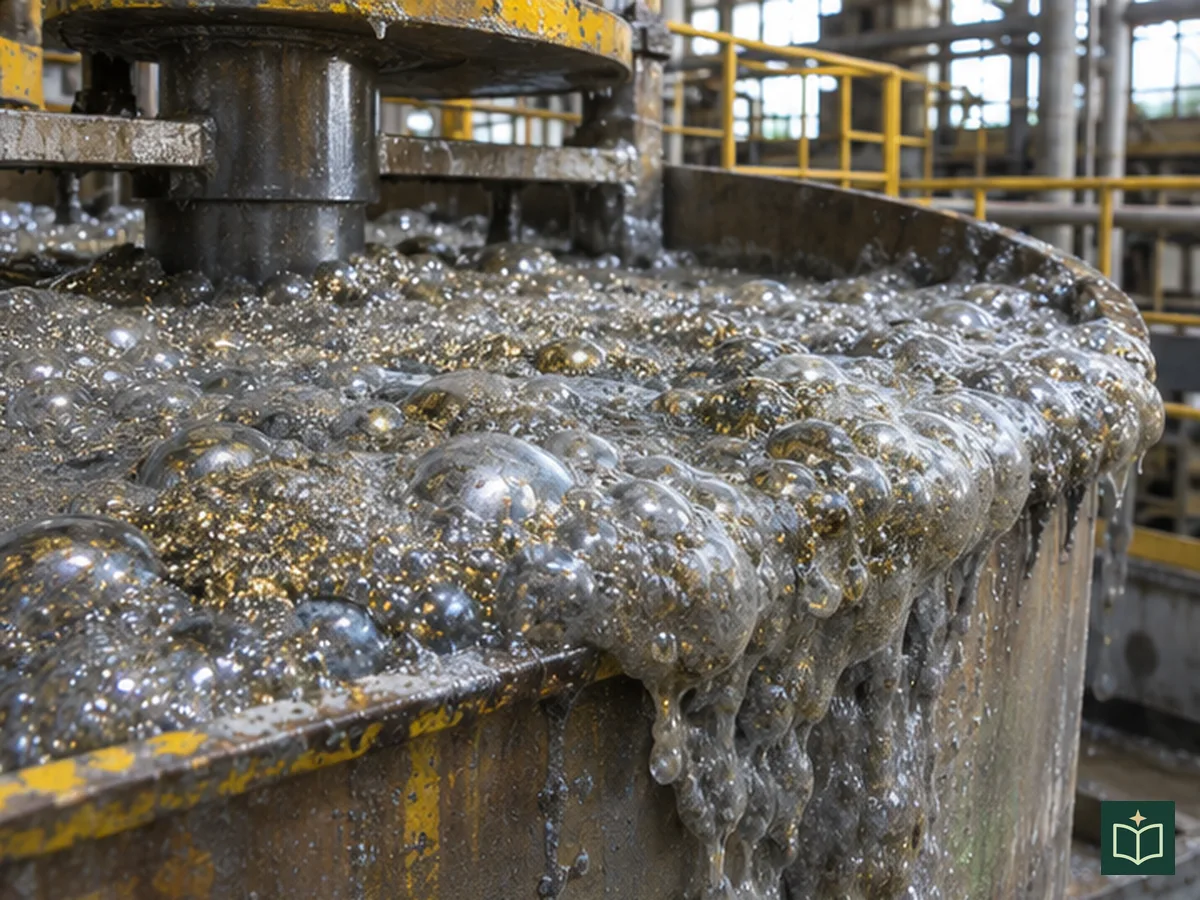
Bismuth is rare in Earth’s crust and is seldom mined for its own sake. Most is recovered as a by-product of refining lead, and also of tungsten, copper and tin, so supply depends on those industries. China is by far the largest producer and refiner. As a minor metal, bismuth trades in a small and opaque market, and its price can swing sharply. Demand is growing modestly as countries restrict lead in plumbing, ammunition and electronics, and as researchers explore bismuth compounds for thermoelectric devices and new medicines. For most people, though, bismuth remains best known as a beautiful crystal on a desk.
Sources & further reading
- Royal Society of Chemistry · Bismuth ↗
- USGS · Bismuth statistics and information ↗
- Britannica · Bismuth ↗
Figures are rounded and widely published; check the linked organisations for the latest editions. These organisations do not endorse this website.