Built for pixels
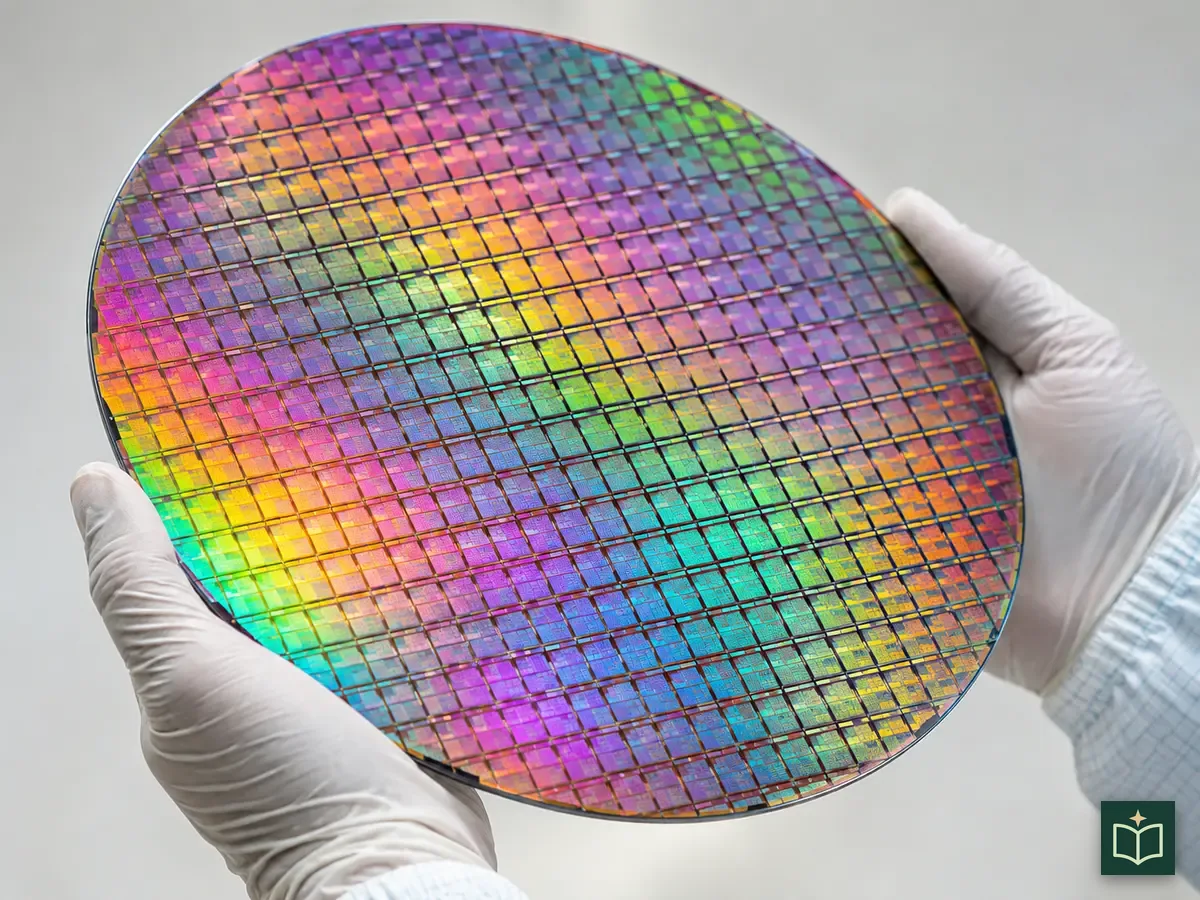
A modern screen has millions of pixels, refreshed dozens of times a second. In a video game, the colour of each pixel depends on lighting, textures and the angle of surfaces, and each can be calculated largely independently of its neighbours. Graphics processing units were designed for exactly this kind of job. Rather than a handful of powerful cores like a CPU, a GPU contains hundreds or thousands of simpler ones that execute the same instruction on different pieces of data. A CPU is like a few expert chefs who can cook anything; a GPU is like a vast kitchen of cooks all chopping onions at once.
The maths underneath AI
Neural networks, the basis of modern artificial intelligence, are built from layers of numbers called weights. Passing information through a layer means multiplying long lists of inputs by large grids of weights and adding the results, an operation known as matrix multiplication. Training a model means repeating this, and the related calculations for adjusting the weights, billions or trillions of times. Each multiplication is easy; the challenge is volume. Because many of these sums do not depend on one another, they can be spread across thousands of cores. That is precisely the shape of work a graphics processor was already good at.
The turning point
In the mid-2000s, chip designers opened GPUs to general programming, letting scientists use them for physics simulations, weather models and other heavy calculations. Researchers in machine learning noticed. In 2012 a neural network for recognising objects in photographs, trained on two graphics cards, beat competing methods in a well-known image-recognition contest by a striking margin. The result persuaded much of the field that large networks trained on GPUs could outperform hand-crafted techniques. Investment followed, and graphics hardware evolved into dedicated AI accelerators with special units for the low-precision arithmetic neural networks tolerate well. Today the largest AI systems are trained on thousands of such chips working together.
Memory is the bottleneck
Raw arithmetic is only half the story. Thousands of cores are useless if they wait for data, so AI chips pair processors with very fast memory stacked close to them, and they are linked together by high-speed connections so that hundreds or thousands of chips can train one model as a team. In practice, how quickly data can be moved often limits performance more than how quickly it can be multiplied. This is why specifications for AI hardware emphasise memory bandwidth and interconnect speeds alongside headline figures for operations per second, and why large training systems resemble tightly wired supercomputers.
Other kinds of accelerator
GPUs are not the only option. Some companies design chips purely for neural-network maths, sometimes called tensor processors. Phones and laptops increasingly include a neural processing unit, a small, power-efficient block for tasks such as blurring video-call backgrounds, transcribing speech or improving photos on the device itself. Each design trades flexibility for efficiency: a general GPU can run many kinds of program, while a specialised chip does fewer things with less energy. The right choice depends on whether the job is training a huge model in a data centre or running a small one on a device in your hand.
Energy and scale
Large AI clusters draw substantial electricity, both to power the chips and to remove their heat, which is why data-centre location, cooling and grid connections have become strategic questions in places investing heavily in AI, including the UAE and Saudi Arabia. Efficiency per chip keeps improving, but demand for computation has grown faster. A common misconception is that a GPU is somehow 'intelligent'. It is a very fast calculator; the capabilities of AI come from the models, data and training methods. Watching how chips, memory and energy supply evolve together is a good way to follow where the technology is heading.
Sources & further reading
Figures are rounded and widely published; check the linked organisations for the latest editions. These organisations do not endorse this website.