Close relatives
Bees and wasps belong to the insect order Hymenoptera, which also includes ants and sawflies. Bees are not a separate branch from wasps; they evolved from a group of predatory wasps roughly 100 million years ago, around the time flowering plants were spreading. The key change was diet. Instead of feeding their larvae on insects, early bees began provisioning them with pollen and nectar. Today there are around 20,000 known bee species and many more wasp species, including tens of thousands of tiny parasitic wasps. Most people picture the honeybee and the yellowjacket, but both groups are far more diverse, and most species of each live solitary lives.
How to tell them apart
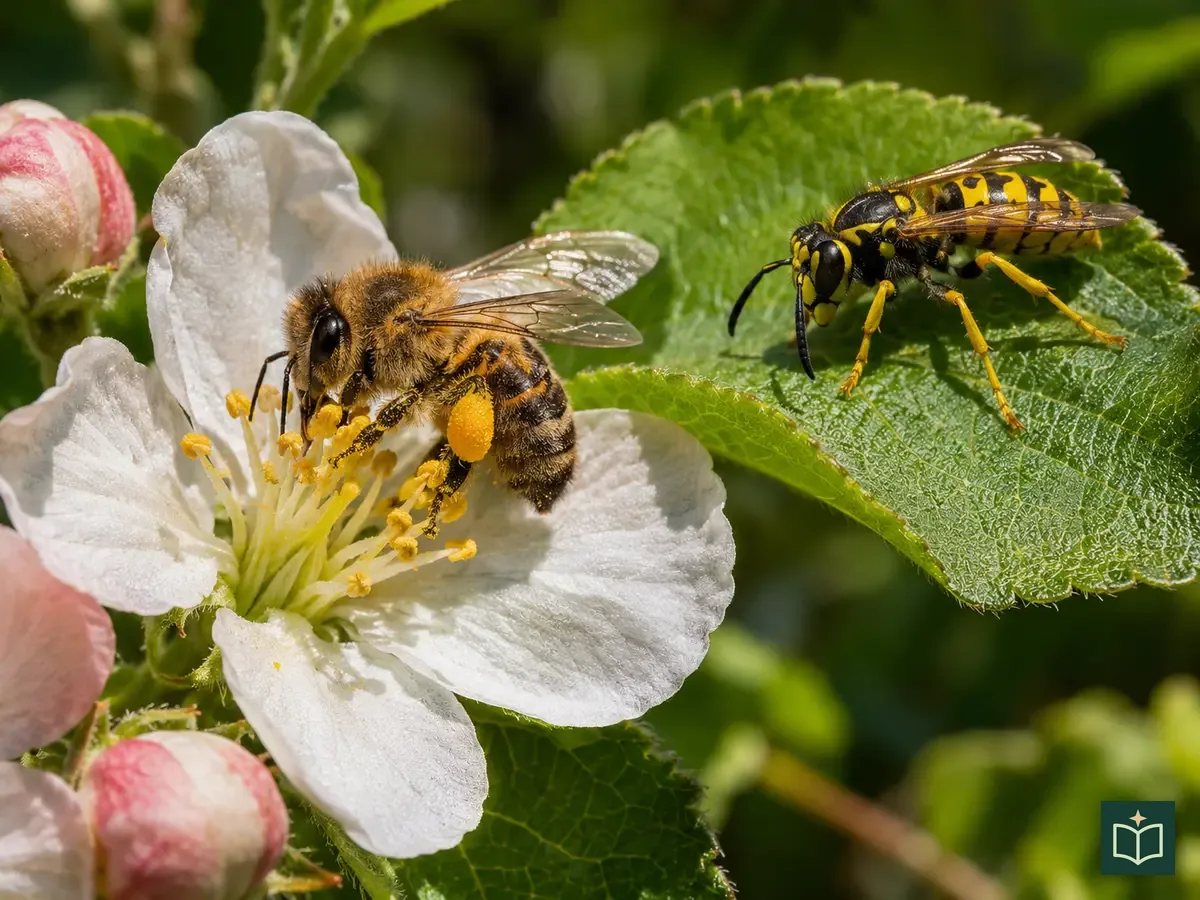
Bees are typically covered in branched hairs that trap pollen, giving them a fuzzy look, and many have broad hind legs with pollen baskets or brushes. Their bodies tend to be rounded. Wasps are usually smoother and shinier, with a narrow, pinched waist between thorax and abdomen, and longer legs that often dangle in flight. Colour is a poor guide, because both groups include yellow-and-black species, and many bees are dark or metallic. Behaviour helps: bees busily visit flowers, while wasps patrol for insects, scavenge meat or sweet food, and investigate picnics. Bees build nests with wax or mud; social wasps chew wood into paper.
Bees and wasps in the Gulf
The Arabian Peninsula has its own bee and wasp fauna adapted to heat and aridity. Beekeeping has a long tradition in the region, and honey from the flowers of the sidr tree, harvested in places such as Yemen and the UAE's mountains, is highly prized. The red dwarf honeybee, Apis florea, which builds a single comb in the open on branches, occurs in parts of the region alongside managed western honeybees. Oriental hornets, large reddish-brown wasps, are common in the UAE and Oman, especially near water and date palms. They can prey on honeybees, which makes them a concern for local beekeepers during the warmer months.
Where they are similar
Bees and wasps share much of their anatomy: four membranous wings linked by tiny hooks, chewing mouthparts, compound eyes and, in females, a sting that evolved from an egg-laying tube. Only females can sting. Both groups include solitary species and highly social ones that live in colonies with a queen and sterile female workers. Both use chemical signals called pheromones to coordinate behaviour, including alarms that can prompt colony members to defend the nest. Both visit flowers for nectar as adults, so both act as pollinators to some degree. And both play important roles in ecosystems, although those roles differ.
Stings and misconceptions
A common belief is that all bees die after stinging. Honeybee workers have barbed stings that usually lodge in mammal skin and tear away, which is fatal to the bee, but most other bees and wasps can sting repeatedly. Another misconception is that wasps are useless. Wasps are important predators of caterpillars, flies and other insects, and parasitic wasps are used in farming to control pests. Most bees and wasps sting only in defence, especially near their nests. For most people a sting is painful but not dangerous, but anyone with signs of a severe allergic reaction needs urgent medical help.
Why it matters
Bees are vital pollinators of many crops and wild plants, and declines in some bee populations, linked to habitat loss, pesticides, parasites and climate change, have raised concern worldwide. The Food and Agriculture Organization of the United Nations highlights pollinators' importance to food security and biodiversity. Wasps contribute to natural pest control and also pollinate some plants, including figs, which depend entirely on tiny fig wasps. Telling the two apart helps people respond calmly, protect beneficial insects and avoid destroying nests unnecessarily. Simple measures, such as planting native flowering plants and limiting pesticide use, support both groups in gardens and farms.
Sources & further reading
Figures are rounded and widely published; check the linked organisations for the latest editions. These organisations do not endorse this website.