Square towers on the skyline
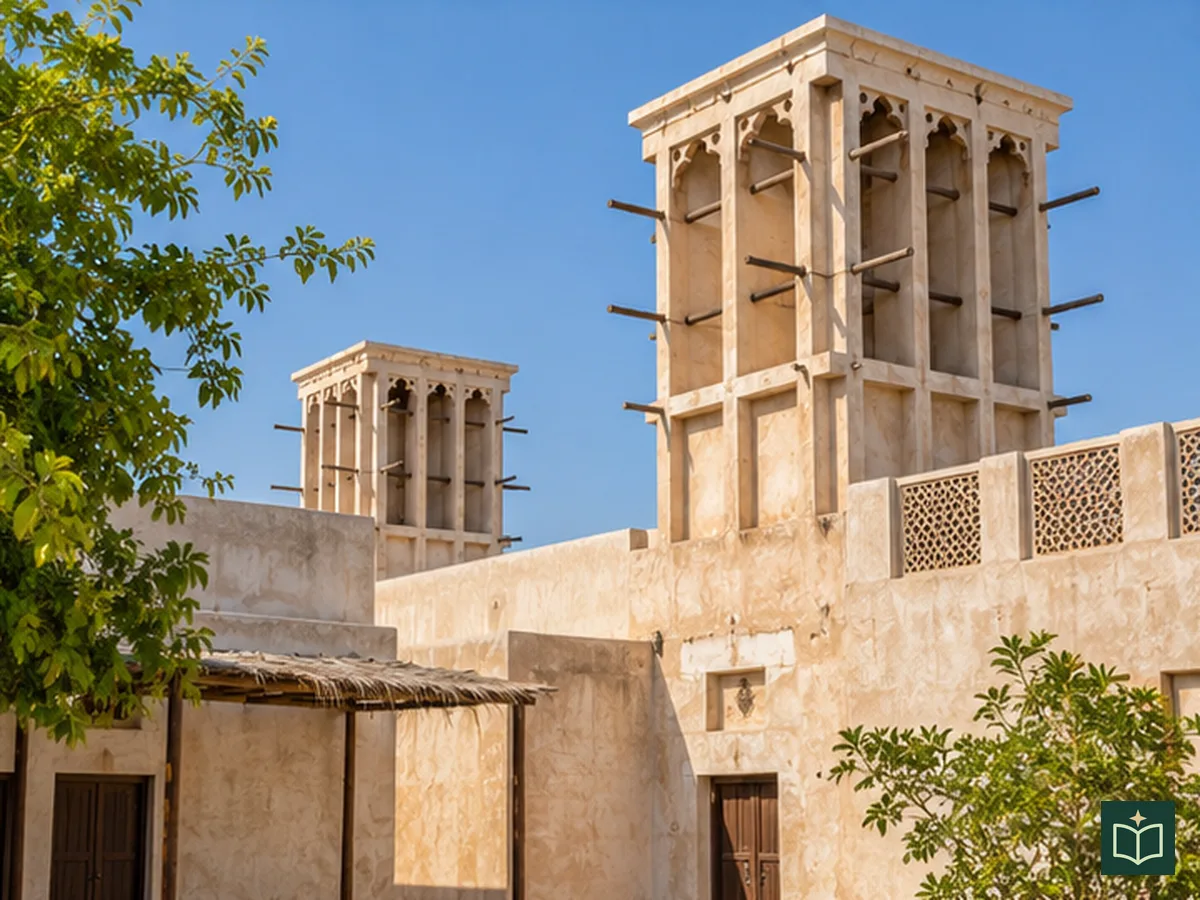
Walk through the Al Fahidi Historical Neighbourhood beside Dubai Creek, once known as Bastakiya, and square towers rise above the low coral-stone houses. These are barjeel, wind towers, the traditional air conditioners of the Gulf. Many of the merchants who built here in the late nineteenth and early twentieth centuries came from Bastak and other towns on the Iranian coast, where wind catchers, called badgir in Persian, were long established. The idea spread around the Gulf's trading ports, from Bahrain to Ras Al Khaimah. A barjeel was a mark of wealth as well as comfort, built of coral stone and gypsum plaster, sometimes with ornate wooden screens on top.
How the tower catches air
A typical barjeel stands several metres above the roof, open on all four sides near the top. Inside, two diagonal walls cross to divide the shaft into four triangular channels. Whichever way the wind blows, it strikes one face, builds up slight pressure and is pushed down that channel into the room beneath. The tower reaches above surrounding roofs because wind speeds increase with height and the air there is less dusty. The force involved is small but steady. Dynamic pressure rises with the square of wind speed, so a 4 metres-per-second breeze gives about half of 1.2 times 16, or roughly 10 pascals: enough to move a lot of air gently.
The exhaust side
Air pushed into a room must leave. On the downwind sides of the tower, wind flowing past the openings creates lower pressure, which draws air up and out of the other channels. Warm air inside the house also rises naturally, a process called the stack effect, and escapes through the tower. The room is therefore flushed with a continuous flow. Even when the air is warm, moving air feels cooler, because it speeds evaporation of sweat from the skin. On still days, the stack effect alone keeps some air moving. Courtyards, thick walls and small windows worked alongside the tower to keep heat out in the first place.
Cooling with water
Builders could add evaporative cooling. Damp cloths hung in the shaft, or porous clay jars of water placed beneath the opening, cooled the incoming air as some of the water evaporated, drawing heat from it. This works best in dry air, which is why the technique is most effective inland, for instance in Iran's Yazd. On the humid Gulf coast in summer, the gain is smaller, because the air is already close to saturation. Here the barjeel's main benefit is ventilation: replacing stuffy, heated indoor air and creating a breeze across people sleeping or resting below. Accounts suggest the rooms felt noticeably more comfortable, though not cold.
Limits and myths
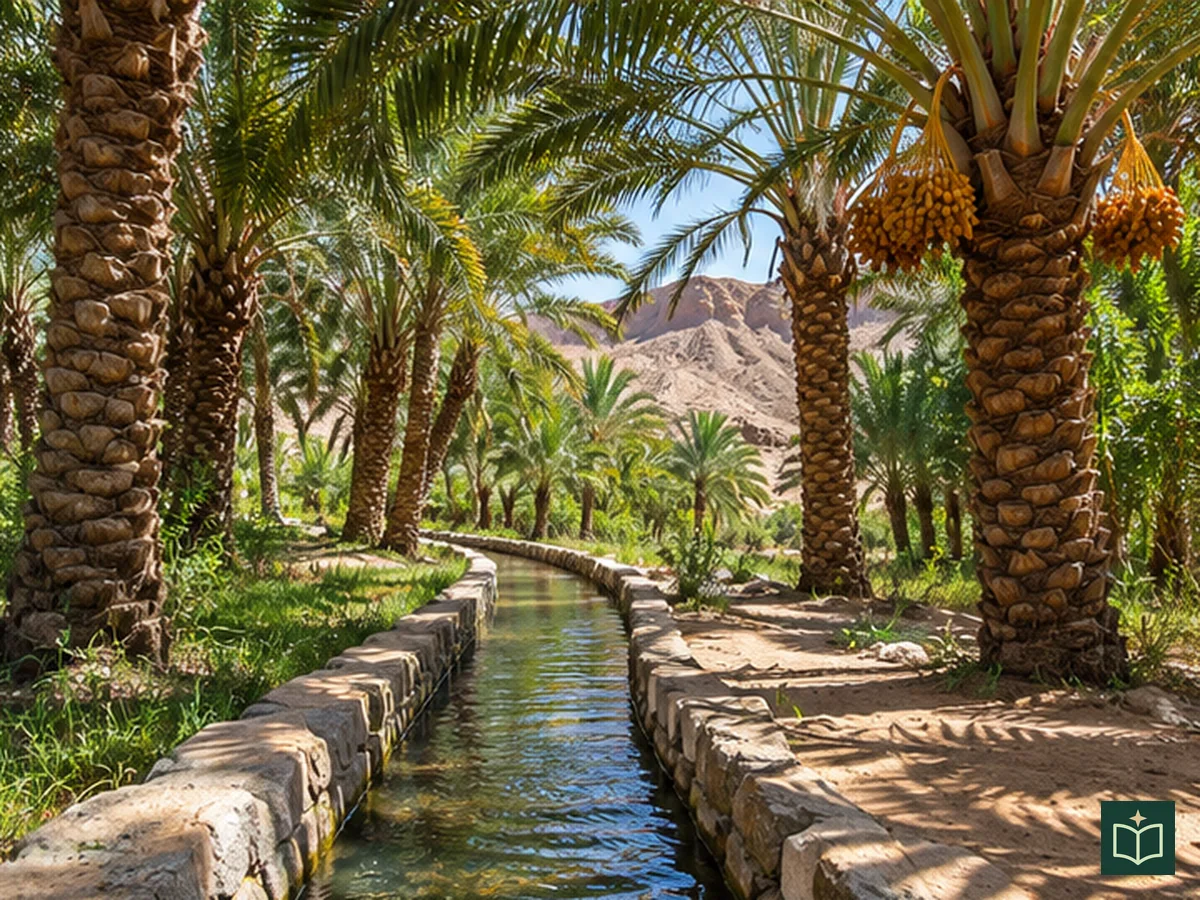
Wind towers are sometimes described as ancient air conditioners that dropped temperatures dramatically. That overstates them. They cannot cool air below the outdoor temperature without water, and in Gulf summers, when the outdoor air itself is above body temperature, ventilation brings limited relief. Many families moved to cooler date gardens or the mountains in the hottest months, while others slept on rooftops. Barjeel worked best during the warm shoulder seasons and on breezy days. They also brought in dust and insects, which is why openings were often screened. Their real achievement was making houses liveable for most of the year using only the wind and careful design.
The idea returns
Air conditioning arrived in the Gulf from the mid-twentieth century and made wind towers obsolete in most homes. Yet their principles have returned in modern sustainable design. Architects now study natural ventilation, shading and thermal mass to cut the energy used for cooling, which accounts for a large share of electricity demand in the region. Masdar City in Abu Dhabi includes a modern wind tower that draws breezes into a public square, and wind-catcher motifs appear on many contemporary Gulf buildings. In Al Fahidi, restored towers now house galleries, cafés and small hotels. They remain one of the clearest examples of how local climate shaped Gulf architecture.
Sources & further reading
Figures are rounded and widely published; check the linked organisations for the latest editions. These organisations do not endorse this website.