A traveller's warning
The name comes from Lakota and French-Canadian descriptions of land that was 'bad to cross': no water, little shelter and slopes that turn to slick mud after rain. Famous examples include Badlands National Park in South Dakota, Alberta's Dinosaur Provincial Park, and parts of Spain, Italy and New Zealand.
How badlands form
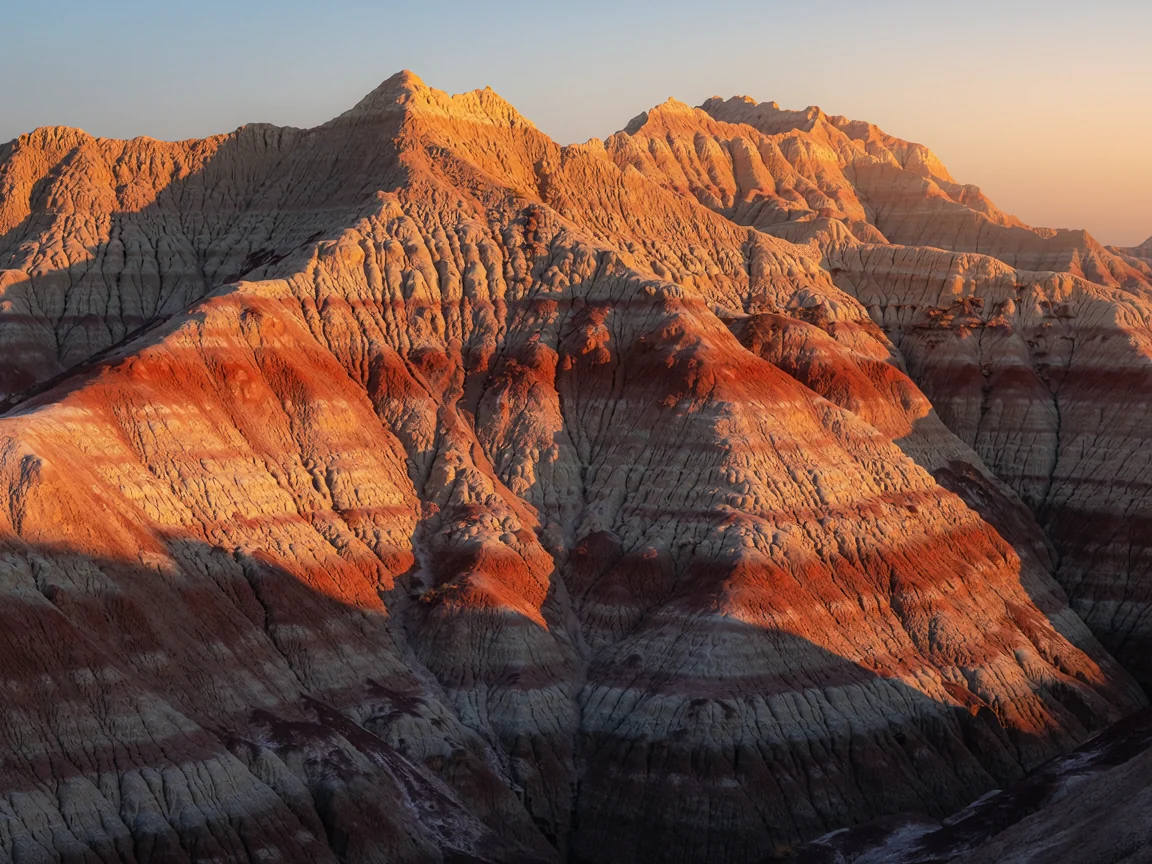
They develop where soft, fine-grained rocks such as mudstone, shale and volcanic ash lie near the surface in a dry climate. With little vegetation to protect the ground, rare but intense rainstorms wash sediment away quickly, carving gullies, sharp ridges, pinnacles and pipes.
Stripes of time
Many badlands are banded in red, yellow, grey and white. Each layer formed under different conditions—river floodplains, ancient seas or falls of volcanic ash—and iron and other minerals tint them. Reading the layers lets geologists reconstruct environments from millions of years ago.
Fossil treasure
Because badlands erode quickly, they continually uncover fossils. Alberta's badlands are among the richest dinosaur fossil sites in the world, and South Dakota's preserve ancient mammals such as early horses and rhinoceroses. Rules protect fossils in many parks, so visitors should report finds rather than collect them.
Sources & further reading
Erosion rates are approximate and vary by location. Photograph: original AI-generated illustration (Adobe Firefly). Reference organisations do not endorse this website.