A salamander that never grows up
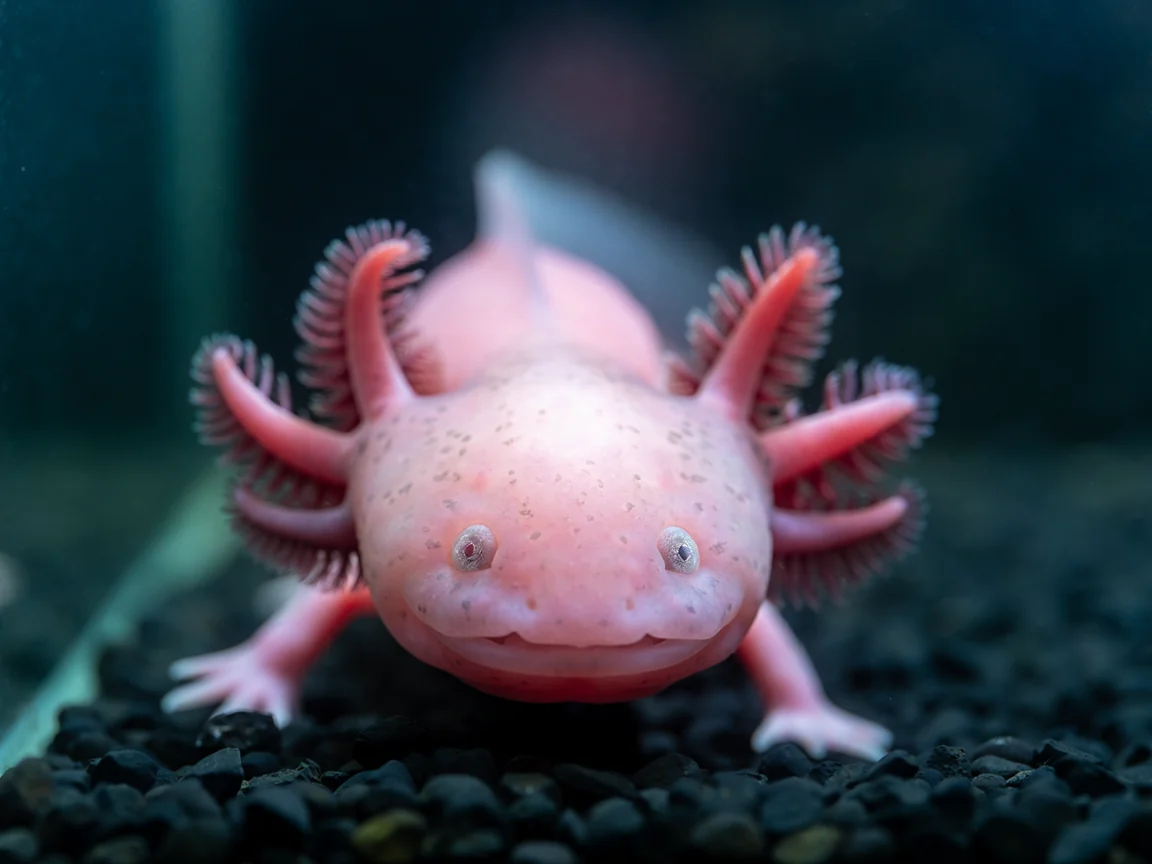
The axolotl keeps its juvenile features, such as feathery external gills, throughout its life, a condition called neoteny. It lives entirely in water. In the wild it is critically endangered, surviving mainly in the remnants of Lake Xochimilco near Mexico City, while millions live in laboratories and aquariums worldwide.
The blastema
When an axolotl loses a limb, skin quickly covers the wound. Underneath, cells lose their specialised identities and form a mass called a blastema. These cells multiply and then re-specialise into bone, muscle, cartilage, nerves and blood vessels, rebuilding the limb in the correct shape and size.
No scar
In humans, wounds heal by forming scar tissue, which seals the injury but does not restore function. Axolotls largely avoid scarring. Immune cells called macrophages appear to be essential: when researchers removed them, axolotls formed scars instead of regenerating.
Why scientists care
The axolotl's genome, sequenced in 2018, is about ten times the size of a human's. Researchers are searching it for the genes and signals that allow regeneration, hoping to learn how to improve healing after injuries, heart attacks or spinal damage in people.
Sources & further reading
Regeneration abilities vary with the animal's age and the injury. Photograph: original AI-generated illustration (Adobe Firefly). Reference organisations do not endorse this website.