A desert along the Pacific
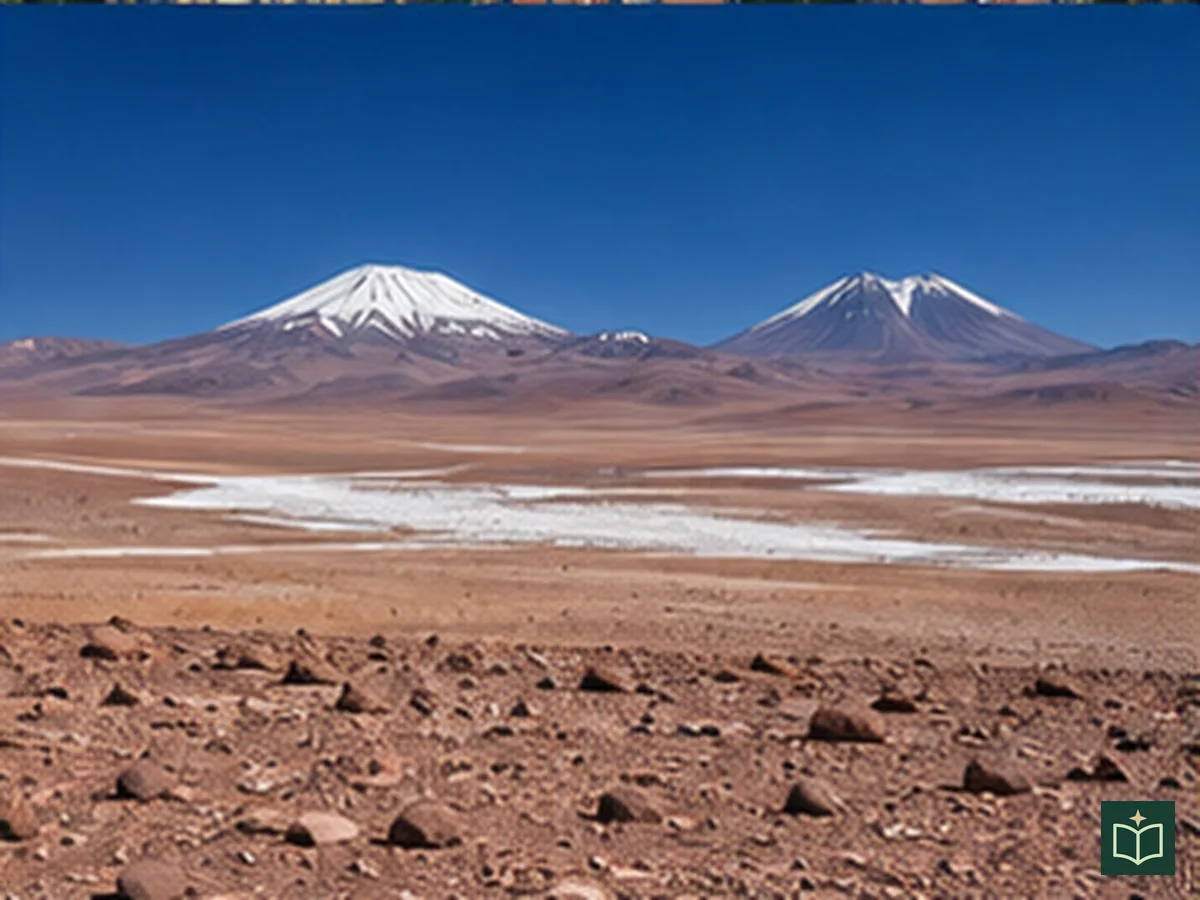
The Atacama runs for roughly 1,000 kilometres along the Pacific coast of northern Chile, between the ocean and the high Andes, and edges into Peru, Bolivia and Argentina. It is a land of salt flats, gravel plains and volcanoes rather than sand seas. Its core is the driest non-polar place on Earth: some areas receive only a few millimetres of rain in a decade. Only the dry valleys of Antarctica are comparable. Yet the Atacama is not especially hot. Coastal towns such as Antofagasta and Arica have mild, cloudy weather much of the year, a clue to why it stays so dry.
Sinking air and a cold sea
The first lock is the atmosphere. The Atacama lies under the South Pacific high, a zone of high pressure where air descends from aloft and warms as it sinks, which suppresses cloud. The second lock is the Humboldt Current, which carries cold water north along the coast, helped by upwelling from the deep. The cold sea chills the lowest layer of air, while warmer air sits above it. That temperature inversion acts like a lid: low cloud and fog form beneath it, but air cannot rise high enough to build rain clouds. Moisture is trapped near the coast instead of falling as rain.
The Andes close the door
The third lock is the mountains. Moist air from the Amazon basin moves westwards towards the Andes, but as it rises over peaks more than 6,000 metres high, it cools and drops its rain on the eastern slopes. By the time it descends towards the Pacific side, little moisture is left, a classic rain shadow. A lower range, the Coastal Cordillera, also helps block what moisture the ocean supplies. Together these factors mean rain clouds rarely get a chance to form, and they have done so for millions of years, making the Atacama one of the oldest continuously dry deserts on Earth.
Life on fog
Where the coastal fog, known locally as camanchaca, presses against hills, it creates islands of life called lomas, with cacti, flowering plants and lichens that live on condensed droplets. Communities have hung large mesh nets on ridges to catch fog for drinking water and small gardens. Inland, beyond the fog's reach, parts of the desert are almost lifeless: soil microbes are scarce, and researchers have used the area to test instruments designed to search for life on Mars. In rare wetter years, often linked to El Niño, seeds that have waited in the soil burst into bloom in an event called the desierto florido.
Minerals and telescopes
Dryness has shaped the Atacama's economy. With no rain to wash them away, salts and minerals accumulate. In the nineteenth century sodium nitrate, prized for fertiliser and explosives, made the region strategically valuable, and the War of the Pacific of 1879–1884 transferred much of it to Chile. Today the desert holds some of the world's largest copper mines and lithium-rich brines beneath salt flats such as the Salar de Atacama. Its clear, dry, stable air also attracts astronomers. Major observatories, including the European Southern Observatory's Very Large Telescope and the ALMA radio array, sit on high plateaus where water vapour is unusually low.
Myths and what to watch
Claims that some Atacama stations have never recorded a drop of rain are often repeated, but records are patchy, and rain does fall occasionally. In 2015, intense storms brought deadly floods and mudflows to towns that rarely see rain at all, because dry, bare ground absorbs little water. Scientists watch these rare events closely, along with changes in coastal fog and in groundwater, which mining and farming draw on heavily. The Atacama shows that deserts are not defined by heat but by the lack of rain, and that a coastline beside the ocean can be among the driest places on the planet.
Sources & further reading
Figures are rounded and widely published; check the linked organisations for the latest editions. These organisations do not endorse this website.