Abundant but elusive
Aluminium is the most abundant metal in Earth’s crust, making up about 8% of it by weight, yet it was once more prized than silver. The reason is chemistry. Aluminium binds tightly to oxygen and is never found as native metal, so early chemists could isolate only small amounts through costly reactions. In the mid-nineteenth century, aluminium was a luxury material; the French emperor Napoleon III is often said to have reserved aluminium tableware for his most honoured guests. In 1884, a small aluminium pyramid was placed at the top of the Washington Monument, then a striking display of a rare metal. Within a few years, a new process changed everything.
From bauxite to alumina
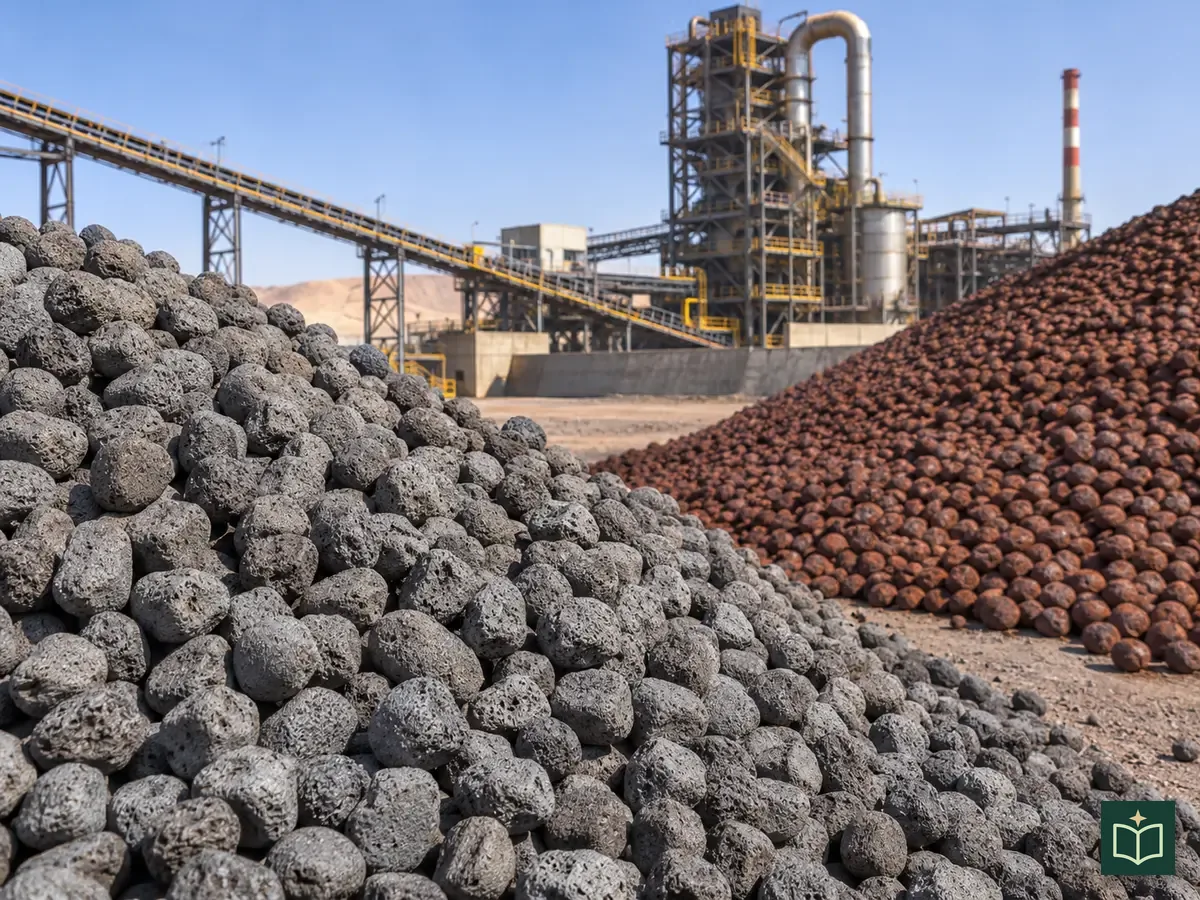
The main ore of aluminium is bauxite, a reddish rock formed by intense tropical weathering, mined in large quantities in Australia, Guinea, China, Brazil and elsewhere. The first step is the Bayer process, patented in 1888, which dissolves the aluminium-bearing minerals in hot caustic soda, leaving impurities behind as a red residue. The aluminium is then precipitated and heated to produce alumina, a fine white powder of aluminium oxide. As a rough rule of thumb, about four to five tonnes of bauxite yield two tonnes of alumina, which in turn produce one tonne of aluminium. Managing the red residue safely is one of the industry’s major environmental challenges.
The electric smelter
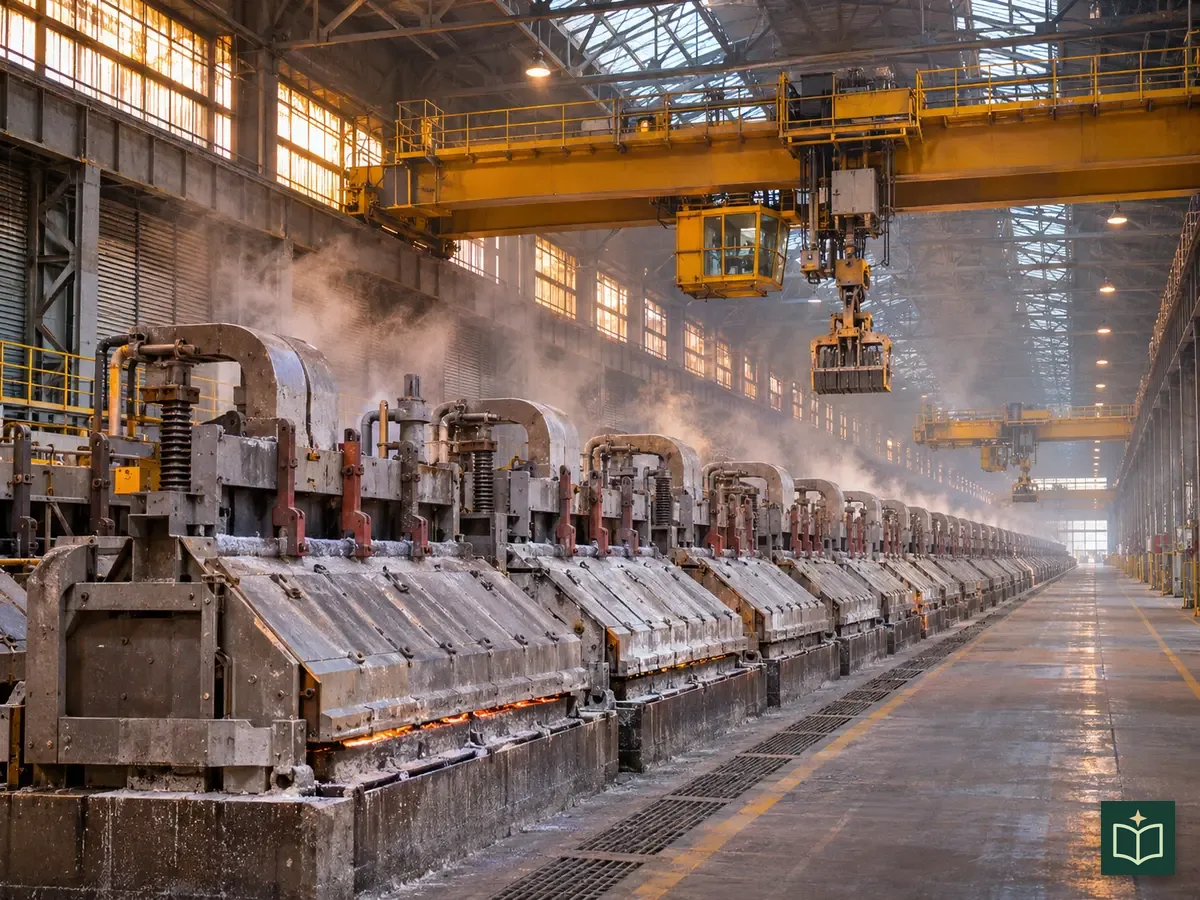
In 1886, Charles Martin Hall and Paul Héroult independently discovered how to make aluminium by electrolysis. Alumina is dissolved in molten cryolite, a fluoride salt, at around 950 °C, inside long rows of steel cells lined with carbon. Huge direct currents pass through the bath, splitting alumina so that aluminium collects as a liquid at the bottom, while oxygen combines with carbon anodes, releasing carbon dioxide. The process runs continuously, and cells must be kept hot day and night. It is extremely electricity-intensive: producing a tonne of aluminium typically requires on the order of 14 to 15 megawatt-hours, which is why smelters seek large, reliable and affordable power supplies.
The Gulf’s aluminium belt
Abundant natural gas for power generation helped make the Gulf a major aluminium region. Bahrain’s Alba began production in 1971, and Dubai Aluminium followed in 1979. From 2013, Dubai Aluminium and Abu Dhabi’s Emal were combined to form Emirates Global Aluminium, which operates large smelters at Jebel Ali and Al Taweelah and is among the world’s largest producers. Saudi Arabia, Qatar and Oman also host major smelters. Together, Gulf producers supply a significant share of the world’s primary aluminium, much of it exported to manufacturers in Asia, Europe and the Americas. The industry also supports local downstream businesses that turn the metal into extrusions, cables and other products.
Recycling’s enormous advantage
Because so much energy goes into breaking the bond between aluminium and oxygen, recycling is unusually beneficial. Remelting scrap uses only about 5% of the energy needed to produce primary aluminium from bauxite, and aluminium can be recycled repeatedly without losing its essential properties. A large share of all the aluminium ever produced is thought to remain in use today, in buildings, cables, vehicles and other products. Drinks cans are the most familiar example: in efficient systems, a used can may be collected, remelted and returned to a shelf as a new can within a couple of months. Separating different alloys remains a challenge, since mixed scrap limits what it can become.
Why aluminium matters
Aluminium combines low density, about a third that of steel, with good strength in alloys, corrosion resistance and high conductivity. Those qualities make it central to aircraft, cars, packaging, window frames, power lines and, increasingly, solar panel frames and electric vehicle bodies. China produces more than half of the world’s primary aluminium, much of it historically powered by coal, which makes the industry a significant source of greenhouse gas emissions. Producers are therefore exploring lower-carbon electricity, including solar power in the UAE, and inert anodes that would release oxygen instead of carbon dioxide. Aluminium’s story is, in the end, a story about energy, and how it is generated.
Sources & further reading
Figures are rounded and widely published; check the linked organisations for the latest editions. These organisations do not endorse this website.