Why ice is dangerous
A wing works because air flows smoothly over its carefully shaped surface. Frost or ice only as rough as coarse sandpaper can disrupt that airflow, reduce lift and increase drag, raising the speed at which the wing stalls. Ice can also jam control surfaces or block sensors.
The clean-aircraft rule
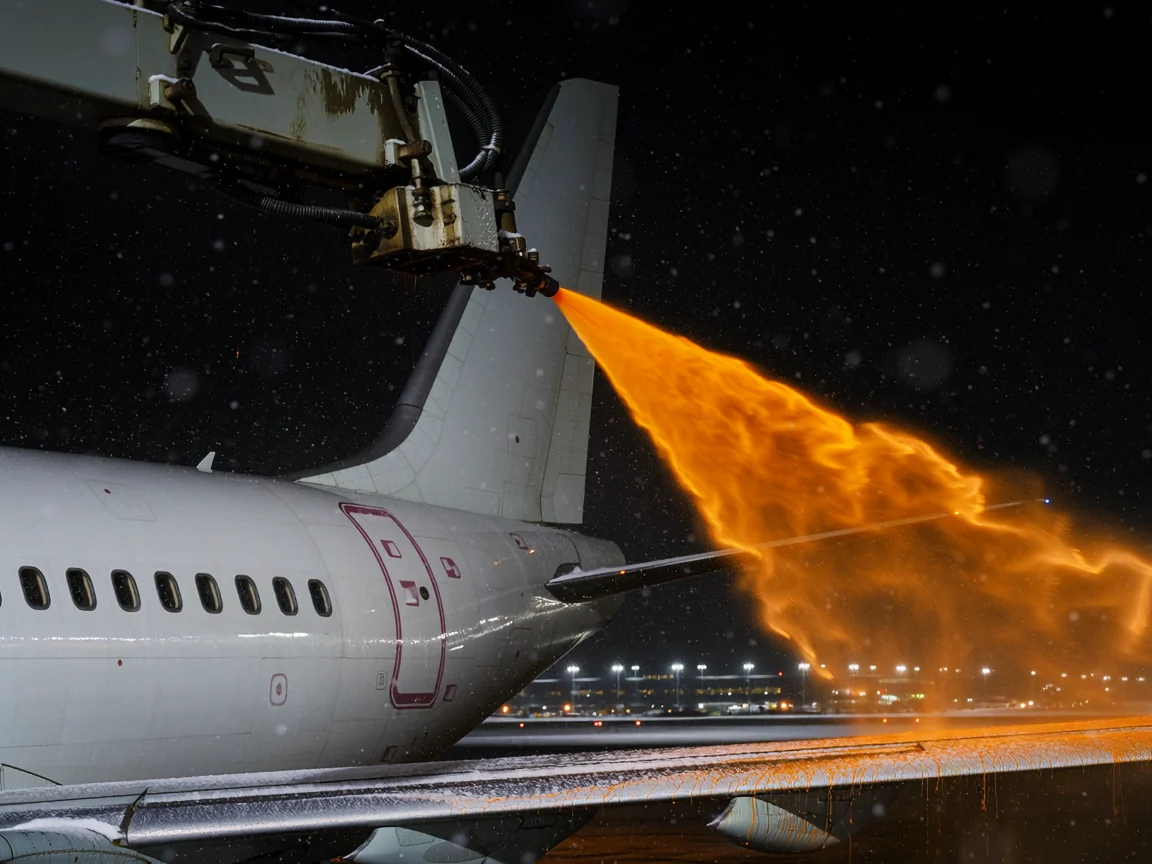
Aviation regulations require that critical surfaces be free of frost, ice and snow before take-off. In winter weather, airports operate de-icing pads or stands where specialised trucks spray aircraft just before departure, while flight crews and ground teams inspect the wings.
Two fluids
De-icing uses heated, diluted glycol, often dyed orange, to melt and wash away contamination. Anti-icing follows with a thicker fluid, often green, that clings to the surface and absorbs falling snow without freezing. It shears off as the aircraft accelerates down the runway.
Racing the clock
Each fluid has a holdover time: how long it protects the wing in given conditions. If the aircraft cannot take off within that window, it must be treated again. Airports collect used glycol where possible because it can harm waterways. In flight, aircraft use heated wing edges or inflatable boots to deal with icing.
Sources & further reading
Fluid colours are typical conventions; procedures vary by operator. Photograph: original AI-generated illustration (Adobe Firefly). Reference organisations do not endorse this website.