Shadows and hours
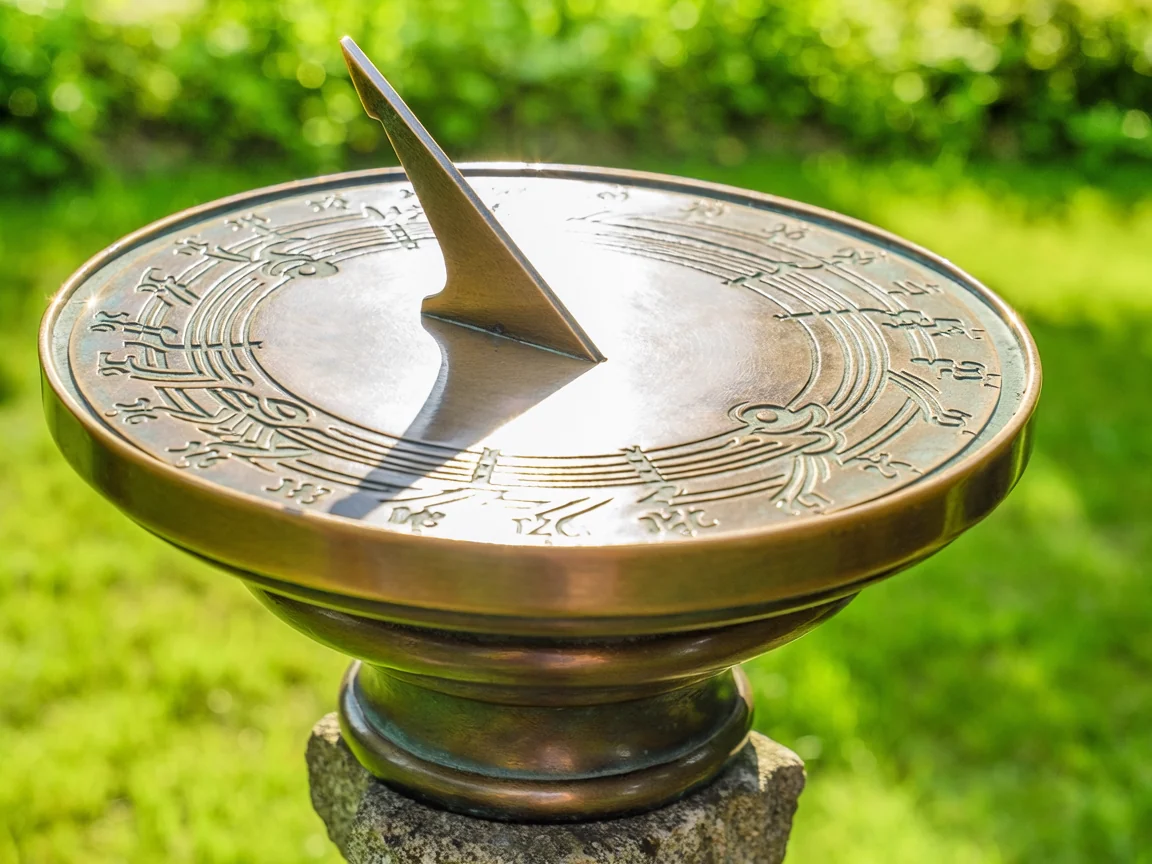
Ancient Egyptians used shadow clocks over 3,000 years ago, and sundials appear in Babylon, Greece, China and Rome. A simple vertical stick, the gnomon, casts a shadow that shortens towards noon and lengthens again. Marking where the shadow fell divided daylight into hours.
The tilted gnomon
Medieval Islamic astronomers and later European makers realised that a gnomon parallel to Earth's axis—tilted at an angle equal to the local latitude—makes the hours equal throughout the year. That insight turned sundials into reliable instruments and led to elaborate dials on mosques, churches and public squares.
Solar time versus clock time
A sundial shows apparent solar time: noon is when the Sun is highest. Because Earth's orbit is elliptical and its axis tilted, solar noon drifts through the year by up to about 16 minutes compared with an evenly running clock. Tables called the equation of time let users correct the reading.
Replaced, not forgotten
Mechanical clocks and later railway time zones made sundials obsolete for daily use, but they were long used to check and set clocks. Today they decorate gardens and buildings and remain a beautiful demonstration of Earth's rotation. A sundial even travelled to Mars on NASA's rovers to help calibrate cameras.
Sources & further reading
Equation-of-time values are approximate. Photograph: original AI-generated illustration (Adobe Firefly). Reference organisations do not endorse this website.