Why sorting matters
Recycling begins long before materials are melted or pulped. First, mixed waste must be separated into clean streams of paper, cardboard, different plastics, glass, aluminium and steel. If a bale of plastic bottles is contaminated with food cartons or the wrong type of plastic, it is worth less and may even be rejected. Good sorting therefore decides whether recycling makes economic sense. Traditionally, much of this work has been done by people standing along fast-moving conveyor belts.
A tough job for humans
Manual sorting is repetitive, tiring and sometimes unsafe. Workers must make quick decisions about thousands of items an hour, while dealing with dust, noise, sharp objects and unpleasant smells. Many recycling plants struggle to hire and keep staff. Even skilled sorters cannot keep pace with large volumes, so some recyclable material is missed and ends up in landfill. That combination of hard work and lost value has encouraged plants to automate.
How the AI sees
AI sorting systems use cameras, and often hyperspectral or near-infrared sensors, mounted above the conveyor. The cameras capture images of every item as it passes. A neural network, trained on millions of labelled pictures of waste, recognises objects by shape, colour, texture, labels and how they reflect light. It can tell a clear drinks bottle from a food tray, a juice carton from a cereal box, or an aluminium can from a steel tin, even when items are crushed or dirty.
Robots and air jets
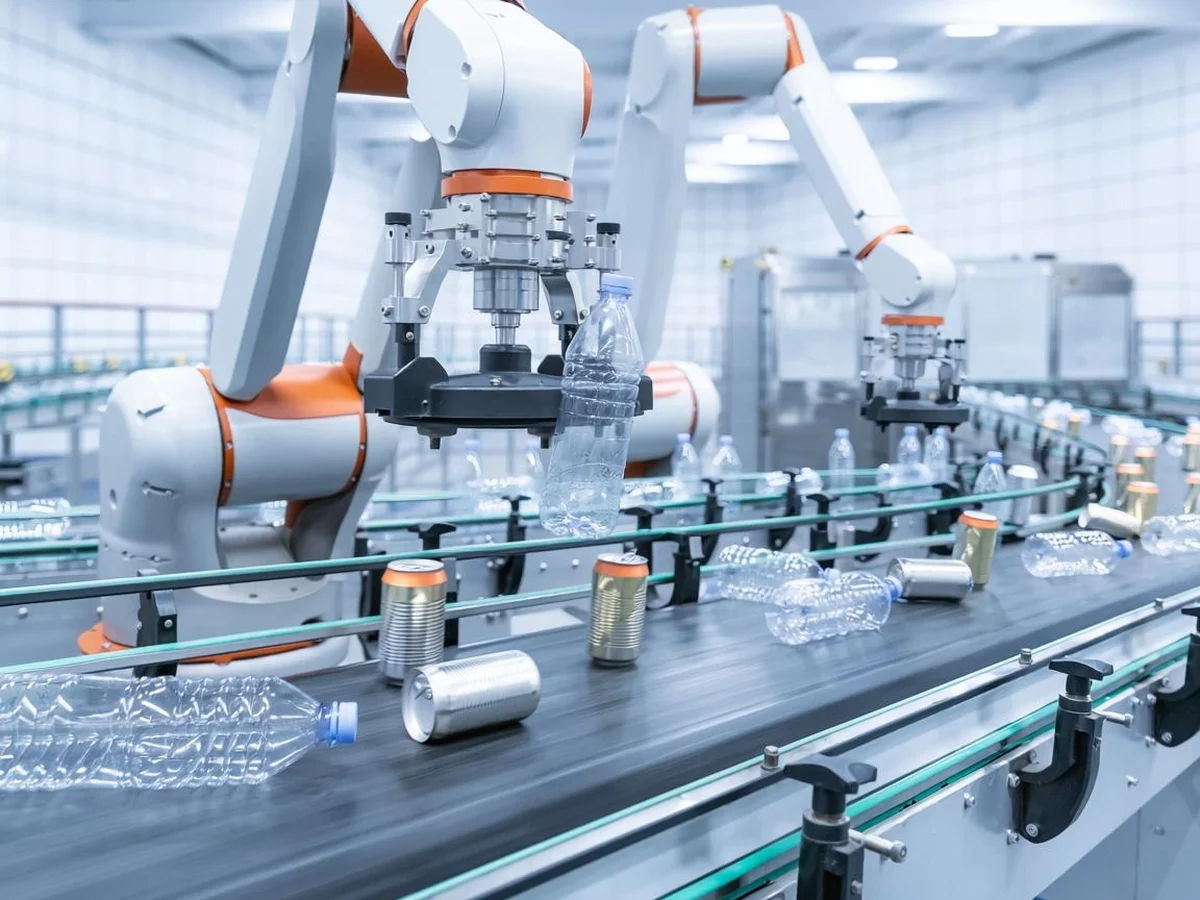
Once the AI identifies an item, the system decides where it should go. Robotic arms with suction cups can pick targeted items off the belt and drop them into chutes, making dozens of picks a minute and working around the clock. Optical sorters use a different trick: a row of precise air jets fires short bursts that knock selected items off the end of the belt into a separate stream. Many plants combine both approaches with magnets and screens.
Learning on the job
Unlike older machines programmed with fixed rules, AI systems keep improving. Each plant sees slightly different waste, and packaging changes constantly as brands launch new products. AI vendors collect images from many facilities and retrain their models to recognise new items. Some systems also act as data tools, counting every object that passes and reporting what is in the waste stream, which helps plant managers and cities understand where recycling is working and where it is not.
Beyond household waste
AI sorting is spreading to other materials. Construction and demolition waste can be sorted into wood, concrete, metals and plastics. Electronic waste plants use vision to identify circuit boards and batteries, which must be removed carefully because damaged lithium-ion cells can cause fires. Textile recyclers are testing systems that recognise fabric types such as cotton and polyester, which is essential if old clothes are to be turned into new fibres.
The limits
Better sorting cannot solve every problem. Some packaging is made of mixed layers that are hard to recycle whatever the sorting method. Markets for recycled materials rise and fall, affecting whether sorted material can be sold. AI systems are also expensive to install, and smaller plants may struggle to afford them. Experts stress that reducing waste, designing packaging for recycling and clear labelling for consumers are just as important as smarter machines.
Recycling in the UAE
The UAE has been investing in waste management and recycling as part of its sustainability goals. Large facilities, including waste-to-energy plants in Dubai and Sharjah, aim to divert waste from landfill, and municipalities run separate collection schemes in many communities. Modern material recovery facilities in the region use automated sorting equipment. As AI sorting becomes cheaper, it could help raise recycling rates and supply cleaner materials for local manufacturing.
What you can do
The smartest robot still works better when people help. Rinse food containers, keep recyclables dry and loose rather than in tied bags, and follow local guidance on what goes in each bin. Avoid wishful recycling, putting in items you hope are recyclable, because these can contaminate a whole load. Choosing products with less packaging, or packaging made from a single material, also makes life easier for both human and robotic sorters.
Sources & further reading
- UNEP · Global Waste Management Outlook 2024 ↗
- Wikipedia · Materials recovery facility ↗
- Wikipedia · Optical sorting ↗
General information; equipment speeds and recycling rates vary between facilities. Photograph: original AI-generated illustration (Adobe Firefly). Reference organisations do not endorse this website.