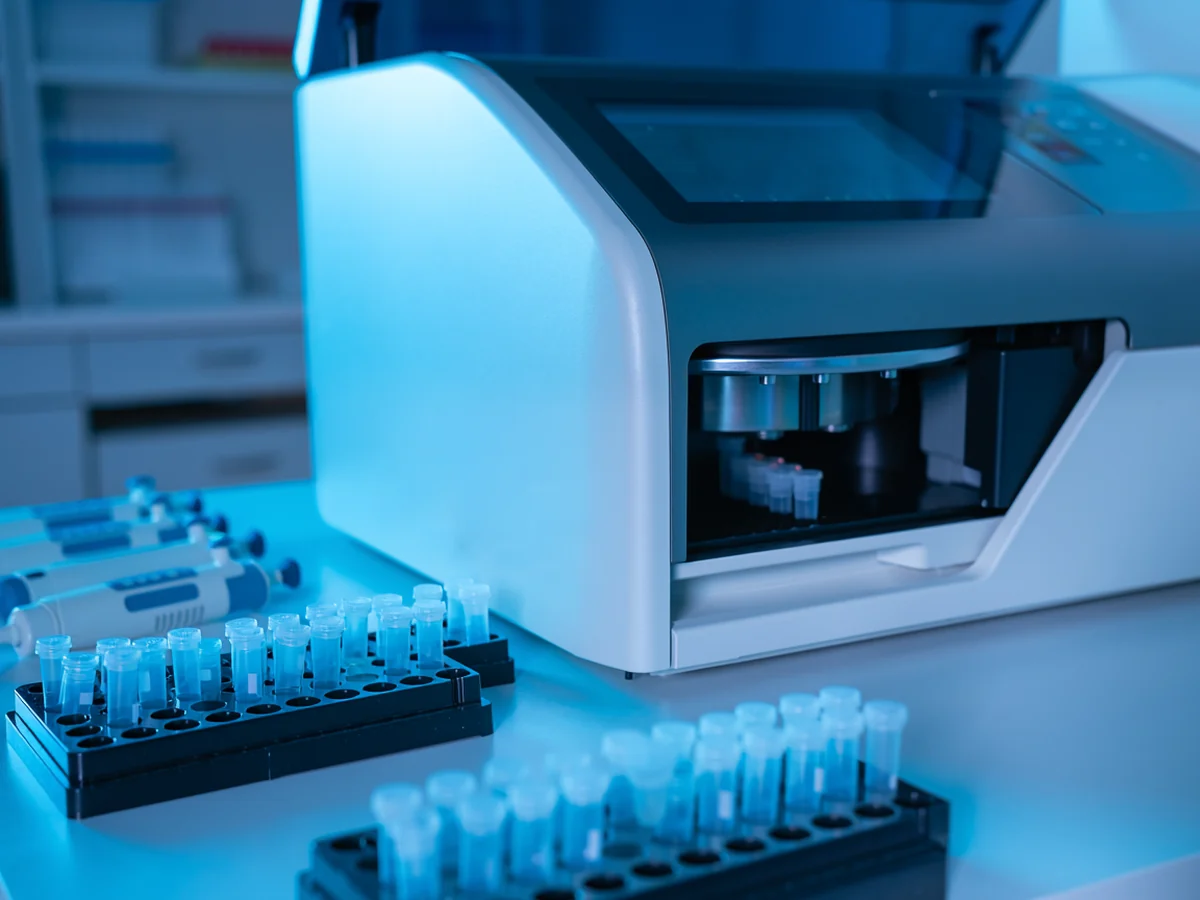
The book of life
The human genome contains about three billion DNA letters, known as bases. Any two people differ at millions of positions. Most of these variants are harmless, but some cause or increase the risk of diseases such as cancers, heart conditions and rare genetic disorders. Since the Human Genome Project was completed in 2003, the cost of sequencing a genome has fallen from billions of dollars to a few hundred, making genetic testing far more common.
The interpretation problem
Sequencing a genome is now relatively easy; interpreting it is hard. When a patient's DNA reveals a rare variant, doctors often cannot tell whether it causes their illness. Such findings are labelled variants of uncertain significance, which can leave patients and families without clear answers. Laboratory experiments to test each variant are slow and expensive, so scientists have turned to computational methods, and increasingly AI, to predict which variants matter.
Reading DNA more accurately
Sequencing machines produce millions of short fragments of DNA that must be pieced together and compared with a reference genome, a process that produces errors. In 2017, Google released DeepVariant, which treats the task of identifying genetic variants as an image recognition problem, using deep learning to distinguish true variants from sequencing errors. It achieved high accuracy in international benchmarks and is widely used in research and clinical genomics.
AlphaMissense
Missense variants change a single letter in a gene so that one amino acid in a protein is swapped for another. Some swaps are harmless; others disrupt the protein and cause disease. In September 2023, Google DeepMind published AlphaMissense in the journal Science. Building on its AlphaFold protein structure technology, it analysed all 71 million possible missense variants in human proteins and classified 89% as likely pathogenic or likely benign, compared with 0.1% that had been confirmed by human experts.
Beyond genes
Only about 2% of the genome codes for proteins. The rest includes regions that control when and where genes are switched on, and variants there can also cause disease. In 2025, Google DeepMind introduced AlphaGenome, an AI model that predicts how variants in long stretches of DNA, up to a million letters, affect gene regulation and other molecular processes. Such tools could help explain how non-coding variants contribute to diseases including cancers.
Faster diagnoses for children
AI is helping diagnose rare genetic diseases, especially in critically ill newborns. Rapid genome sequencing combined with automated analysis can identify a genetic cause within days, allowing doctors to choose the right treatment. Some hospitals have reported diagnoses in less than a day using AI-assisted pipelines. For families who have spent years searching for answers, known as a diagnostic odyssey, a diagnosis can be life-changing even when no cure exists.
Cancer genomics
In cancer, AI analyses the mutations in tumours to help match patients with targeted therapies and clinical trials. It can detect fragments of tumour DNA in blood samples, an approach called liquid biopsy, which is being developed for early cancer detection and monitoring. AI also helps predict which patients are likely to respond to immunotherapy. These advances are part of precision oncology, in which treatment is tailored to the genetic features of each patient's cancer.
The Emirati Genome Programme
The UAE launched the Emirati Genome Programme in 2021 to sequence the genomes of its citizens and build a national genetic database. Led by Abu Dhabi's health authorities with technology partners, it has collected samples from hundreds of thousands of Emiratis. The aim is to support preventive and personalised healthcare, identify genetic risks common in the population and advance research. AI tools are central to analysing the enormous volumes of data involved.
Privacy and ethics
Genetic data is deeply personal: it reveals information about a person's health risks and their relatives. Large genomic databases raise questions about consent, security, data sharing and potential misuse, for example by insurers or employers. Many countries have laws protecting genetic data. AI predictions about variants are also probabilistic, so they must be communicated carefully by doctors and genetic counsellors, and confirmed with other evidence before major medical decisions.
Why it matters
Genomics promises medicine tailored to each person's DNA, but that promise depends on understanding what the genome's variations mean. AI is accelerating that understanding, helping diagnose rare diseases, guide cancer treatment and identify people at higher risk of illness. As sequencing becomes routine and AI models improve, genetic information could become a standard part of healthcare, provided it is used responsibly and fairly.
Sources & further reading
- Science · Accurate proteome-wide missense variant effect prediction with AlphaMissense (2023) ↗
- Google DeepMind · AlphaGenome: AI for better understanding the genome (2025) ↗
- Nature Biotechnology · A universal SNP and small-indel variant caller using deep neural networks (DeepVariant, 2018) ↗
This is general information, not medical advice. Genetic test results should be discussed with a doctor or genetic counsellor. Photograph: original AI-generated illustration (Adobe Firefly). Reference organisations do not endorse this website.