Common problems, easy to miss
Tooth decay and gum disease are among the most common health conditions in the world. The World Health Organization estimates that oral diseases affect close to 3.5 billion people. Dentists rely on visual examinations and X-rays to find problems, but early cavities between teeth, small infections and subtle bone loss can be hard to see, especially at the end of a busy day. Different dentists may also interpret the same X-ray differently.
How dental AI works
Dental AI systems are trained on large collections of X-rays labelled by experienced dentists, learning to recognise the appearance of decay, bone loss, infections, existing fillings and other features. When a dentist takes new X-rays, the software analyses them within seconds and overlays coloured markings on areas of concern. The dentist then reviews the findings, confirms or rejects them and decides on treatment.
Regulatory clearance
In 2022, the US Food and Drug Administration cleared AI software from companies including Overjet and Pearl to help detect tooth decay on dental X-rays. Further clearances followed for features such as measuring bone levels and identifying other conditions. Clearance requires companies to show evidence that the software performs safely and helps dentists, typically through studies comparing dentists' accuracy with and without AI assistance.
Benefits for patients
Studies submitted for regulatory clearance and published research have reported that dentists using AI detected more cavities, particularly early ones, without a large increase in false alarms. Finding decay early means simpler, cheaper treatment, such as a small filling instead of a root canal. AI overlays also help dentists explain problems to patients, who often find it hard to see what the dentist sees on a grey X-ray image.
Consistency and quality
Dental practices and insurers use AI to improve consistency, checking that diagnoses and treatments are supported by X-ray evidence. Some insurers use AI to review claims, which can speed up approvals but has also raised concerns among dentists about automated denials. Dental schools use AI tools in training, helping students learn to read X-rays. Large dental groups use AI to monitor quality across many clinics.
Planning treatment
Beyond detection, AI helps plan treatments. Three-dimensional scans can be analysed to map teeth, bone and nerves before implant surgery or orthodontic treatment. AI-assisted software designs crowns and aligners, and some systems predict how teeth will move during orthodontic treatment. Digital workflows, from intraoral scanners to 3D printing, are increasingly common in modern dental clinics, including in the UAE.
Limitations
AI can miss problems or flag healthy areas, so dentists must review its findings carefully rather than accepting them automatically. Performance can depend on the quality of X-rays and the type of equipment, and tools trained mainly on data from one population may perform differently elsewhere. Some patients and dentists worry that AI could encourage unnecessary treatment if findings are not interpreted carefully. Professional judgment remains essential, and dentists remain responsible for every diagnosis.
Radiation and access
AI does not increase the number of X-rays needed; it analyses the images dentists already take. In places with few dentists, AI could help general health workers screen for dental problems and refer patients appropriately, though such uses require evaluation. Teledentistry, in which images are reviewed remotely, combined with AI, could help extend dental care to underserved communities, including remote areas and care homes.
What patients can do
Patients can ask their dentist whether they use AI tools and how they interpret the results. Regular check-ups, brushing twice a day with fluoride toothpaste, cleaning between teeth and limiting sugary food and drinks remain the best ways to prevent dental problems. If a dentist recommends treatment based on X-ray findings, patients can ask to see the images and have the findings explained.
Why it matters
Oral health affects overall health, comfort and quality of life, and untreated dental disease is a major global burden. AI tools that help dentists catch problems earlier and explain them clearly can improve care and reduce costs. Dentistry also illustrates a broader pattern in medical AI: the most successful tools support professionals in routine tasks, helping them work more accurately rather than replacing their expertise.
Sources & further reading
- World Health Organization · Oral health fact sheet ↗
- American Dental Association · Artificial intelligence in dentistry ↗
- US FDA · Artificial intelligence-enabled medical devices ↗
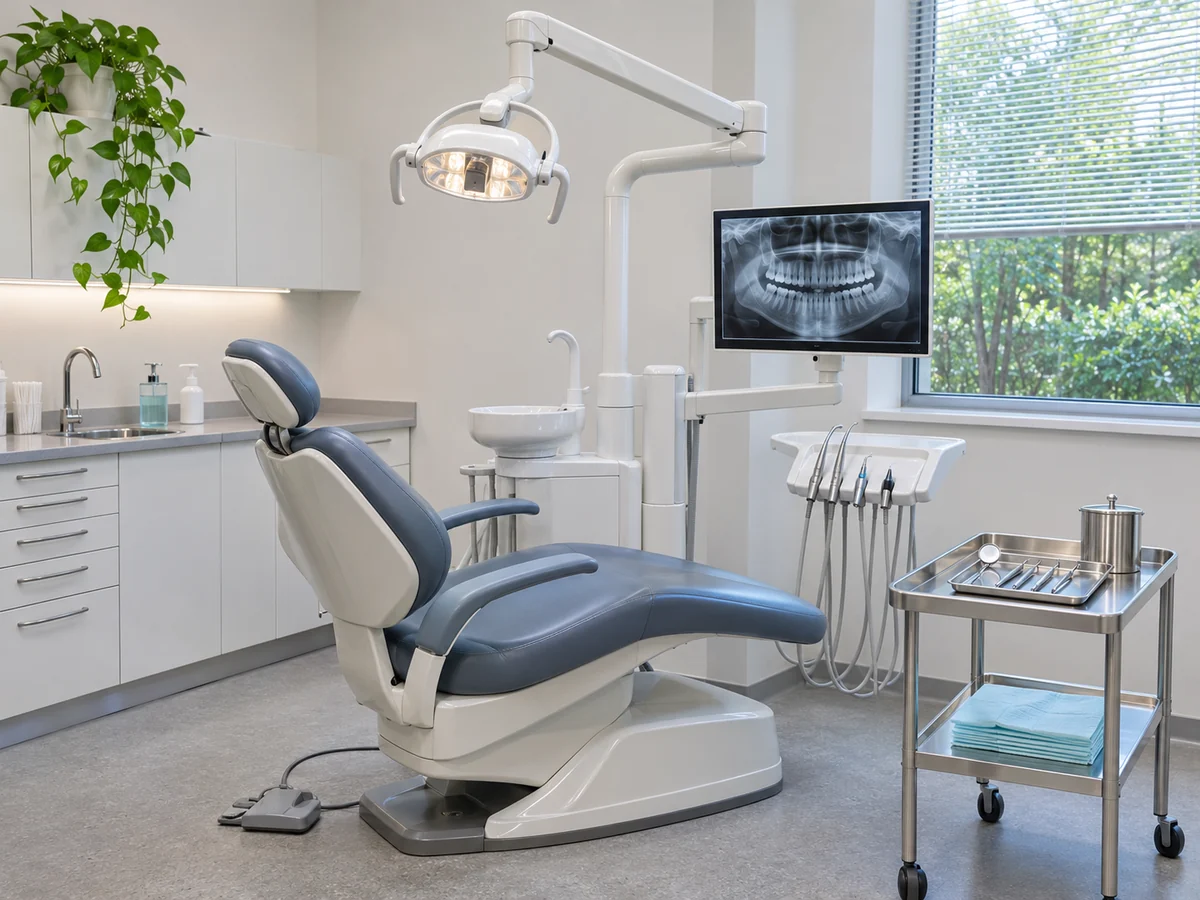
This is general information, not medical advice. Photograph: original AI-generated illustration (Adobe Firefly). Reference organisations do not endorse this website.