Background
On 23 January 2025, shortly after taking office, President Donald Trump signed an executive order titled Removing Barriers to American Leadership in Artificial Intelligence, which revoked a 2023 executive order on AI issued by the previous administration and directed officials to produce an AI action plan within 180 days. The resulting plan, Winning the AI Race: America's AI Action Plan, was released on 23 July 2025, alongside three related executive orders.
Accelerating innovation
The first pillar focuses on removing what the administration regards as unnecessary barriers to AI development. It directs agencies to review and revise regulations that may hinder AI, encourages the development of open-source and open-weight models, supports regulatory sandboxes where companies can test AI in sectors such as healthcare, and promotes the adoption of AI across federal agencies. It also calls for investment in AI-enabled science and in evaluating AI systems.
Building infrastructure
The second pillar addresses the physical needs of AI: data centres, electricity and semiconductor factories. It calls for streamlining environmental permitting for data centres and power projects, expanding the electricity grid and supporting chip manufacturing in the United States. It also emphasises training workers, such as electricians and technicians, needed to build and operate this infrastructure, and improving the security of AI systems.
Leading internationally
The third pillar aims to spread American AI technology abroad and strengthen national security. One accompanying executive order directed the creation of a programme to export full-stack American AI packages, including chips, models, software and standards, to allies and partners. The plan also calls for stronger enforcement of export controls on advanced chips and for countering the influence of adversaries in international standards bodies.
Ideological neutrality
Another executive order required that federal agencies procure only large language models that are truthful and ideologically neutral, as defined by the administration, with guidance on implementation to follow. The administration said this would ensure AI used by the government does not reflect political bias. Critics argued that the requirement was vague and could pressure companies to shape their models' outputs to suit the government.
Supporters' view
Supporters, including many technology companies and industry groups, welcomed the plan's focus on speeding up infrastructure, reducing regulatory uncertainty and promoting American AI abroad. They argued that the United States must move quickly to stay ahead of China and that excessive regulation could slow innovation. Energy and construction industries welcomed measures to accelerate permitting for power plants and transmission lines.
Critics' view
Critics, including some civil rights organisations, AI safety researchers and environmental groups, argued that the plan placed too little emphasis on risks such as discrimination, misinformation, privacy and the safety of advanced AI, and that faster permitting could weaken environmental protections. Some also raised concerns about federal attempts to discourage state-level AI regulation, an issue that was debated in Congress during 2025.
States and AI rules
In the absence of a comprehensive federal AI law, US states have passed many AI-related laws, on topics such as deepfakes in elections, AI in hiring and safety requirements for large AI developers, as in California's 2025 law on frontier AI transparency. The administration and some lawmakers have argued that a patchwork of state laws could hinder innovation, while others defend states' rights to protect their residents.
Implications abroad
The plan has significant implications for other countries. Its emphasis on exporting American AI technology and partnering with allies has shaped agreements with countries including the UAE and Saudi Arabia, which have committed to large investments in US AI infrastructure and gained access to advanced American chips under security arrangements. It also signals continued strict controls on technology exports to China.
Funding research
Beyond deregulation, the plan supports public investment in AI research, including access to computing resources for academic researchers through a national AI research resource, and the use of AI to accelerate scientific discovery at national laboratories. It calls for evaluating frontier AI systems for national security risks, investing in AI interpretability and robustness research and building high-quality scientific datasets.
Why it matters
As home to the leading AI companies and most AI investment, the United States has enormous influence over how AI develops worldwide. The AI Action Plan reflects a strategy that prioritises speed, infrastructure and global market share. How it is implemented, and how it balances innovation with safety, fairness and environmental concerns, will affect not only Americans but users and countries around the world.
Sources & further reading
- The White House · America's AI Action Plan (PDF, July 2025) ↗
- Holland & Knight · America's AI Action Plan: what's in, what's out, what's next ↗
- Sidley · The Trump administration's 2025 AI Action Plan ↗
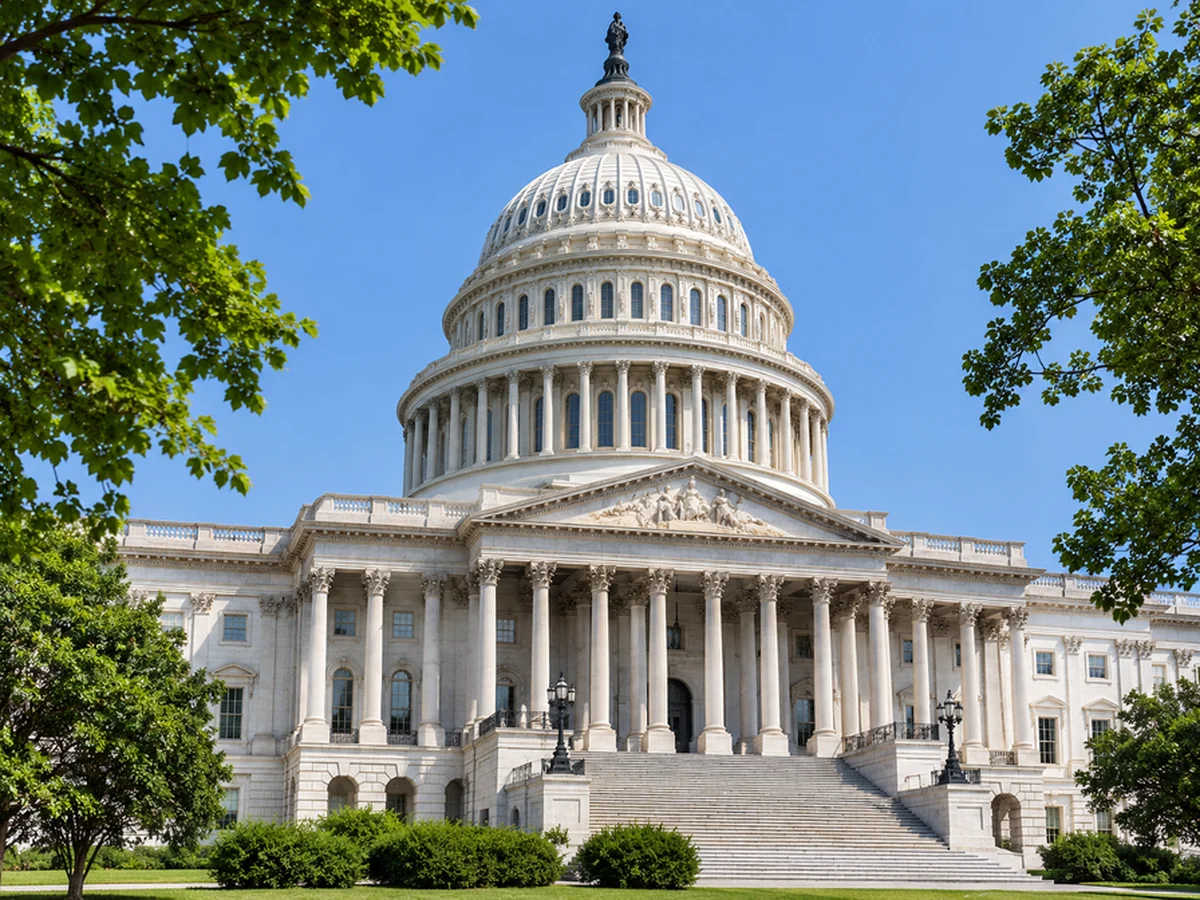
This chapter describes the policy and the views of supporters and critics without taking a position. Photograph: original AI-generated illustration (Adobe Firefly). Reference organisations do not endorse this website.