Hospitals as complex systems
A large hospital manages thousands of patients, staff, beds, operating rooms, scanners and supplies, all interacting in complex ways. A shortage of beds on one ward can back up the emergency department, delay surgeries and leave ambulances waiting outside. These problems harm patients and frustrate staff. Many health systems face rising demand from ageing populations, making efficient operations more important than ever.
Command centres
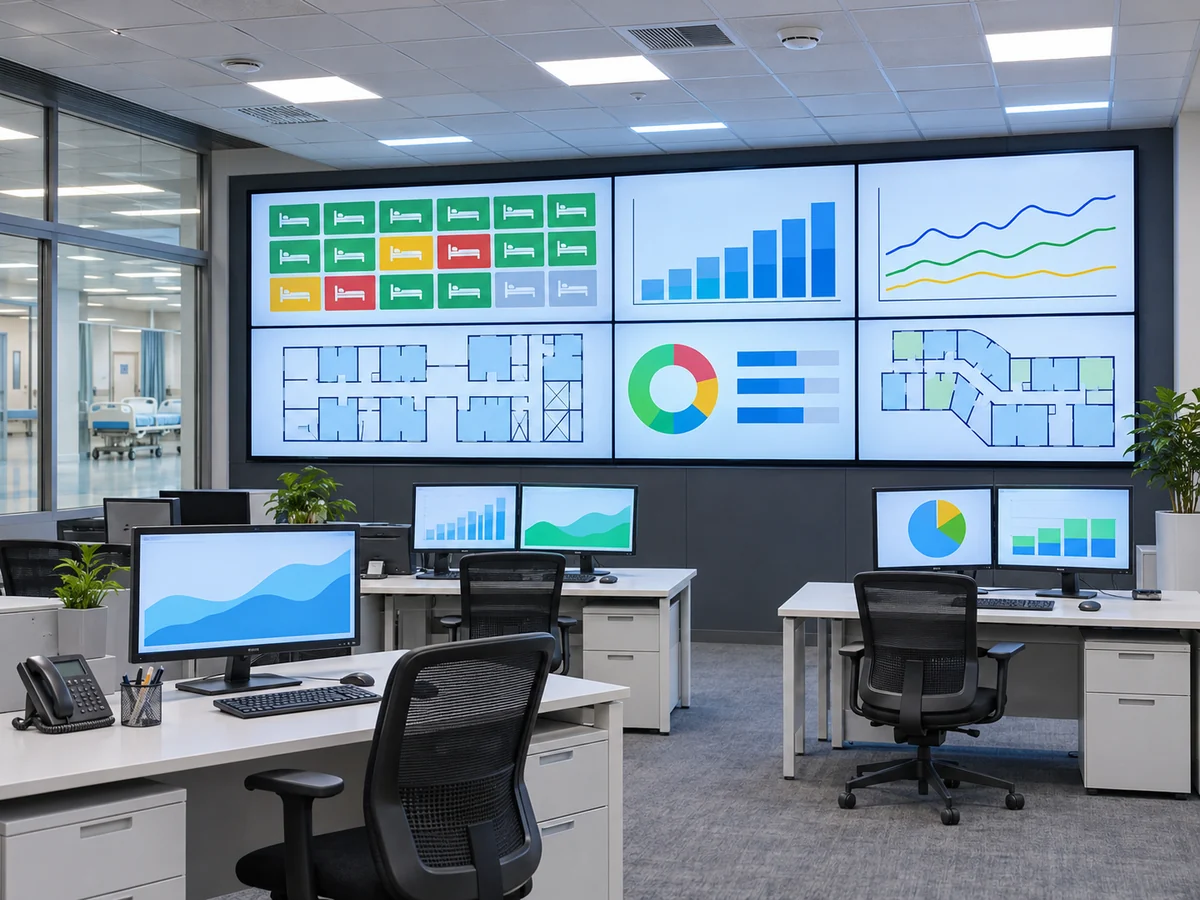
Inspired by air traffic control, some hospitals have built command centres where staff monitor real-time information about the whole hospital: available beds, patients waiting, expected discharges, staffing levels and transfers. Johns Hopkins Hospital in the United States opened one of the first such centres in 2016, working with GE Healthcare. AI tools in these centres forecast demand and flag emerging bottlenecks so staff can act early.
Forecasting demand
Machine learning models analyse historical patterns, seasons, holidays, local events, weather and disease outbreaks to predict how many patients will arrive at emergency departments and how many will need admission in the coming hours and days. Accurate forecasts allow hospitals to plan staffing, open extra beds or postpone non-urgent procedures before they become overwhelmed, rather than reacting after problems arise.
Managing beds and discharges
Bed shortages often result from delays in discharging patients who are ready to leave. AI can predict which patients are likely to be discharged soon, helping staff arrange transport, medicines and follow-up care in advance. It can also suggest the best bed for each new patient based on their needs and the ward's capacity. Faster, smoother discharges free beds for patients waiting in emergency departments.
Operating rooms
Operating rooms are among a hospital's most valuable and expensive resources. Surgeries often run longer or shorter than scheduled, leaving gaps or causing overruns and cancellations. AI models trained on past operations can predict surgery durations more accurately, helping schedulers plan theatre lists better. Hospitals have reported fitting in more operations and reducing overtime with improved scheduling tools.
Staffing
Nurses and doctors are a hospital's most important resource, and shortages are common worldwide. AI scheduling tools match staffing levels to predicted demand, consider staff preferences and rules on working hours, and help managers fill gaps quickly. Good scheduling can reduce burnout and reliance on expensive temporary staff. Staff and unions emphasise that tools must respect working conditions and not simply squeeze more work from people.
Predicting deterioration
AI early warning systems monitor patients' vital signs and test results to predict who may deteriorate, such as developing sepsis or needing intensive care, allowing staff to intervene early. Other models predict which patients are at high risk of being readmitted after discharge, so that extra support can be arranged. These tools must be accurate and carefully integrated to avoid overwhelming staff with alerts.
Emergency departments
Emergency departments face unpredictable surges of patients. AI tools help triage nurses by predicting which patients are likely to need admission or urgent tests, allowing faster decisions. Some hospitals use AI to estimate waiting times and share them with patients, or to suggest alternative services such as urgent care clinics for less serious problems. Reducing crowding in emergency departments is linked to better outcomes for patients.
Cutting paperwork
Administrative tasks consume a large share of healthcare workers' time. AI helps automate coding of diagnoses for billing, processing insurance approvals, transcribing and summarising notes, answering routine patient messages and scheduling appointments. Generative AI tools, such as AI scribes, are reducing documentation time for doctors. Automating these tasks can free staff for patient care, though errors must be caught by human review.
Hospitals in the UAE
UAE hospital groups have invested in digital operations, including command centres, electronic records and AI tools for scheduling and patient flow. Abu Dhabi's connected health records through Malaffi help coordinate care across providers, and new initiatives connect operating room data across hospitals to improve surgical planning. These investments support the country's goal of a world-class, efficient healthcare system.
Why it matters
Delays in hospitals can harm patients, from longer waits for emergency care to cancelled operations. AI can help hospitals use their beds, staff and equipment more efficiently, reducing waiting times and improving care without necessarily building new facilities. Some of the most valuable uses of AI in healthcare may be these behind-the-scenes improvements, which patients may never see but will certainly feel.
Sources & further reading
- Johns Hopkins Medicine · The Judy Reitz Capacity Command Center ↗
- NHS England · AI in health and care ↗
- Semafor · Operating rooms get AI-equipped in the UAE (2026) ↗
A general overview of hospital practice. Photograph: original AI-generated illustration (Adobe Firefly). Reference organisations do not endorse this website.