Time is brain
A stroke happens when blood supply to part of the brain is cut off, usually by a clot, or when a blood vessel bursts. Brain cells begin to die within minutes, so speed of treatment is critical. For the most serious strokes, caused by a clot in a large artery, the best treatment is often thrombectomy, a procedure in which a specialist threads a catheter through the blood vessels to pull the clot out. NHS England notes that every 20-minute delay in thrombectomy cuts the chance of full recovery by about 1%.
The bottleneck
Thrombectomy requires specialist teams who are mostly based in large regional centres. Many patients first arrive at smaller hospitals where scans must be interpreted, often by doctors who are not stroke imaging experts, before a decision is made to transfer the patient. Reading the scans, sharing them with specialists and arranging the transfer can take a long time, especially at night. Each delay means some patients become ineligible for treatment or recover less well.
What the AI does
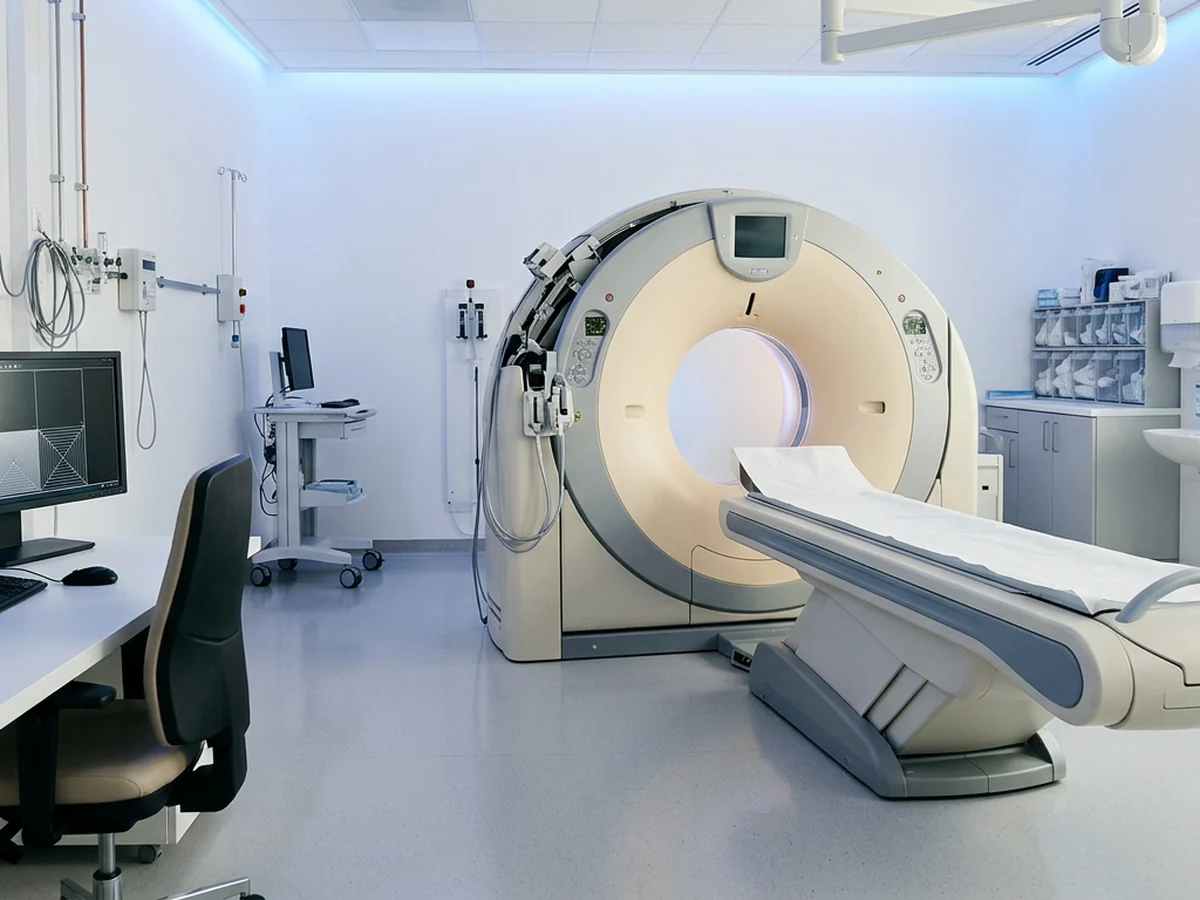
Stroke AI software analyses CT scans of the brain and its blood vessels as soon as they are taken. It highlights suspected blockages in large arteries, estimates how much brain tissue is already damaged and how much could still be saved, and sends the images and results to doctors' phones and computers. Specialists at the regional centre can see the same images almost instantly, allowing faster decisions on treatment and transfer. Doctors still make the decisions; the software supports them.
The English study
In December 2025, The Lancet Digital Health published a study covering 452,952 stroke patients admitted to all 107 NHS hospitals in England between 2019 and 2023. Researchers compared 26 hospitals that implemented the Brainomix 360 Stroke software with others. At the AI hospitals, the share of patients receiving thrombectomy doubled from 2.3% to 4.6%, compared with a smaller rise from 1.6% to 2.6% elsewhere. Patients whose scans were reviewed with the AI were significantly more likely to receive the treatment.
More than an hour faster
NHS England reported that patients at participating hospitals received treatment more than an hour earlier in some cases, as faster scan interpretation sped up transfers to specialist centres. The biggest improvements were seen at hospitals without on-site neuroradiology expertise, where rapid interpretation is most valuable. According to the researchers, 15,377 patients had their scans reviewed using the AI tool from January 2022 onwards. Receiving a thrombectomy roughly doubles a patient's chance of regaining independence after a major stroke.
A national programme
England's results reflect a deliberate national effort. With funding from an NHS AI award programme, AI decision-support tools were introduced across every regularly admitting stroke service in England, and the Brainomix tool was rolled out to more than 70 hospitals. The study was observational rather than a randomised trial, so other factors may have contributed, but the researchers concluded that the results support routine use of AI imaging software in stroke care.
Around the world
Several companies offer similar tools, and hospitals in the United States, Europe, Asia and the Middle East use AI to triage stroke scans and coordinate stroke teams. Some systems also detect brain bleeds, which require very different treatment, and others help monitor patients after treatment. In the UAE, major hospitals have invested in advanced stroke units and digital imaging networks, where AI tools can help connect smaller hospitals with specialist centres.
Limits and safeguards
AI stroke software can miss some blockages, especially small or unusual ones, and can occasionally raise false alarms. That is why its results are used to prioritise and support, not to replace, expert review. Hospitals must check that the software performs well on their own scanners and patient populations, train staff to use it correctly and monitor outcomes. The technology also only helps if the rest of the system, such as ambulances, transfer arrangements and specialist teams, can respond quickly.
What you can do
No software can help if a patient does not reach hospital quickly. The most important step is recognising a stroke: sudden facial drooping, arm weakness or speech problems are warning signs, and the advice is to call emergency services immediately. In the UAE the ambulance number is 998. Getting to hospital fast gives doctors, and the AI tools that support them, the best chance of saving brain tissue and restoring independence.
Sources & further reading
- The Lancet Digital Health · AI imaging decision support for acute stroke treatment in England (2025) ↗
- NHS England · 'Life-changing' AI support helping stroke patients get a second chance ↗
- Digital Health · AI tool helps spot deadly clots in stroke patients faster ↗
This is general information, not medical advice. In an emergency call 998 (UAE) or your local number. Photograph: original AI-generated illustration (Adobe Firefly). Reference organisations do not endorse this website.