A plastic problem
The world produces hundreds of millions of tonnes of plastic every year, and only a small share is recycled; globally, less than 10% of all plastic ever made has been recycled. One of the most common types is PET, or polyethylene terephthalate, used in drinks bottles, food packaging and polyester clothing. PET makes up a significant share of global waste and can take centuries to break down in landfills or the ocean.
Limits of recycling
Most PET recycling today is mechanical: bottles are washed, shredded and melted into new products. But each cycle degrades the quality of the plastic, and coloured, mixed or dirty items, such as food trays and textiles, are often hard to recycle at all. Much of this waste ends up being burned or buried. Scientists have long searched for ways to break plastic back down into its original building blocks so it can be remade like new.
Nature shows the way
In 2016, Japanese scientists reported discovering a bacterium, Ideonella sakaiensis, at a bottle recycling site, which had evolved the ability to feed on PET using an enzyme now called PETase. Enzymes are proteins that speed up chemical reactions. The natural enzyme was promising but slow and unstable, working only under narrow conditions. Researchers around the world set out to improve it, a process that traditionally requires years of trial and error in the lab.
Enter machine learning
At the University of Texas at Austin, a team including Hal Alper and Andrew Ellington used a machine learning model called MutCompute, created by graduate student Danny Diaz. Trained on more than 19,000 protein structures, it learned which amino acids fit best in each position of a protein's 3D structure. Applied to PETase, it suggested mutations likely to make the enzyme more stable and active, narrowing thousands of possibilities to a manageable shortlist.
FAST-PETase
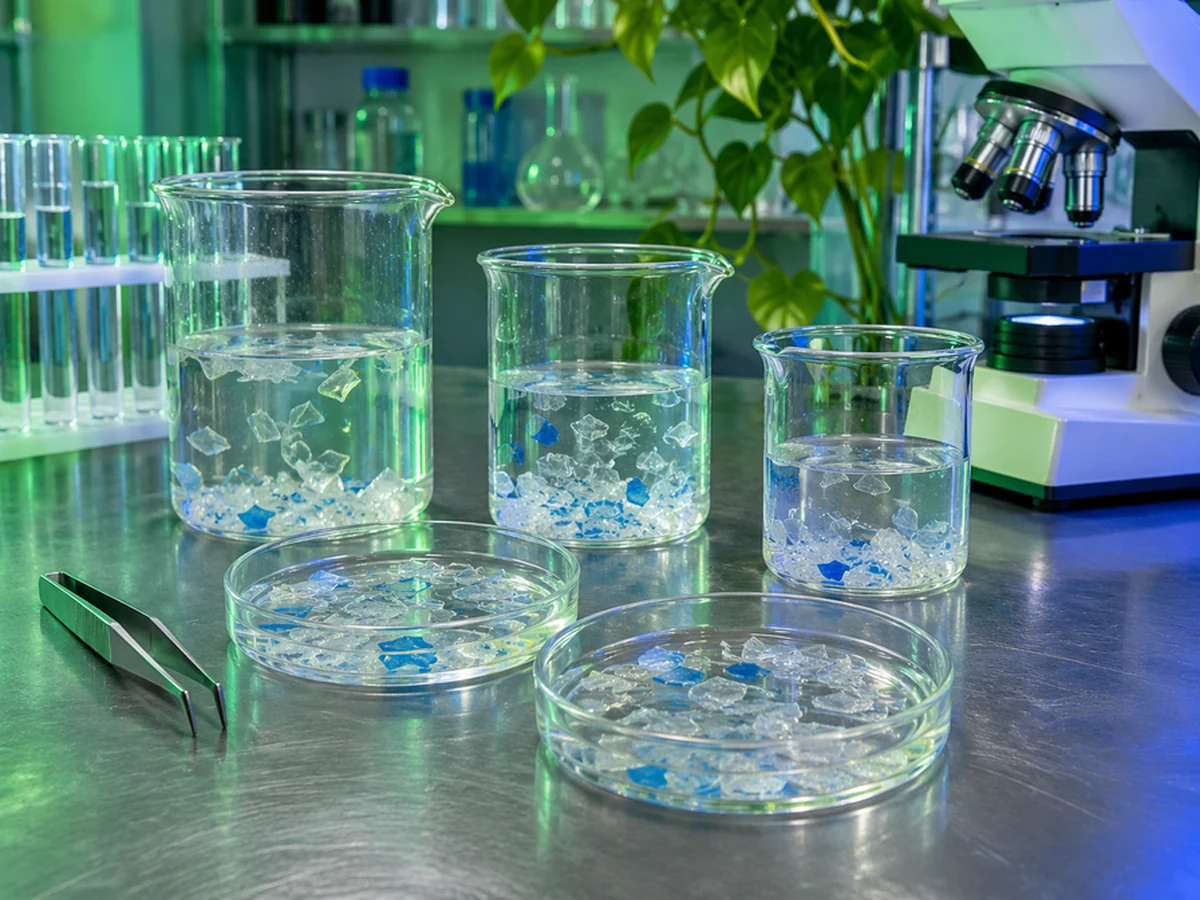
The resulting enzyme, published in Nature in April 2022, was named FAST-PETase, for functional, active, stable and tolerant PETase. It contains five mutations compared with the natural enzyme. Tested on PET from 51 different used plastic containers, as well as polyester fibres and water bottles, it almost completely broke them down within a week, and in some cases within 24 hours, working at temperatures of 50 °C or below.
A closed loop
Crucially, the team showed a complete recycling loop: they used FAST-PETase to break plastic down into its chemical building blocks, then used those building blocks to make new PET. Because the material is rebuilt from the molecular level, recycled plastic can in principle match the quality of new plastic made from oil, and the process could be repeated many times. Working at moderate temperatures could also save energy compared with some other recycling methods.
From lab to factory
Other teams have also engineered plastic-eating enzymes. In 2020, the French company Carbios and university researchers in Toulouse reported in Nature an engineered enzyme that broke down 90% of PET in 10 hours at higher temperatures. Carbios opened a demonstration plant in 2021 and is developing an industrial plant at Longlaville in France, designed to process 50,000 tonnes of PET waste a year. After financing delays, it targets starting production in 2028.
Challenges ahead
Enzyme recycling must compete on cost with cheap plastic made from oil and with mechanical recycling. Building large plants requires major investment, and waste must still be collected and sorted. Most progress so far concerns PET; other common plastics, such as polyethylene and polypropylene used in bags and containers, are chemically much harder for enzymes to break down. Researchers are using AI to search for enzymes that could tackle these too.
A wider fight
Recycling alone cannot solve plastic pollution. Experts emphasise reducing unnecessary plastic, reusing products and improving waste collection. International negotiations on a global treaty to end plastic pollution failed to reach agreement in 2025. Many countries, including the UAE, have introduced bans on single-use plastic items, such as shopping bags, in recent years, as part of efforts to reduce plastic waste.
Why it matters
AI is transforming protein engineering, allowing scientists to design better enzymes far faster than traditional methods. Plastic-eating enzymes are one example of how this could help the environment, turning waste into a resource. If they can be made cheap and scalable, AI-designed enzymes could help create a truly circular economy for plastics, where materials are used again and again instead of polluting the planet.
Sources & further reading
- Nature · Machine learning-aided engineering of hydrolases for PET depolymerization (Lu et al., 2022) ↗
- UT Austin Cockrell School of Engineering · Plastic-eating enzyme could eliminate billions of tons of landfill waste (2022) ↗
- Resource Recycling · Carbios delays French PET recycling plant to secure funds (2025) ↗
Research and company plans are as reported and may change. Photograph: original AI-generated illustration (Adobe Firefly). Reference organisations do not endorse this website.