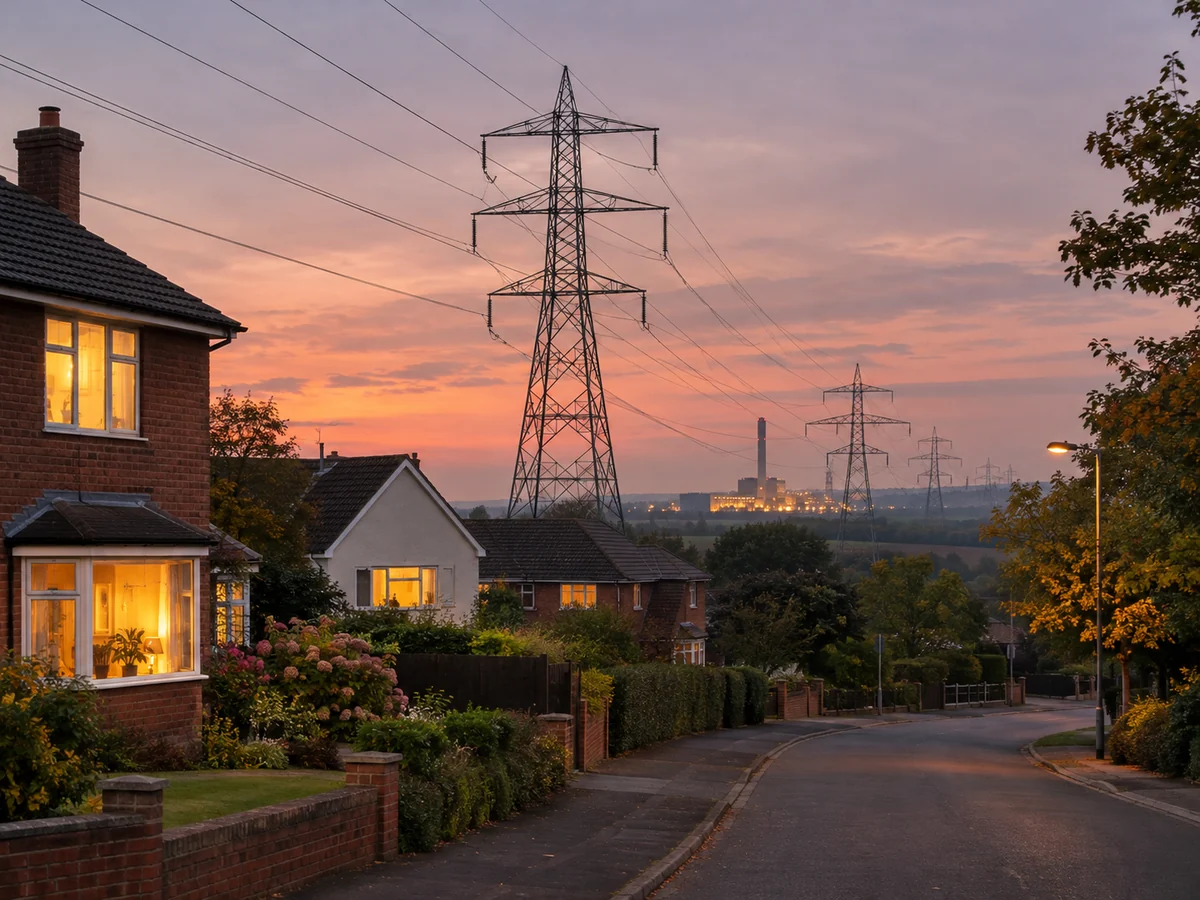
Power-hungry AI
AI data centres use enormous amounts of electricity to run and cool their chips. A single large AI campus can need as much power as a city. In the United States, utilities and grid operators have sharply raised their forecasts of future demand, largely because of data centres. The International Energy Agency projects that global data centre electricity use will more than double by 2030. The question is who pays for the extra power.
How capacity markets work
In parts of the United States, grid operators run auctions to make sure there will be enough power plants available during the hottest and coldest days, when demand peaks. Power suppliers are paid to commit capacity years ahead. These capacity payments are passed on to customers through their electricity bills. When demand is expected to rise faster than new supply, auction prices climb, and everyone connected to the grid pays more.
The PJM shock
PJM operates the grid for about 67 million people in 13 US states and Washington, D.C., including northern Virginia, the world's largest data centre hub. Its capacity price jumped from about 29 dollars per megawatt-day for 2024/25 to about 270 dollars for 2025/26, and then to about 329 dollars for 2026/27, the maximum allowed under a price cap. PJM said the 2025 auction would add 1.5% to 5% to many customers' bills from June 2026.
Data centres' share
PJM's independent market monitor, Monitoring Analytics, has estimated that data centres were responsible for a large share of these increases. For the 2025/26 auction, it attributed about 63% of the price rise to data centres, or roughly 9.3 billion dollars. Across several recent auctions, it attributed tens of billions of dollars in capacity costs to data centre demand. Some utilities and data centre operators dispute parts of these estimates.
Rising household bills
Residential electricity prices in the United States have been rising for several reasons, including inflation, ageing grids that need upgrading and fuel costs. The US Energy Information Administration expected average residential prices to rise from about 17.3 cents per kilowatt-hour in 2025 to 18.2 cents in 2026. In some states with many data centres, prices rose faster than the national average, making electricity bills a political issue.
Who should pay?
Experts identify two ways data centres can raise bills: utilities spreading the cost of new power lines and substations across all customers, and market prices rising because supply cannot keep up. Many states are now considering special rates for very large users, requiring data centres to pay upfront for grid upgrades or commit to long-term contracts, so that ordinary households are not left with the costs if demand forecasts prove too high.
Tech companies respond
Facing local opposition, tech companies have made pledges. In January 2026, Microsoft announced a Community-First AI Infrastructure plan, promising to pay its way so that its data centres do not increase residential electricity prices, including by paying for grid upgrades linked to its growth. The announcement followed calls from US President Donald Trump for tech companies to cover their own power costs. Other companies have signed deals to build new power plants.
The other side
Data centres can also bring benefits. They pay taxes, create construction and technical jobs and, if they pay fair rates, can help spread a grid's fixed costs across more users. Some data centres can reduce their power use during peak demand, easing pressure on the grid. AI itself can help utilities forecast demand and run grids more efficiently. Whether data centres raise or lower bills depends heavily on how rules are designed.
Beyond the United States
Similar debates are happening elsewhere. Ireland, where data centres use a large share of national electricity, has limited new connections in the Dublin area. In the UAE and Saudi Arabia, governments are building data centres alongside large solar, nuclear and gas power capacity as part of national AI strategies, and electricity tariffs are set by regulators. Planning power supply carefully is essential wherever AI infrastructure grows quickly.
Why it matters
AI's benefits are widely shared, but so are its costs if they are passed on through electricity bills. Making sure data centres pay for the power and grid upgrades they need, while adding clean energy supply fast enough, is one of the key challenges of the AI era. How governments and companies handle it will affect not only climate goals but also public support for AI.
Sources & further reading
- Microsoft · Building Community-First AI Infrastructure (2026) ↗
- Inside Climate News · PJM's capacity auction will affect your electricity prices in 2026 (2025) ↗
- Monitoring Analytics · PJM independent market monitor ↗
Figures are as reported by PJM, its market monitor and news sources. Photograph: original AI-generated illustration (Adobe Firefly). Reference organisations do not endorse this website.