
Beyond 500.
A desert road.
Four electric motors.
A new threshold for speed.
A number.
With a precise meaning.
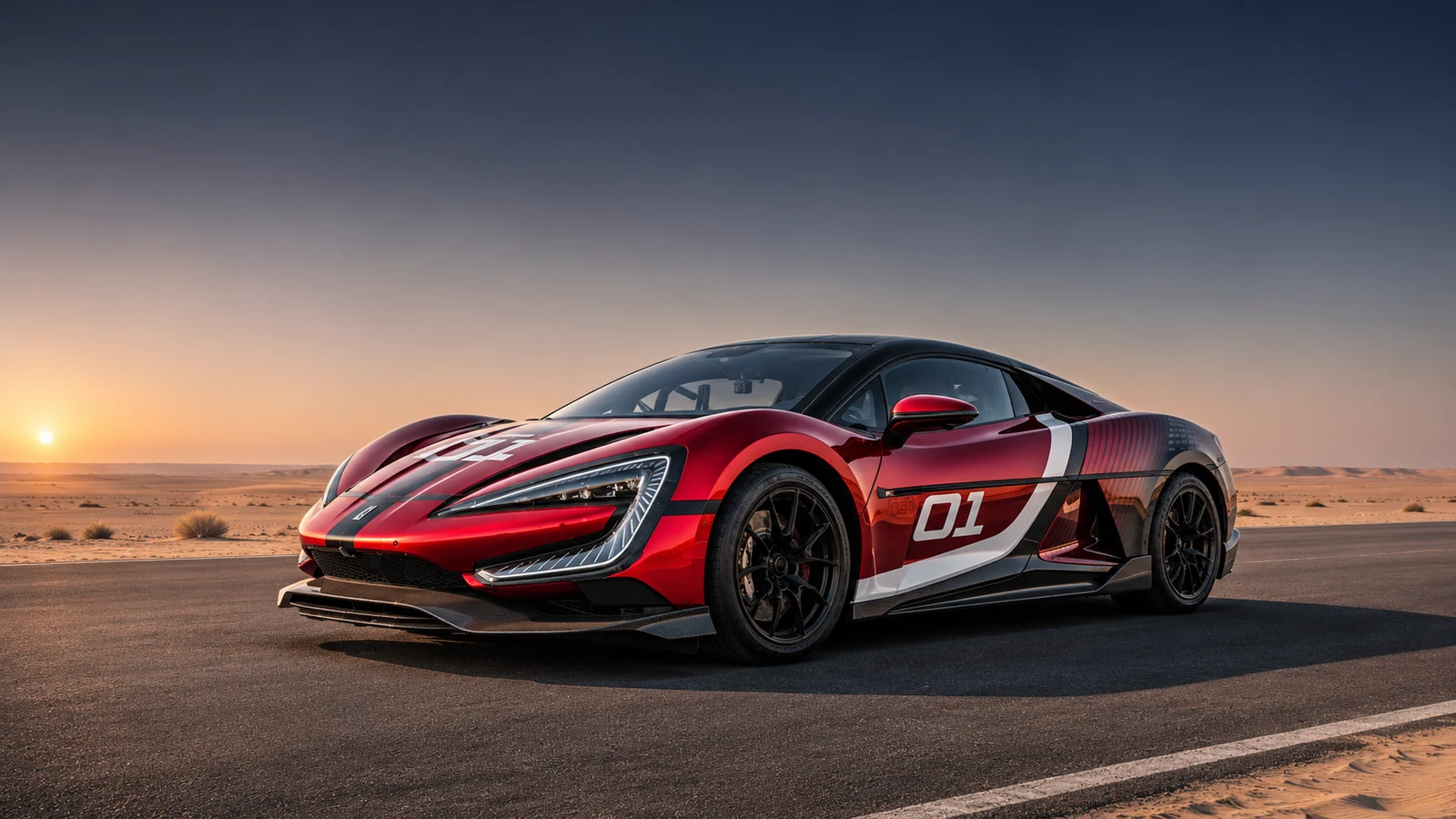
On 1 November 2026, Marc Basseng drove the Yangwang U9 Xtreme to 503.17 km/h on a closed section of the E11 in Abu Dhabi’s Al Dhafra region. Guinness records it as the highest production-car speed achieved in a single-direction run. [1]
The FIA recognised the achievement. This was a peak-speed run in one direction; it is different from a record calculated by averaging runs in opposite directions. The distinction belongs alongside the headline. [2]
A cockpit.
A different kind of theatre.
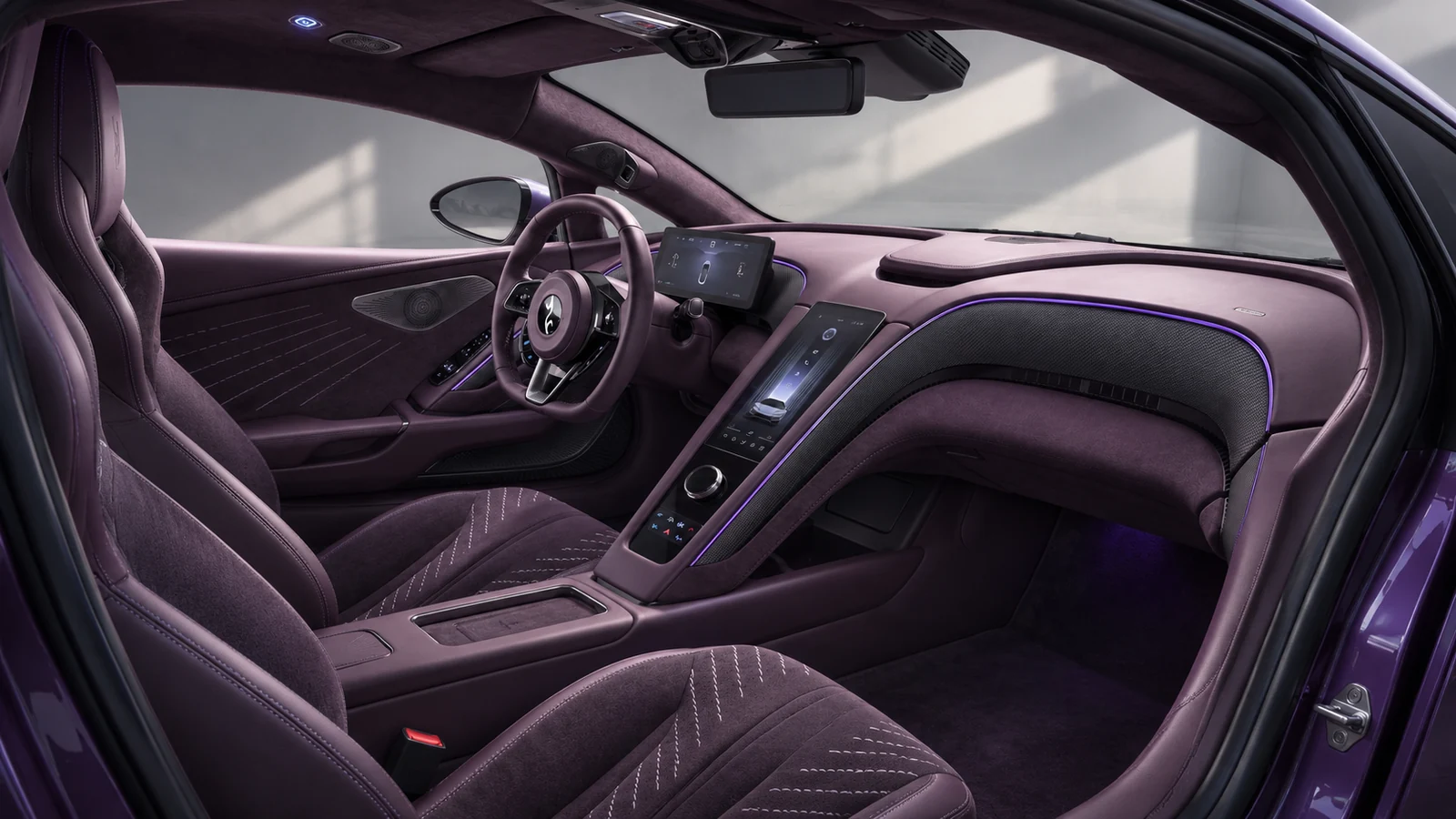
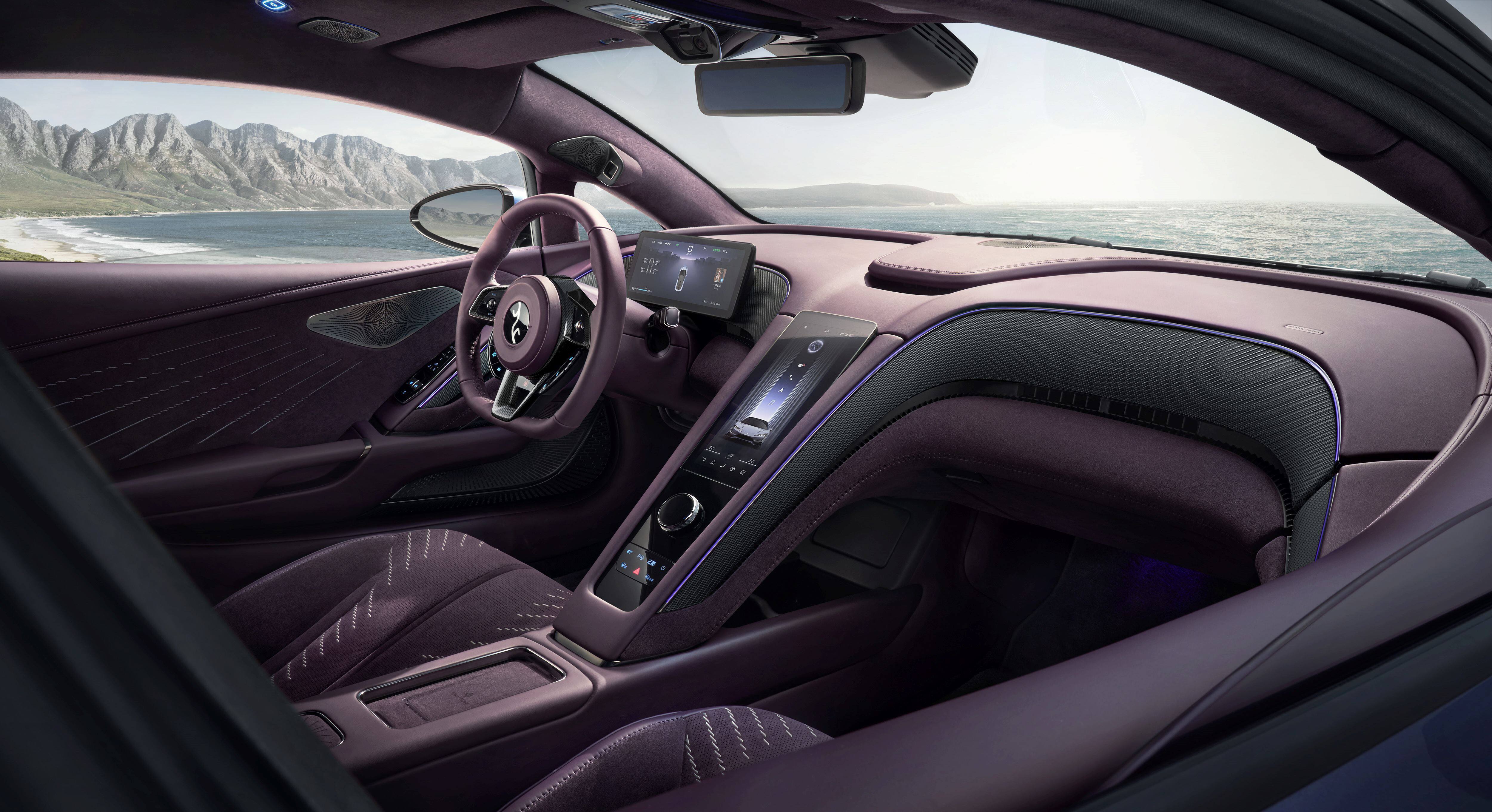
Plum leather, carbon fibre and a tall centre console give the cabin its enclosed, driver-focused character. The reference image reveals how the screen and trim are built around the occupants.
BYD’s standard-U9 launch describes two 14-way adjustable seats. That equipment belongs to the standard model; it should not be assumed to describe the record car. [5]
The power is electric.
The engineering is physical.
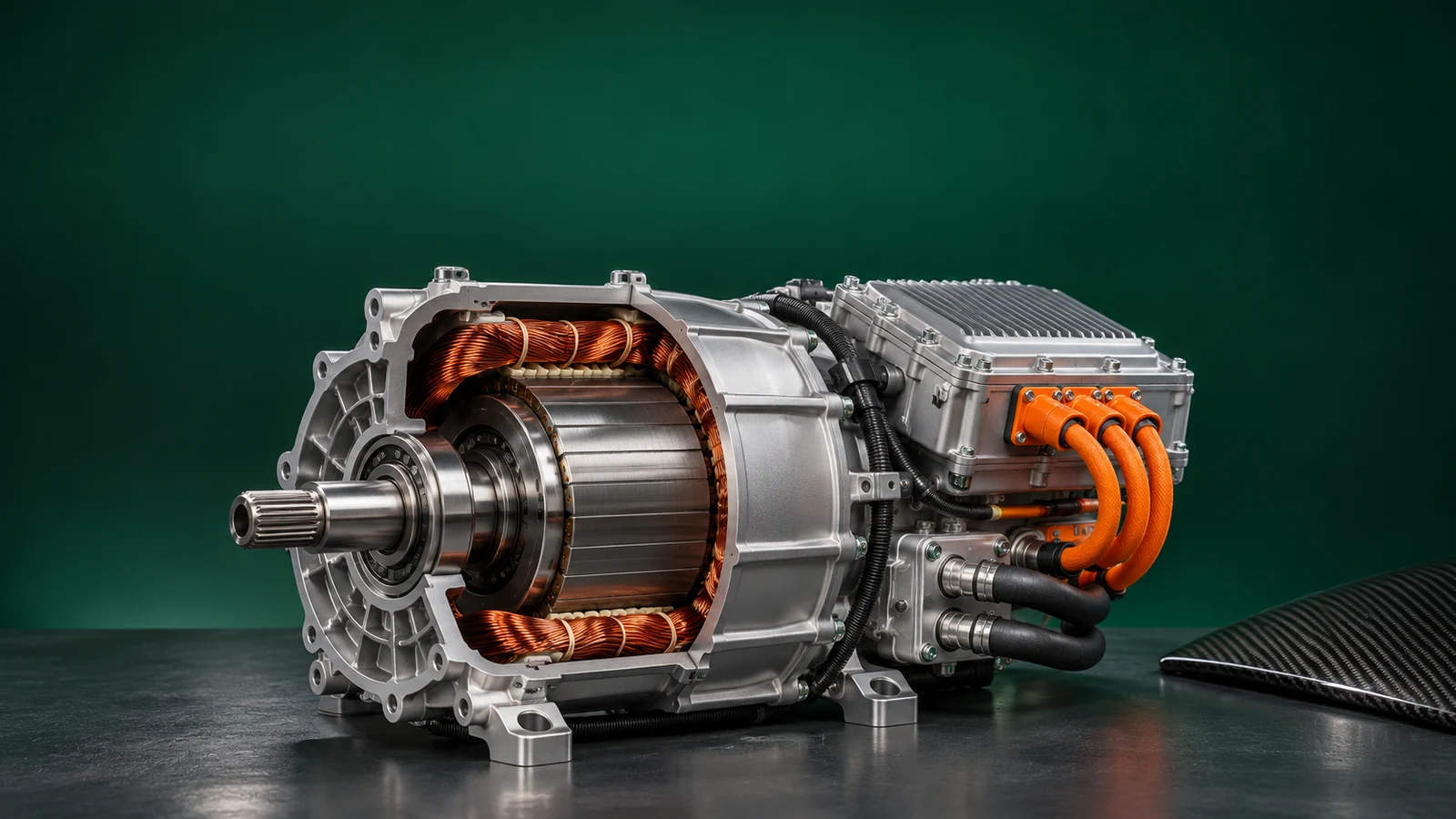
There is no petrol engine. The Xtreme uses four independently controlled electric motors. BYD quotes 555 kW per motor and a maximum motor speed of 30,000 rpm. The record announcement gives total output as 3,019 PS—metric horsepower. [3]
Its 1,200-volt architecture and LFP Blade Battery supply this power. BYD describes a 30C discharge capability: a rating for releasing energy, not a 30C charging promise or a guaranteed operating duration. [4]
One battery.
Four controlled contact patches.
The battery stores energy. Power electronics regulate the electrical supply. Motors turn that energy into rotation; the tyres transfer force to the road.
Independent motor control allows wheel torque to be adjusted separately. The diagram shows that relationship, not the precise packaging of the production car.
Explore how electricity works →Speed needs
more than power.
Cooling
BYD identifies thermal management as central to sustained output: motors, electronics and battery all need heat control.
Body control
DiSus-X active suspension manages vertical wheel movement. The Abu Dhabi setup included changes to suspension preload and rebound damping.
Air & contact
Rear-wing angle and tyre pressure were also adjusted for the run. Aerodynamics, tyres and chassis setup act together. [3]
Look closer.
Follow the sources.
Checked 17 November 2026. Record details come from Guinness and the FIA; engineering ratings are manufacturer claims.
All three feature images are AI-created editorial illustrations. Exterior and cabin studies use official BYD references; the motor is a generic concept. They are not documentary photographs or factory CAD. No manufacturer endorsement is implied.