What goosebumps are
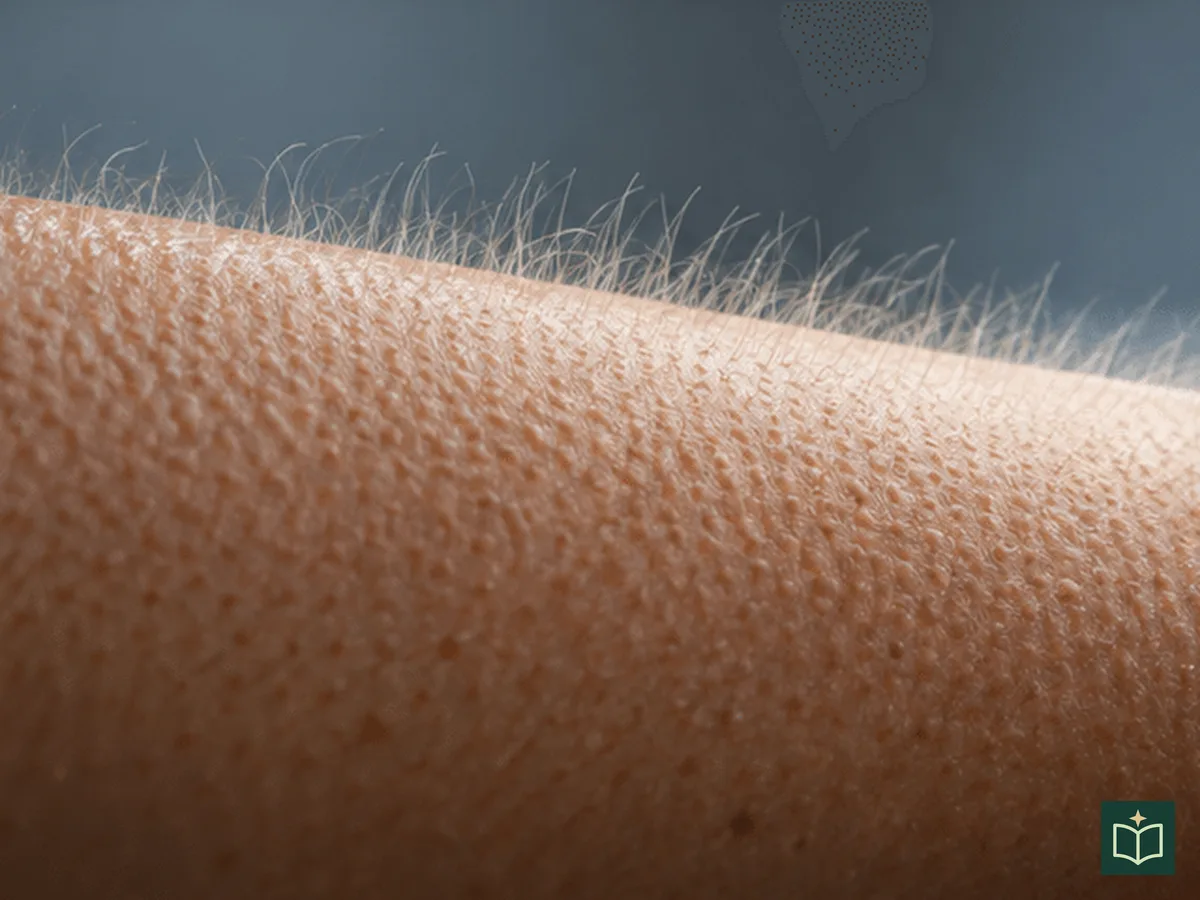
Step from a warm room into an air-conditioned mall, hear a stirring piece of music or receive a sudden fright, and small bumps may rise across your arms. Scientists call this piloerection, meaning hair erection, or horripilation; the medical term for goose-flesh is cutis anserina. The name comes from the resemblance to the skin of a plucked goose, where bumps mark the follicles that held feathers. Most of the human body is covered in hair follicles, around five million of them, though many produce only fine, pale hairs. Goosebumps appear where these follicles are found, which is why they never occur on the palms of the hands or the soles of the feet.
The machinery
Attached to each hair follicle is a tiny band of smooth muscle called the arrector pili, meaning the muscle that raises the hair. It runs at an angle from the follicle to the upper layer of the skin. When it contracts, it pulls the hair upright and squeezes the skin around it into a small mound. Unlike the muscles we use to move, these work involuntarily. They are controlled by the sympathetic nervous system, the network behind the fight-or-flight response, which also speeds the heart and dilates the pupils. Adrenaline released into the blood can trigger them too, which is why goosebumps often come with a racing pulse in moments of fear.
Why furry animals need them
In mammals with thick fur, the reflex is useful. Raising the hairs traps a deeper layer of still air close to the skin, and still air is a good insulator, so the animal loses heat more slowly in the cold. Birds achieve the same effect by fluffing their feathers. The reflex also serves in confrontation. A frightened or angry cat arches its back with its fur on end, looking much larger to a rival. Chimpanzees bristle during displays, and a porcupine's quills, which are modified hairs, rise when it is threatened. Charles Darwin discussed hair-raising in his 1872 book on the expression of emotions in animals.
A reflex without a coat
Humans have lost most of their body fur, so raising our short, sparse hairs neither keeps us noticeably warmer nor makes us look bigger. For this reason goosebumps are often cited as a vestigial reflex, a leftover from ancestors for whom it mattered. The nerve and muscle pathway remains intact and responds to the same triggers as ever: cold and fear. Many people also get goosebumps from strong emotions, such as hearing a powerful piece of music, seeing a breathtaking view or listening to moving recitation. These emotional chills, sometimes called frisson, seem linked to the brain's reward systems, and people vary widely in how often they experience them.
Still doing a job
Research suggests the system is not entirely redundant. A 2020 study by scientists at Harvard University found, in mice, that the nerve and the arrector pili muscle together form a unit that also regulates the stem cells which grow new hair. The muscle acts as a bridge holding the nerve close to the stem cells. Under prolonged cold, the nerve became more active, prompting the stem cells to start growing new hair. Without the muscle, the nerve connection was lost and hair growth was affected. If similar links hold in humans, the goosebump machinery could help explain how the body adjusts hair growth to its surroundings.
When goosebumps signal more
Ordinary goosebumps are harmless and fade within seconds or minutes once the trigger passes. Persistent or unusual goosebumps without any cold or emotional trigger are uncommon and can occasionally be associated with fever and chills, withdrawal from certain drugs or, very rarely, nerve conditions; anyone with worrying symptoms should seek medical advice. The skin condition keratosis pilaris, which causes small rough bumps on the arms, can look similar but is caused by plugs of keratin, not muscle contraction. For most people, goosebumps remain a small daily reminder of our evolutionary past, a reflex built for a fur coat that we no longer wear but still carry.
Sources & further reading
Figures are rounded and widely published; check the linked organisations for the latest editions. These organisations do not endorse this website.