Masters of disguise
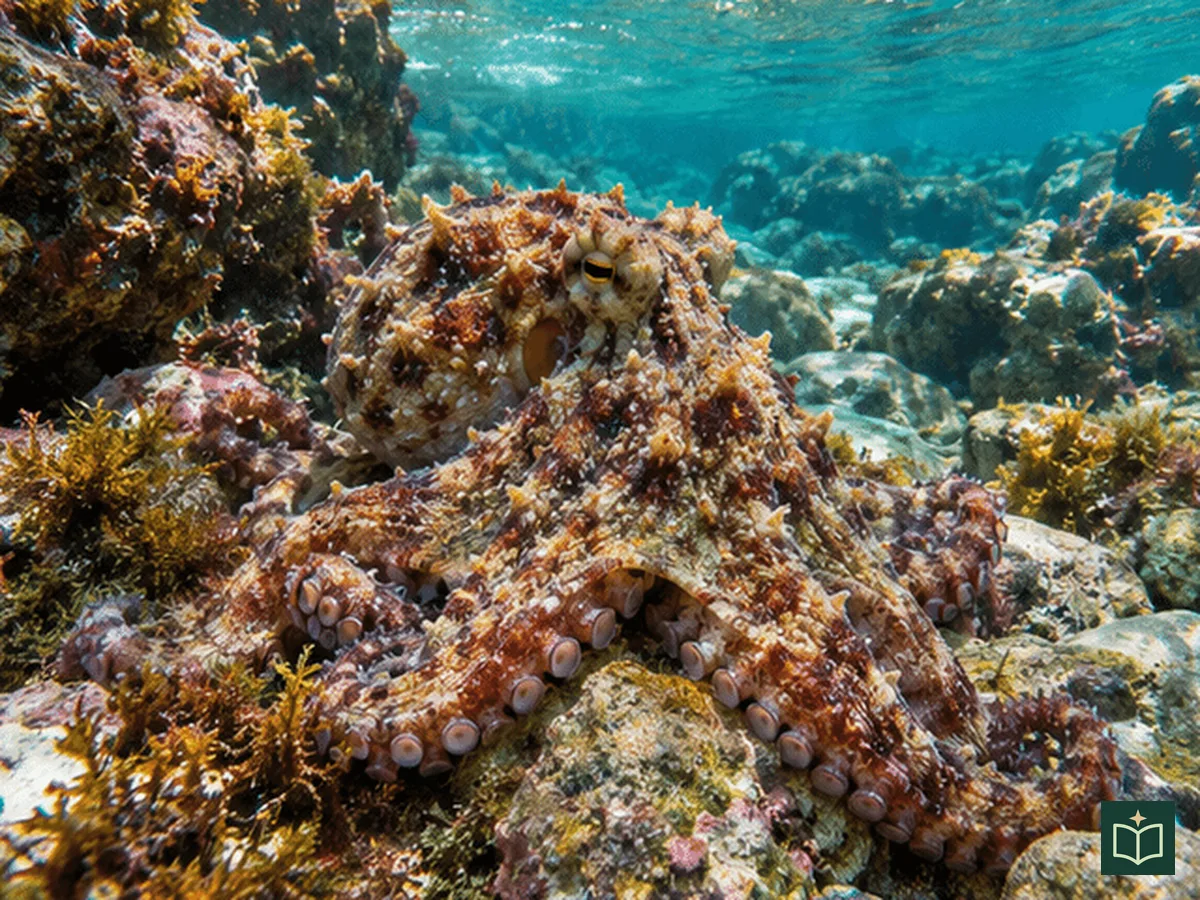
Octopuses, cuttlefish and squid, the cephalopods, are the fastest colour-changers in the animal kingdom. An octopus resting on a reef can turn from red to mottled brown to almost white in moments, matching rocks, sand or seaweed. It can also flash dark patterns to startle a predator or ripple waves of colour across its body. Cuttlefish are especially skilled. The pharaoh cuttlefish, common in Gulf waters and widely fished from them, produces striking displays during courtship and hunting. Unlike chameleons, whose colour changes rely largely on slower processes, cephalopods change in well under a second, because their colour-changing cells are directly wired to the brain.
Chromatophores: pigment sacs
The top layer of colour comes from chromatophores, tiny elastic sacs of pigment, each surrounded by a ring of small muscles. Different chromatophores hold yellow, orange, red, brown or black pigment, and large cephalopods carry many thousands, in some species millions, of them across their skin. When nerves signal the muscles to contract, they pull the sac open like a stretched balloon, spreading the pigment into a visible spot. When the muscles relax, the elastic sac shrinks to a nearly invisible dot. By opening and closing different groups, the animal creates patterns much as a screen creates images from pixels. The nerves run from the brain, letting changes ripple across the body almost instantly.
Reflectors beneath
Pigments alone cannot make blues or bright whites, so cephalopods use deeper layers that work with light. Iridophores contain stacks of thin, transparent plates that reflect certain wavelengths, much like the shimmer on a soap bubble, producing iridescent blues and greens. Some species can tune these reflectors to shift colour. Leucophores, found especially in cuttlefish and some octopuses, scatter all wavelengths evenly and appear white; they reflect whatever light falls on them, so in blue water they look blue. The combination of a variable pigment layer over reflective layers gives these animals a wide palette. The blue-ringed octopus uses iridophores to flash its warning rings in a fraction of a second.
Changing shape as well as colour
Colour is only part of the disguise. Octopuses and cuttlefish can raise small muscular bumps on their skin called papillae, turning smooth skin into spikes, ridges or frills that resemble coral, algae or rough rock. Combined with posture, such as curling the arms or flattening the body, the effect can be startling. The mimic octopus of Indonesia goes further, imitating the shape and movements of other animals, including lionfish, flatfish and sea snakes. Cuttlefish hunting prey sometimes produce a passing cloud display, sending dark bands sweeping across the body, which may mesmerise or confuse small fish and crabs before the cuttlefish strikes.
The colour-blind puzzle
There is a mystery at the heart of this skill. Most cephalopods have only one type of light-detecting cell in their eyes, which suggests they cannot distinguish colours in the way people do. Yet they match their surroundings remarkably well. Several explanations have been proposed. They may match brightness, contrast and pattern rather than hue, which is often enough to fool predators. Researchers have found light-sensitive proteins in the skin of some octopuses, hinting that the skin itself may sense light. Another hypothesis suggests their unusual U-shaped or W-shaped pupils could let them extract some colour information. The question has not been settled.
Why it matters
Cephalopod skin has evolved under intense pressure from predators such as fish, seals and dolphins, and it shows how effective camouflage can be when built from many independently controlled units. Engineers have studied it in designing flexible displays and adaptive camouflage materials. It also offers insight into the octopus's unusual nervous system: an octopus has around 500 million neurons, many of them in its arms, which can respond to touch and taste with considerable independence. Studying how such a brain controls millions of skin elements at once may reveal general principles of how nervous systems coordinate complex outputs, using an animal whose last common ancestor with us lived more than 500 million years ago.
Sources & further reading
- Britannica · Cephalopod ↗
- Smithsonian Ocean · Cephalopods ↗
- Monterey Bay Aquarium Research Institute ↗
Figures are rounded and widely published; check the linked organisations for the latest editions. These organisations do not endorse this website.