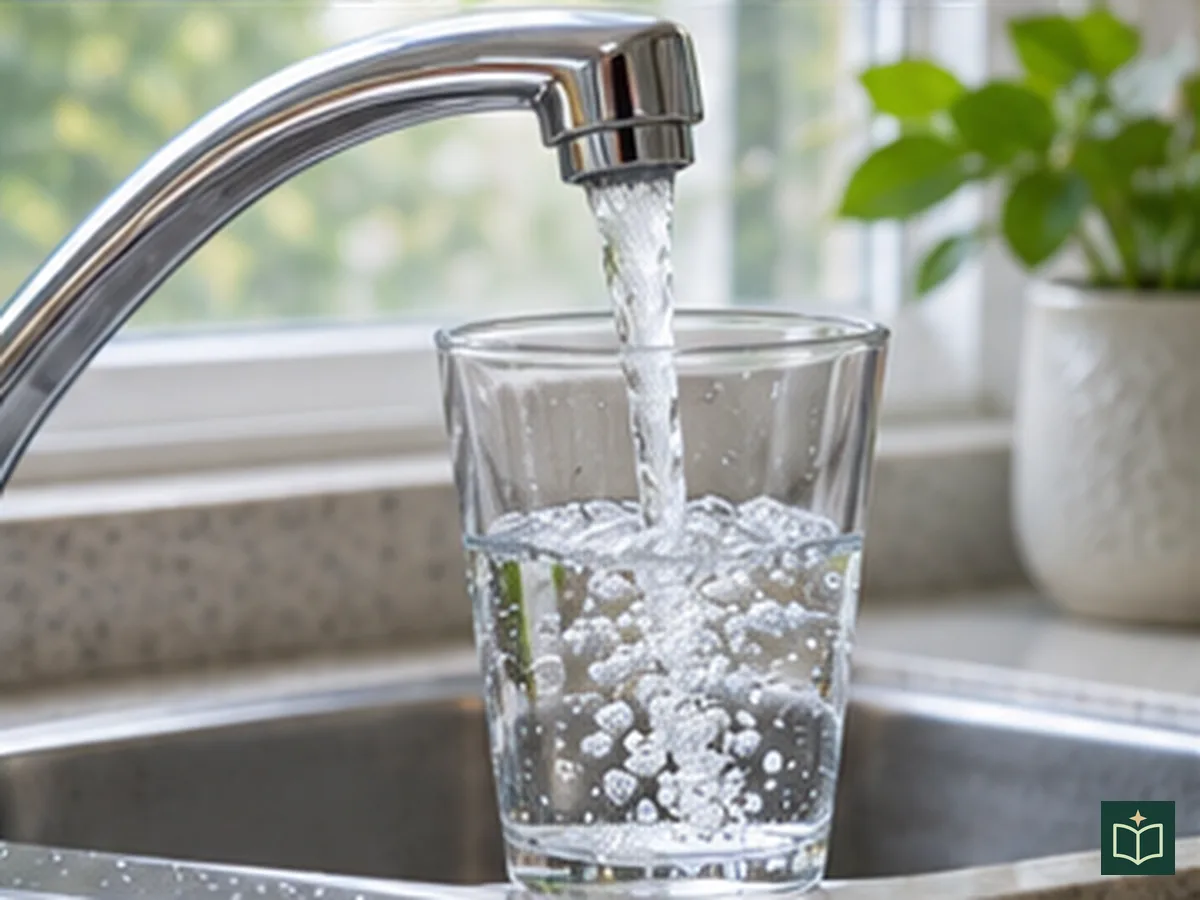
Why water needs a guard
Treating water at a plant is only half the battle. After it leaves, drinking water may travel through hundreds of kilometres of pipes, sit in reservoirs and building tanks, and pass through ageing joints where contamination can enter. Bacteria can also grow in thin films on pipe walls. If water were disinfected only at the plant, any germs entering later would face no resistance. Many utilities therefore leave a small, deliberate amount of disinfectant in the water, known as a residual. Chlorine is the most common choice because it is effective, inexpensive and easy to measure. That residual is what some people notice as a faint swimming-pool smell.
How chlorine works
Chlorine dissolved in water forms hypochlorous acid, a powerful oxidant that damages the cell walls and internal machinery of bacteria and inactivates many viruses. The amount that remains active is called free chlorine. As water travels, chlorine reacts with organic matter, pipe surfaces and any microorganisms, and gradually decays. Utilities therefore dose enough at the plant to leave a measurable residual at the furthest taps. Some use chloramine instead, made by combining chlorine with ammonia, which is weaker but longer-lasting and forms fewer by-products. World Health Organization guidance suggests a free chlorine residual of at least 0.2 milligrams per litre at the point of delivery.
The numbers behind a city's dose
Chlorine doses are tiny in concentration but large in total. One milligram per litre means one gram in every thousand litres. A city supplying a million cubic metres of water a day, which is a billion litres, would need about a tonne of chlorine daily at that dose. Plants store chlorine as gas in pressurised containers, as liquid sodium hypochlorite, similar to strong bleach, or generate it on site from salt using electricity. The dose is adjusted for water temperature, flow and how far the water must travel. WHO sets a health-based guideline of 5 milligrams per litre, far above the levels utilities normally maintain at the tap.
Keeping it right across the network
Monitoring is continuous. Online analysers at plants and reservoirs measure chlorine around the clock, and technicians collect samples from taps and hydrants across the network, testing for chlorine and indicator bacteria such as E. coli. If levels fall too low in distant areas, booster stations add more chlorine along the way. Too much creates complaints about taste and more disinfection by-products, such as trihalomethanes, which regulators limit because long-term exposure at high levels is a concern. The skill lies in balance: enough chlorine to protect the far end of the network, but not so much that water near the plant tastes strongly of it.
The Gulf challenge
Gulf cities face particular conditions. Desalinated water is pumped long distances from coastal plants, and high temperatures speed up chlorine decay, so maintaining a residual is harder in summer. Many buildings store water in rooftop or underground tanks, where it can sit for days, warm up and lose its chlorine. Authorities in the UAE and elsewhere require regular tank cleaning and inspection for this reason, because a neglected tank can undo the utility's careful treatment. Chlorination has deep roots: continuous chlorination of public supplies began in the early 20th century, including in Jersey City in 1908, and it helped dramatically reduce diseases such as typhoid and cholera.
Myths and what you can do
A chlorine smell is not a sign of unsafe water; it usually means the residual is doing its job. The concentrations used are considered safe to drink for a lifetime under WHO guidance. People who dislike the taste can keep a jug of water in the fridge for a few hours, letting chlorine dissipate, or use a carbon filter, though filtered water should then be used promptly. Chloramine does not dissipate as easily and must be removed before water is used for fish tanks or dialysis. If tap water ever smells or looks markedly different, contacting the local utility is the sensible first step.
Sources & further reading
Figures are rounded and widely published; check the linked organisations for the latest editions. These organisations do not endorse this website.