A long journey, a messy finish
Light from a star may travel for years, centuries or millennia across nearly empty space without being disturbed. Then, in its last few tens of kilometres, it plunges into Earth's atmosphere. Air is not uniform. Winds stir pockets of warmer and cooler air at many heights, and because light travels at slightly different speeds through air of different temperature and density, each pocket bends it a little differently, an effect called refraction. These pockets constantly move and change. As starlight passes through them, its path is nudged this way and that many times a second. To an observer on the ground, the star seems to flicker, brighten, dim and shift. Astronomers call this scintillation.
Why stars and not planets
Stars are so distant that even the largest appear as true points of light, far too small for the eye or most telescopes to show as discs. A single thin pencil of light from a point is easily deflected as a whole, so its brightness and position jump about. Planets are much closer and appear as tiny discs, even if they look like points to the naked eye. Light from different parts of the disc takes slightly different paths through the air, and the flickers average out. That is why Venus, Jupiter and Mars usually shine steadily, and why a steady 'star' in the evening sky is often a planet. Near the horizon, though, even planets can twinkle.
Colours near the horizon
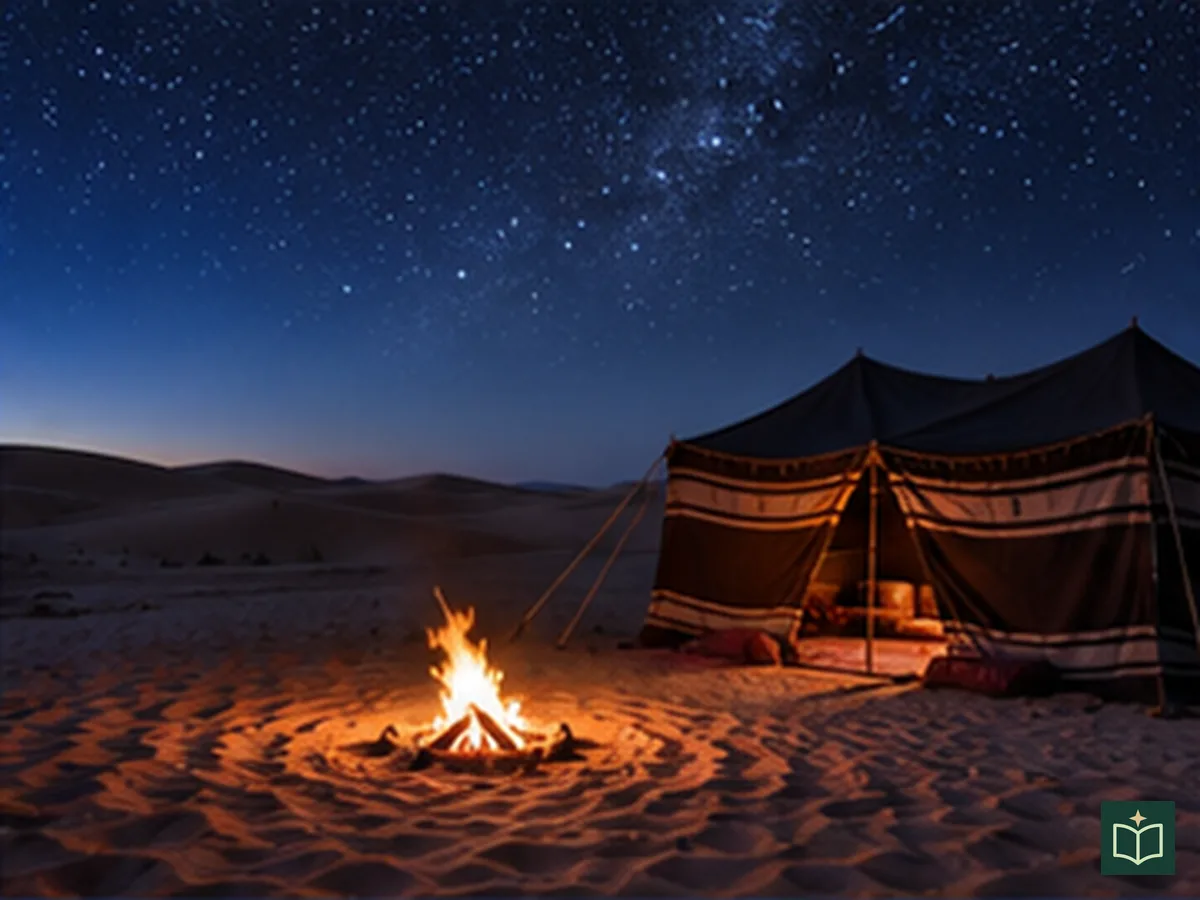
Twinkling is most dramatic for stars low in the sky. Their light crosses far more air at a shallow angle and meets more turbulence on the way. Bright stars near the horizon, such as Sirius on winter evenings, can flash red, green and blue. This happens because the atmosphere bends different colours by slightly different amounts, acting like a weak prism, and turbulence makes each colour flicker separately. Twinkling also varies with the weather. Strong winds high overhead increase it, and so does ground still releasing the day's heat. In the Gulf, warmth radiating from sand and concrete after sunset can make low stars shimmer strongly in the early evening.
Seeing, the astronomer's enemy
The turbulence that makes stars sparkle is a nuisance for astronomers, who call the resulting blur 'seeing'. Through a large telescope, a star smears into a dancing blob instead of a sharp point, which limits the fineness of detail that can be observed, however big the telescope. For much of the twentieth century, this meant that the largest telescopes on Earth could not resolve much finer detail than far smaller instruments on a good night. Astronomers therefore build observatories on high, dry mountaintops with smooth airflow, such as Mauna Kea in Hawaii, La Palma in the Canary Islands and the peaks of Chile's Atacama Desert, where the air above is thinner, steadier and drier.
Escaping the air
The simplest way to avoid twinkling is to leave the atmosphere entirely. The Hubble Space Telescope, launched in 1990, orbits above the air and sees stars as steady points, producing images far sharper than ground telescopes of similar size could manage at the time. The James Webb Space Telescope, launched in 2021, works about 1.5 million kilometres from Earth. Ground astronomers have fought back with adaptive optics. A sensor watches a bright star, or an artificial 'star' created by shining a laser into the upper atmosphere, and measures the distortion hundreds of times a second. A thin, flexible mirror then changes shape to cancel it, largely removing the twinkle from the image.
A sign of a living atmosphere
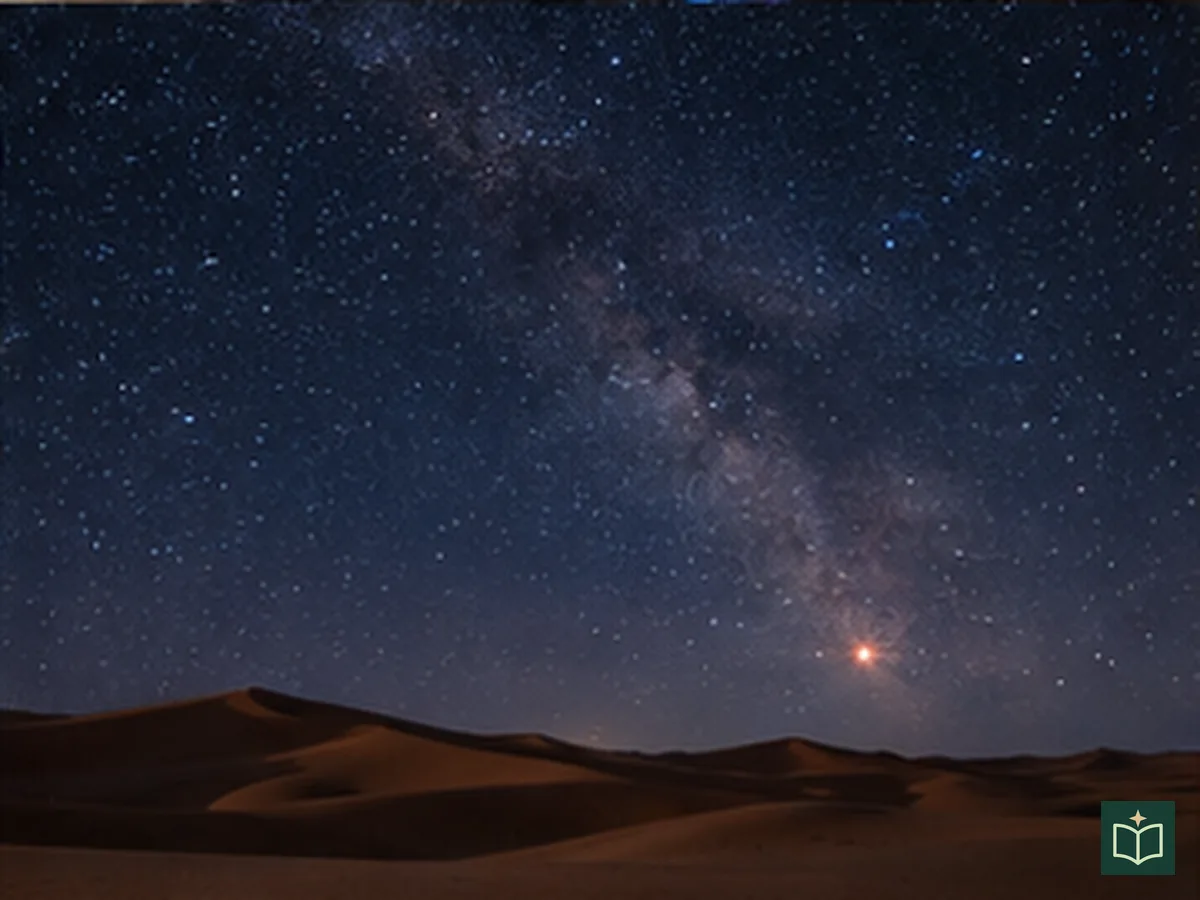
Twinkling is not a property of stars at all. Astronauts on the International Space Station see stars shining steadily, and an observer standing on the airless Moon would too. On Earth, twinkling is a visible reminder that we live at the bottom of an ocean of moving air. Strong twinkling often signals turbulent winds aloft, which is why some traditional sky-watchers read it as a weather sign. For casual stargazers, it offers a handy rule of thumb: stars twinkle, planets mostly do not. And for anyone looking up on a desert night, far from city lights, the shimmer is a reminder that the last few kilometres of a star's ancient light are the most turbulent of its entire journey.
Sources & further reading
Figures are rounded and widely published; check the linked organisations for the latest editions. These organisations do not endorse this website.