Not a museum piece
Magnetic tape stored computer data before hard disks existed; the UNIVAC I used tape drives in 1951. Many people assume it vanished with cassette players. In fact tape remains central to how large organisations keep data for the long term. Research laboratories, broadcasters, banks, governments and major cloud providers store vast archives on it. CERN, the European particle physics laboratory, keeps hundreds of petabytes of experimental data on tape. The reason is simple economics and physics. For data that must be kept for years but is rarely read, nothing else combines such low cost per terabyte, such low energy use and such long shelf life. Capacity per cartridge also keeps rising.
How a tape cartridge works
The dominant format today is LTO, short for Linear Tape-Open, developed by a consortium of manufacturers. Each cartridge, about the size of a thick paperback, holds a single reel of tape roughly a kilometre long and narrower than half an inch. Inside the drive, the tape is threaded past a head that writes and reads magnetic patterns in thousands of narrow parallel tracks, sweeping back and forth along the tape many times to fill it. Because the coating is spread over such a large area, a cartridge holds a great deal: the LTO-9 generation, introduced in 2021, stores 18 terabytes before compression. Error-correcting codes protect the data against small flaws.
The price of patience
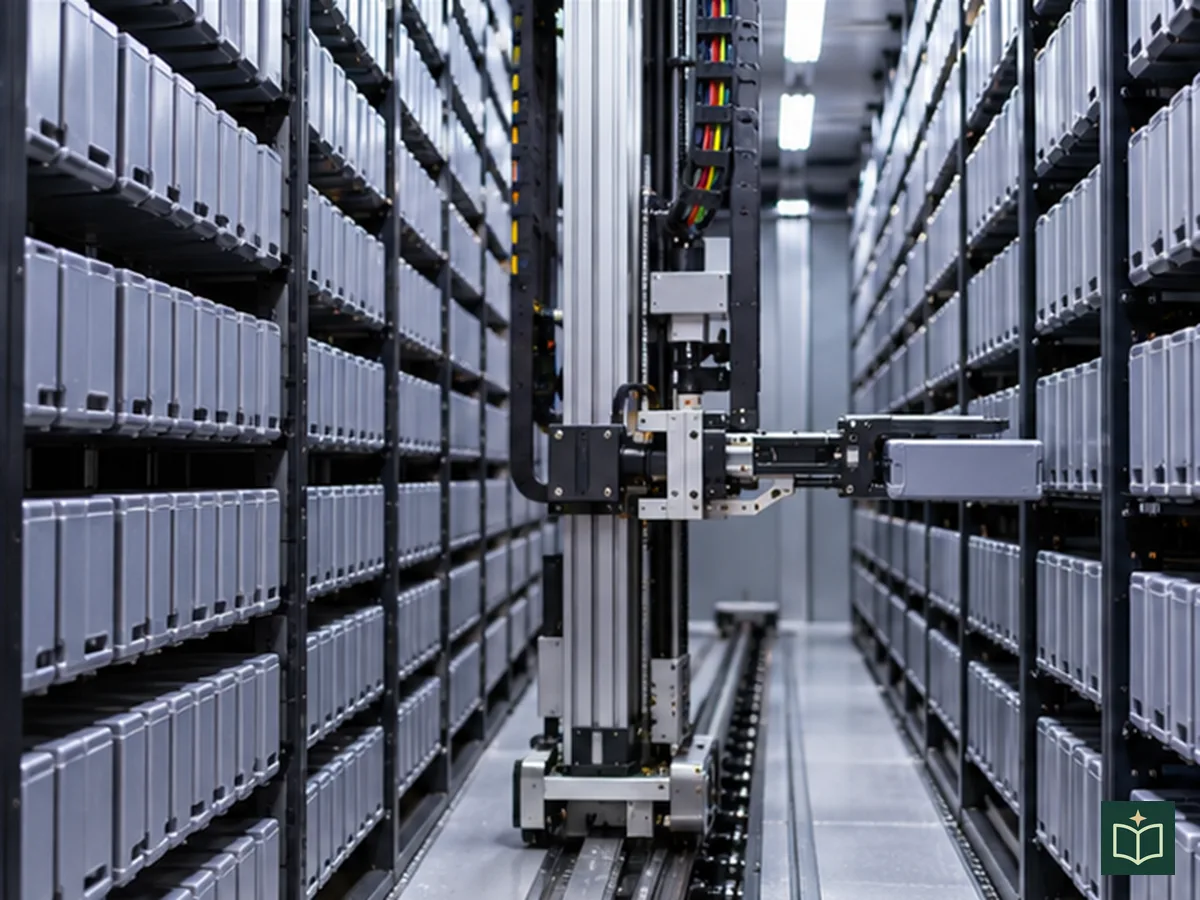
Tape’s weakness is access time. A hard disk can jump to any part of its platter in milliseconds. A tape must first be fetched, often by a robot arm in a library holding thousands of cartridges, then loaded and wound to the right place, which can take a minute or more. Once the data is found, though, tape streams quickly. At about 400 megabytes per second, filling an 18-terabyte cartridge takes 45,000 seconds, about 12 and a half hours. That makes tape ideal for writing and reading large sets of data in sequence, and poor for databases or anything requiring many small, random reads. Cloud ‘archive’ tiers with retrieval delays of hours often rely on tape.
Cheap, cool and long-lived
A cartridge on a shelf uses no electricity and generates no heat, unlike disks that must keep spinning or be powered regularly. For huge archives, that reduces energy and cooling costs considerably, a meaningful saving in hot climates. Tape media is rated to last around 30 years when stored properly, in steady temperatures and moderate humidity. Tape is also less likely to fail catastrophically: a hard disk with a broken motor may lose everything, while damage to tape is usually local. Its main long-term risk is obsolescence, because drives can usually read only the latest few generations, so archives must be migrated to newer cartridges every decade or so.
An air gap against attacks
A cartridge removed from its drive is physically disconnected from every network. Ransomware or a hacker who has broken into a company’s systems cannot encrypt or delete it. This so-called air gap has revived interest in tape among businesses worried about cyberattacks. Many organisations keep a recent copy on disk for quick recovery and an older copy on tape, sometimes stored off site. Tape also supports write-once modes, in which data cannot be altered or erased once written, useful for regulators who require records to be kept unchanged. The trade-off is effort: someone must manage cartridges, test that they can be read back and keep drives working.
Will tape last?
Tape has been declared dead many times, yet its capacity has kept climbing, because the technology still has more room for denser recording than hard disks do. Manufacturers publish a roadmap of future LTO generations with much larger capacities. Alternatives are being researched, from data etched into glass to information encoded in synthetic DNA, but none is yet practical at scale. Meanwhile the world produces ever more data that must be kept but is seldom read: scientific measurements, medical scans, video footage and financial records. For that cold data, the humble reel of tape is likely to remain the quiet foundation beneath the cloud for years to come.
Sources & further reading
Figures are rounded and widely published; check the linked organisations for the latest editions. These organisations do not endorse this website.