A summer disguise
Through spring and summer, a leaf is packed with chlorophyll, the green pigment that captures sunlight for photosynthesis. Chlorophyll is constantly damaged by light and rebuilt, so a leaf stays green only as long as the tree keeps making it. It is so abundant that it masks other pigments present the whole time. The most important are carotenoids, the family of molecules that colour carrots, egg yolks and mangoes. They help harvest light and protect the leaf from excess sunshine. A green leaf typically holds several times more chlorophyll than carotenoid, so the yellows and oranges remain hidden until the green begins to fade.
The signal to shut down
In temperate regions, deciduous trees shed their leaves before winter, when frozen ground makes water hard to draw up and short days make photosynthesis unprofitable. The main trigger is the lengthening night, which trees detect reliably, with temperature fine-tuning the timing. As autumn approaches, the tree stops making chlorophyll. Rather than waste the old pigment, it dismantles it and pulls valuable nutrients, especially nitrogen and phosphorus, back into its branches and roots for reuse in spring. Meanwhile a layer of cells forms where the leaf stalk joins the twig, gradually cutting off the flow of water and sugar. Eventually the leaf hangs by a thread and falls.
Yellow uncovered, red made new
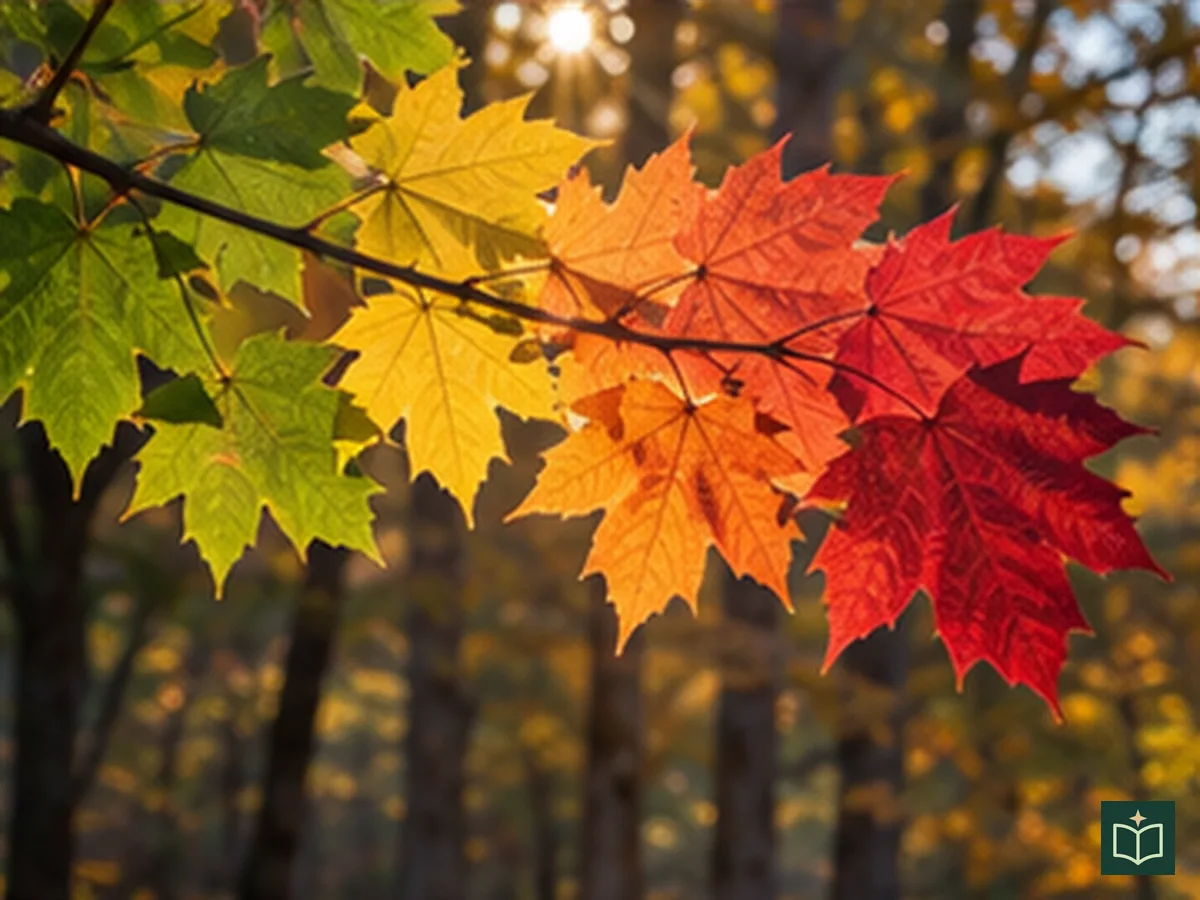
Once the chlorophyll has gone, the carotenoids show through, turning birches, ginkgoes and poplars yellow and gold. Reds and purples work differently. They come from anthocyanins, pigments most leaves do not contain in summer. In maples, sumacs and some oaks, the leaf actively manufactures anthocyanins in autumn from sugars trapped inside it. That is why sunny days and cool, but not freezing, nights produce the most brilliant reds: sunshine makes plenty of sugar, and cool nights keep it in the leaf. The browns of oaks and beeches come from tannins and other compounds left behind once the pigments are gone. Each species has its own palette.
Why bother making red?
Producing new pigment in a leaf that is about to fall costs energy, so scientists have looked for a benefit. The leading explanation is that anthocyanins act as a sunscreen. As chlorophyll is dismantled, the leaf becomes vulnerable to damage from bright light, and red pigment shields the machinery that is still recovering nutrients, allowing the tree to reclaim more of them. Anthocyanins may also help protect against cold and drying. Another idea suggests that bright colours warn insects such as aphids that a tree is well defended. The sunscreen explanation has the strongest experimental support, but the debate is not settled, and the reasons may differ between species.
Trees that stay green
Not every tree puts on a show. Evergreens such as pines and spruces keep tough, waxy needles through winter and replace them gradually. Many tropical trees shed leaves in dry seasons rather than winters. Some temperate trees, including alders, drop their leaves while they are still largely green, and others let them turn brown with no bright phase. In the UAE, most native trees, such as the ghaf and the sidr, are evergreen, and autumn colour is seen mainly in parks and gardens planted with imported species. The famous displays of New England, East Asia and northern Europe depend on particular tree species combined with crisp, sunny autumn weather.
A changing calendar
Autumn colour is also a measurable sign of the seasons. Scientists and volunteers have recorded leaf-colouring and leaf-fall dates for decades, and satellites now track the browning of forests across continents. Many records show autumn arriving later in parts of the Northern Hemisphere as temperatures rise, while spring leaf-out comes earlier, lengthening the growing season. Drought and sudden early frosts can dull colours or make leaves drop before they turn. For visitors, the result is a show that varies from year to year. For the tree, it is a careful salvage operation: recover what is valuable, seal the wound and wait out the cold until it is time to grow green again.
Sources & further reading
Figures are rounded and widely published; check the linked organisations for the latest editions. These organisations do not endorse this website.