Mostly the same, slightly different
Any two people share about 99.9 per cent of their DNA sequence. The remaining 0.1 per cent still amounts to millions of differences scattered through the roughly three billion letters of the human genome. Most are single-letter changes called single nucleotide polymorphisms, or SNPs. Some variants are found worldwide; others are more common in particular regions, because populations that lived apart for many generations drifted in different directions. Ancestry tests exploit these subtle differences in frequency. They do not search for a gene that marks someone as Arab, South Asian or European, because no such gene exists. Instead they look at patterns across many sites and ask which populations those patterns most resemble.
From saliva to data
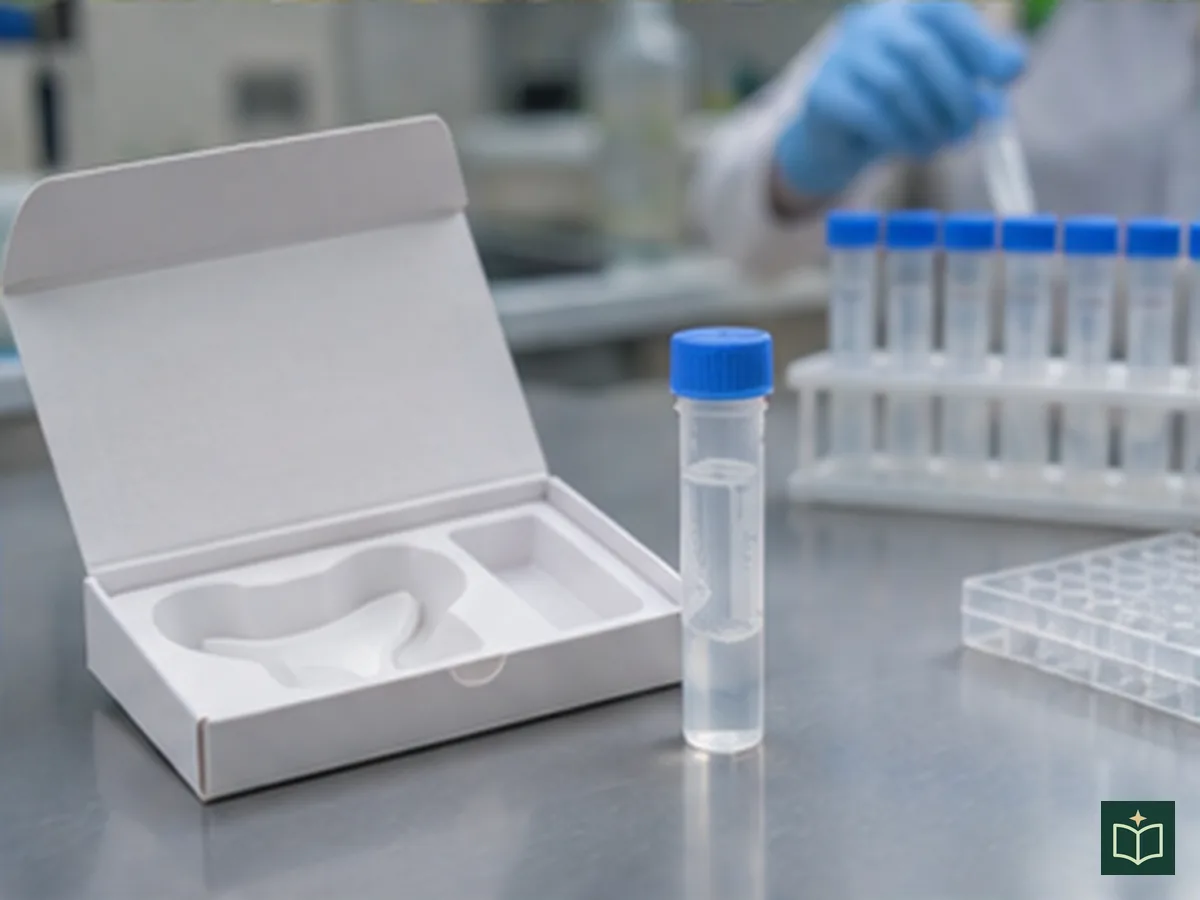
The customer spits into a tube or swabs the inside of a cheek. Saliva contains cells shed from the mouth, and in the laboratory their DNA is extracted, copied and washed over a genotyping chip, a small slide carrying probes that each detect one known variant. Most consumer tests read roughly 600,000 to 700,000 positions this way. That is far cheaper than sequencing a whole genome, but it covers only a small, carefully chosen fraction, selected because those sites often vary between people and between populations. The result is a long list showing which versions of each marker a person carries, one copy inherited from each parent.
Matching against reference groups
To turn markers into an ancestry breakdown, companies assemble reference panels: DNA from people whose families have lived in one region for generations, often drawn from research projects and consenting customers. Software slices a person's genome into short segments and asks, for each one, which reference population it most closely resembles. Adding up the segments produces the familiar pie chart. Each of us inherits about half our DNA from each parent and, on average, about a quarter from each grandparent, but the shuffling is random, so siblings receive different mixes. Two brothers may therefore get noticeably different percentages, even though they share exactly the same ancestors.
Finding relatives
The same data can find relatives. If two customers share long, identical stretches of DNA, they probably inherited them from a recent common ancestor. The total length of shared segments indicates how close the relationship is likely to be: a parent and child share about half, first cousins around an eighth on average. This feature has reunited adoptees with birth families and revealed unexpected relationships. It also raises privacy questions, because a person's DNA reveals information about relatives who never agreed to be tested. Investigators in some countries have used public genealogy databases to identify suspects in old criminal cases, prompting debate about consent and data-protection rules.
Why results are estimates
Ancestry percentages carry real uncertainty. They depend on which reference populations a company holds, and many regions, including parts of Africa, the Middle East and Central Asia, have historically been underrepresented. Neighbouring populations share much history, so separating Gulf Arab from Levantine ancestry is harder than separating European from East Asian. Results reflect where similar people live today, not necessarily where ancestors lived centuries ago. Because companies use different panels and methods, the same person can receive different breakdowns from different firms, and see their own results shift when a database is updated. Small components below a few per cent deserve particular caution.
Beyond the pie chart
Many tests also report maternal and paternal lineages. Mitochondrial DNA passes from a mother to all her children, and the Y chromosome passes from father to son, so each traces a single line back thousands of years. Yet they reveal only two lines out of thousands of ancestors. Some companies also offer health reports based on selected variants. These cover only a limited set of genes and can miss important ones, so any health finding should be confirmed with a doctor or genetic counsellor before it influences decisions. Used with care, an ancestry test is an engaging glimpse of human migration written into DNA, provided its numbers are read as estimates rather than identities.
Sources & further reading
- MedlinePlus Genetics (US National Library of Medicine) ↗
- National Human Genome Research Institute ↗
- Britannica · DNA ↗
Figures are rounded and widely published; check the linked organisations for the latest editions. These organisations do not endorse this website.