Bright after 3,000 years
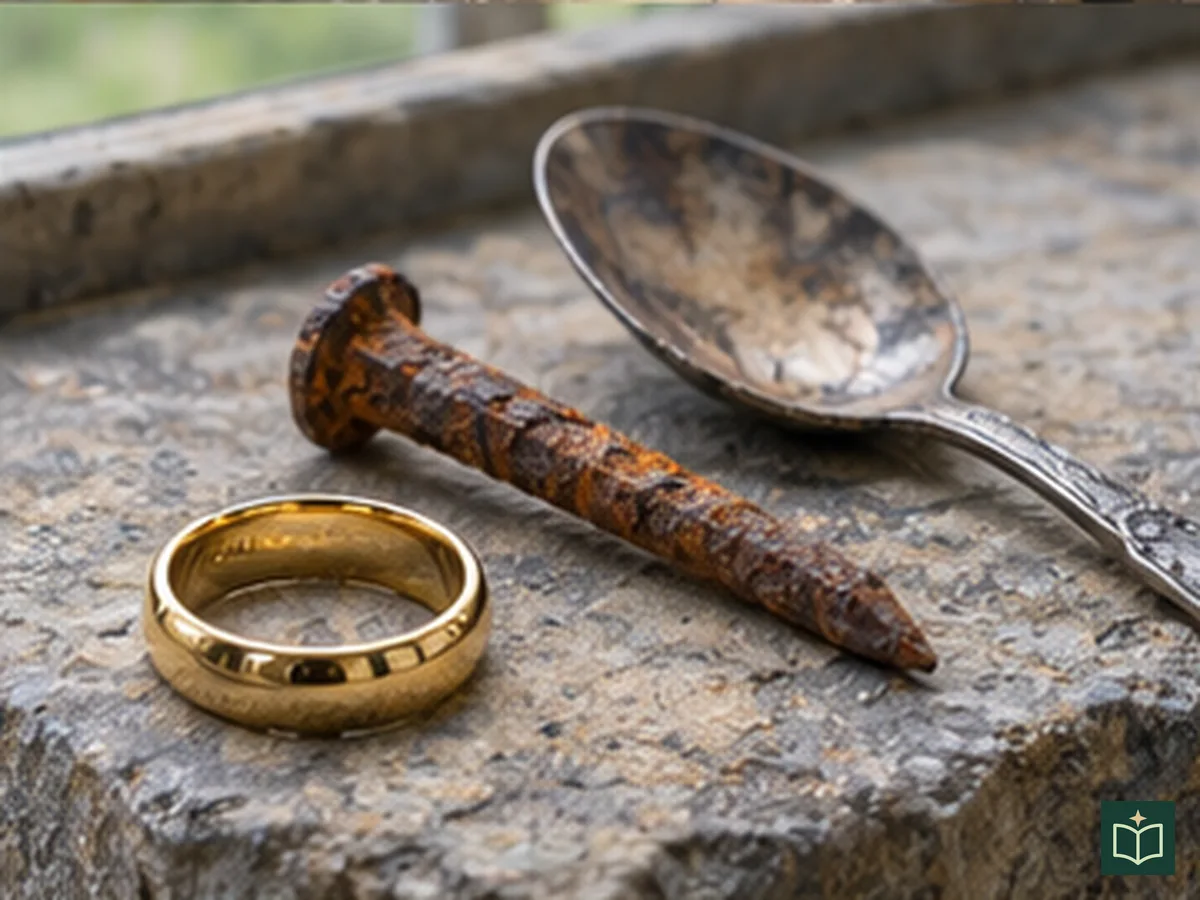
Gold objects pulled from ancient tombs and shipwrecks usually look much as they did when they were made. Iron from the same sites is often a crust of rust, and silver is blackened. This is not luck or good storage. Gold is among the least reactive metals in the periodic table, a member of the group chemists call the noble metals. Air, water, salt and most single acids leave it untouched at ordinary temperatures. That chemical calm is a large part of why people have used gold for coins, jewellery and sacred objects for thousands of years, and why it still sits inside electrical connectors today.
How other metals corrode
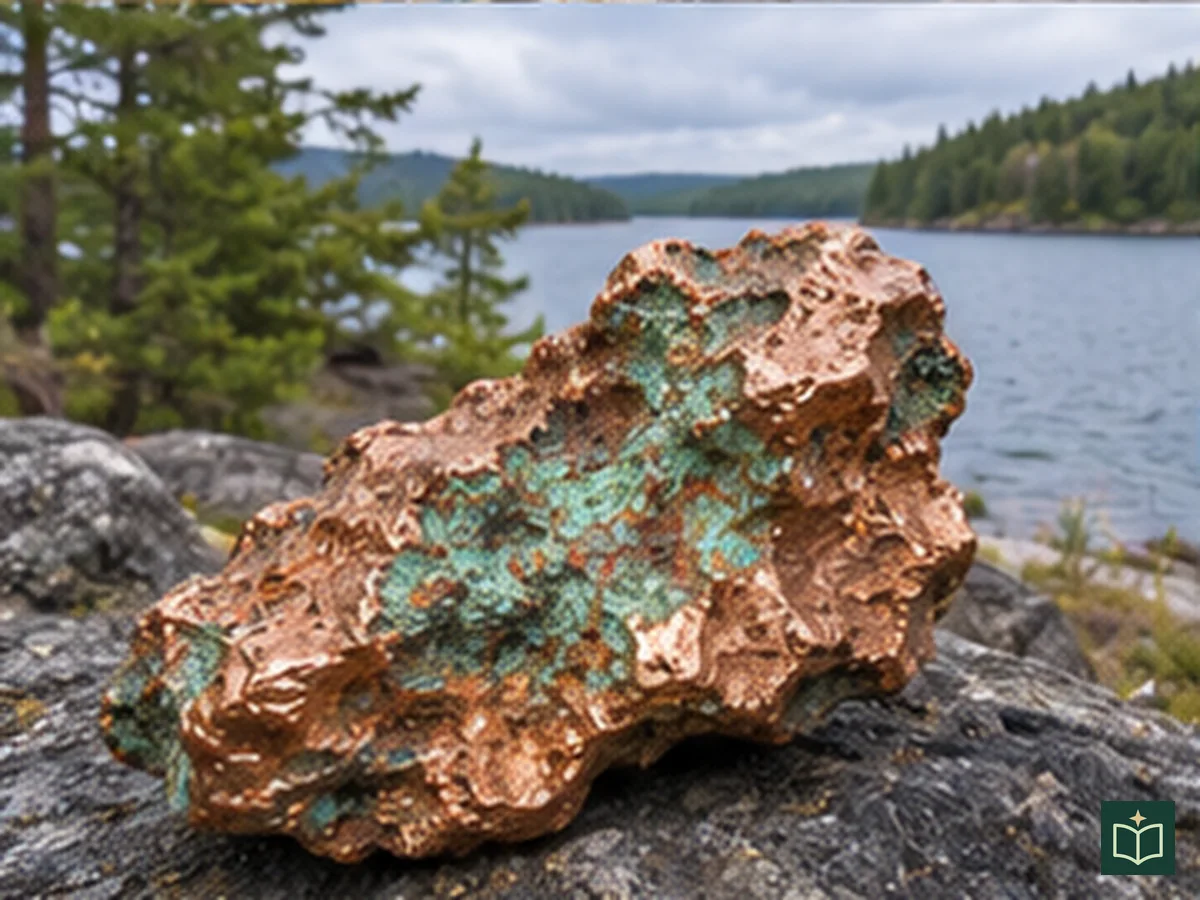
Corrosion is a metal giving away electrons. Iron does this readily: in damp air it combines with oxygen and water to form hydrated iron oxides, the flaky orange rust that falls away and exposes fresh metal beneath. Silver is more resistant to oxygen but reacts with traces of sulphur compounds in the air, forming a dark film of silver sulphide that we call tarnish. Copper builds a green layer over years. In each case, the metal atoms find it energetically worthwhile to lose electrons and bond with something in their surroundings. Gold, uniquely among common metals, almost never finds that trade worthwhile.
Why gold holds its electrons
Gold has a heavy nucleus with 79 protons, and its inner electrons move at a substantial fraction of the speed of light. Einstein's relativity makes them behave as though heavier, pulling the outermost electron shell closer to the nucleus. The single outer electron is therefore bound more tightly than simple trends predict, which also explains gold's yellow colour. Studies of metal surfaces have shown that oxygen molecules barely stick to clean gold. Even when gold oxide is made in the laboratory, it decomposes on gentle heating. Without a stable oxide, there is no corrosion layer and nothing to dull the shine.
The royal water
Gold does dissolve, but only under special conditions. The classic solvent is aqua regia, Latin for royal water, usually a mixture of about three parts concentrated hydrochloric acid to one part nitric acid. Neither acid alone attacks gold much. Nitric acid can oxidise a few gold atoms, but the reaction stalls. Chloride ions from hydrochloric acid then grab each new gold ion, forming stable tetrachloroaurate complexes. Removing the ions drives the reaction forward, so the metal keeps dissolving. Refiners use this chemistry to purify gold, and the gold can later be precipitated back out as pure metal, ready to be cast into bars.
Medals hidden in a bottle
A famous episode shows how complete that dissolving can be. In Copenhagen in 1940, as German forces occupied Denmark, the chemist George de Hevesy dissolved two German physicists' gold Nobel Prize medals in aqua regia so they could not be seized. The orange solution sat on a laboratory shelf, unnoticed, throughout the occupation. After the war the gold was recovered from the solution and sent back to the Nobel Foundation, which recast the medals. Beyond aqua regia, gold can also be dissolved by cyanide solutions in the presence of oxygen and absorbed by liquid mercury, methods that mining has long exploited.
When gold jewellery does tarnish
People are sometimes surprised to see dark marks on gold rings. Usually the culprit is not the gold. Jewellery below 24 karat is an alloy, and the copper and silver mixed in to harden it can react with sulphur compounds from skin, cosmetics, perfume or air. Lower-karat pieces, such as 9 or 14 karat, contain more of these metals and are more prone to discolouration than 22-karat. Some skin marks come from makeup particles abrading the metal. Gentle washing in mild soapy water usually restores the surface. Pure gold itself remains unchanged, which is exactly why it is valued.
Sources & further reading
Figures are rounded and widely published; check the linked organisations for the latest editions. These organisations do not endorse this website.