Two forces on the open road
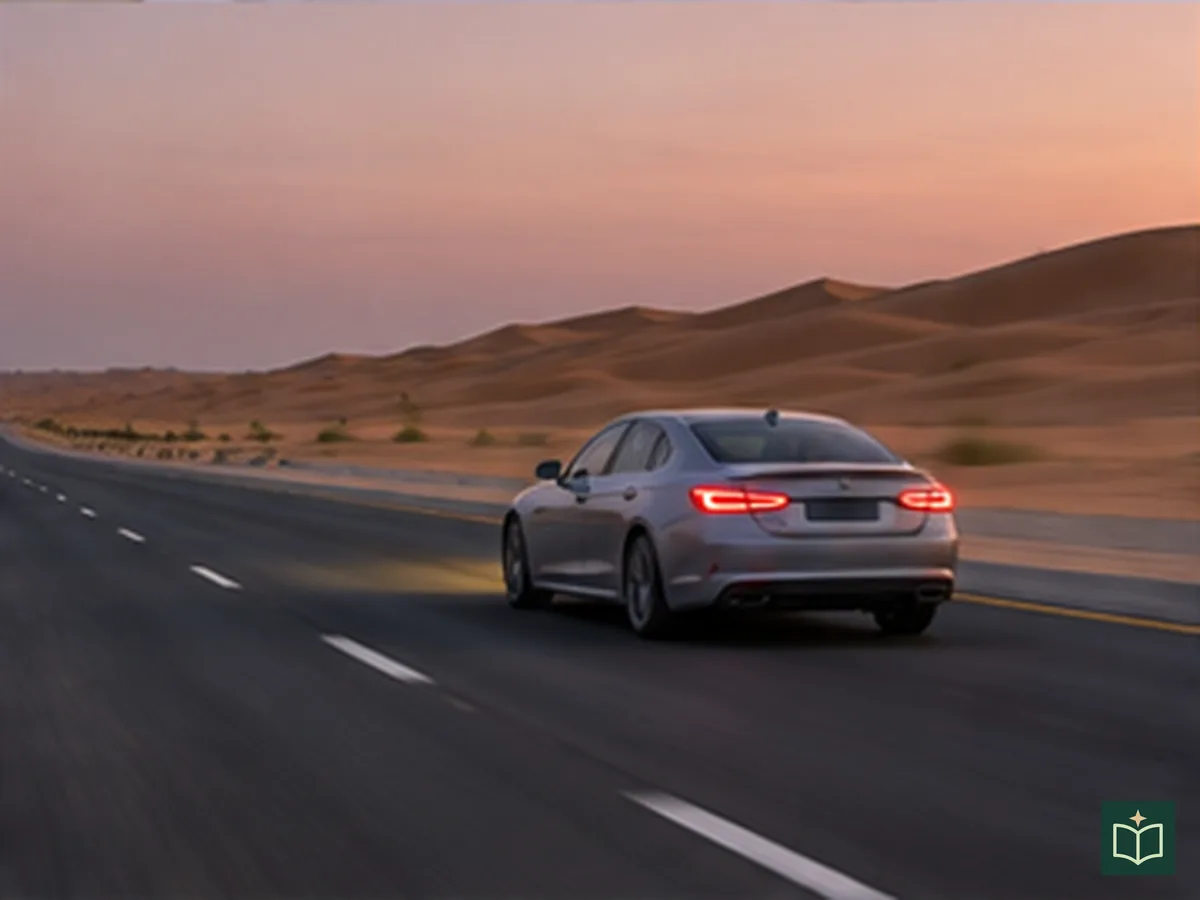
A car cruising at a steady speed on a flat road is working against two main forces. Rolling resistance comes from tyres flexing as they turn and depends mostly on weight and tyre design; it changes little with speed. Aerodynamic drag comes from pushing air out of the way. At low speeds it is small, but it rises quickly. For a typical family car, the two forces are roughly equal somewhere around 60 to 80 kilometres per hour. Above that, air resistance takes over as the largest load on the engine. That is why motorway driving and city driving have such different fuel-saving rules, even though both use the same car.
Why the square matters
Drag depends on air density, the car’s frontal area, a shape factor called the drag coefficient, and the square of speed. Double the speed and the force quadruples. The reason is that a faster car hits more air every second and hits each parcel of it harder. The power needed to overcome drag, which is force multiplied by speed, therefore rises with the cube of speed. Energy per kilometre, the figure that matters for fuel use, rises with the square. Car designers chase small cuts in the drag coefficient for this reason: smooth underbodies, tapered tails and flush door handles all trim a force that grows relentlessly with speed.
100 versus 140
Take an illustrative mid-sized car with a drag coefficient of 0.30, a frontal area of 2.2 square metres and a mass of 1,500 kilograms. At 100 km/h, drag is about 306 newtons and rolling resistance about 147, a total near 453. At 140 km/h, drag climbs to about 599 newtons while rolling resistance stays near 147, a total near 746. The energy needed per kilometre rises by about 65 per cent. Real fuel use rises somewhat less, because engines often run a little more efficiently under heavier load, but the increase is still large. The reward is time: a 100-kilometre trip takes 60 minutes at 100 km/h and about 43 minutes at 140.
Tyres, weight and roof boxes
Speed is not the only lever. Tyres that are under-inflated flex more and raise rolling resistance, so checking pressures regularly, especially in Gulf summer heat, saves fuel and improves safety. Low-rolling-resistance tyres help further. Weight matters most in stop-start traffic, where every acceleration must lift the car’s mass back up to speed, and less on a steady motorway cruise. Anything that changes the car’s shape matters at speed: roof boxes, bike racks and open windows can add noticeable drag, and a roof box can cost more fuel at 120 km/h than a heavy load in the boot. Removing roof racks when not in use is one of the simplest efficiency gains available.
The same physics for electric cars
Electric cars obey identical physics, which is why their range on the motorway is often well below their range in town. Electric motors are efficient across most speeds, and regenerative braking recovers energy in stop-start driving, so city use flatters them. On a long cruise there is no braking to recover, and drag simply drains the battery faster. A drop in speed from 130 to 110 km/h can add a significant fraction to a single charge’s range. This is also why many electric cars have unusually low drag coefficients, covered wheels and smooth underbodies: aerodynamics translates directly into kilometres, and a smaller battery can do the same job in a more slippery car.
Why it matters
Speed limits are set chiefly for safety, but they also shape national fuel use. Some UAE motorways allow 140 km/h, among the higher limits in the world, while many European countries cap motorway speeds between 110 and 130 km/h. For a driver, easing from 140 to 120 km/h on a long trip costs a few minutes and saves a meaningful share of fuel, along with brake and tyre wear. For heavy lorries, which already travel more slowly, aerodynamic side skirts and tail fairings yield similar savings. The broad lesson is simple: at motorway speeds, smooth and moderate driving does more for fuel use than almost any accessory a driver can buy.
Sources & further reading
Figures are rounded and widely published; check the linked organisations for the latest editions. These organisations do not endorse this website.