Site and situation
Geographers explain city locations with two related ideas. Site describes the physical characteristics of the place itself: its water supply, terrain, soil, climate and defensibility. Situation describes its position relative to the wider world: the routes that pass nearby, the resources within reach and the other settlements it connects. A good site makes a settlement possible; a good situation makes it grow. Paris began on an island in the Seine that was easy to defend and to cross, but it became a great capital because it sat at the centre of a fertile basin where rivers and roads converged. Most successful cities combine both advantages.
Water, crossings and harbours
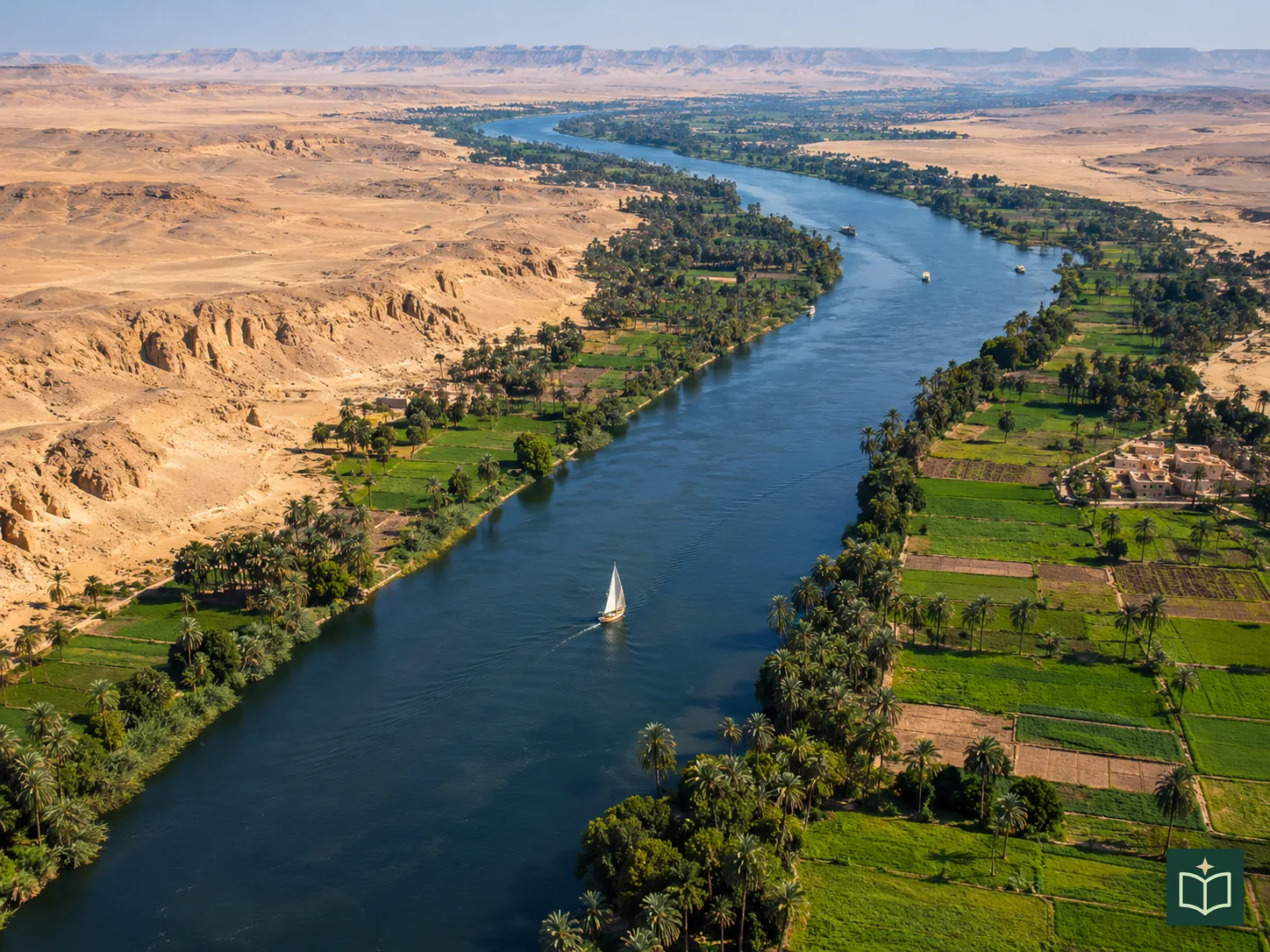
Water has shaped city locations more than any other factor. Early cities in Mesopotamia, Egypt, the Indus valley and China grew beside rivers that supplied water, fertile floodplains and transport. Points where rivers could be bridged or forded, such as London on the Thames, became natural meeting places. Confluences, where rivers join, attracted trade; Khartoum stands where the White and Blue Nile meet. Sheltered natural harbours created ports such as Sydney, Istanbul and Rio de Janeiro. The head of navigation, the furthest point ships could sail upriver, also favoured cities, because goods there had to be transferred between boats and land transport.
Breaks of bulk and crossroads
Many cities grew where goods changed mode of transport, a point geographers call a break of bulk. Ports, river junctions and railway hubs all force cargo to be unloaded, stored, traded and processed, generating jobs and wealth. Chicago boomed in the nineteenth century as the link between Great Lakes shipping and railways serving the American interior. Other cities grew at crossroads of caravan routes, such as Samarkand on the Silk Roads, or beside strategic narrows, like Singapore near the Strait of Malacca. In each case, situation outweighed site: Singapore has little land and no major river, but its position on shipping routes proved decisive.
Gulf towns on creek and coast
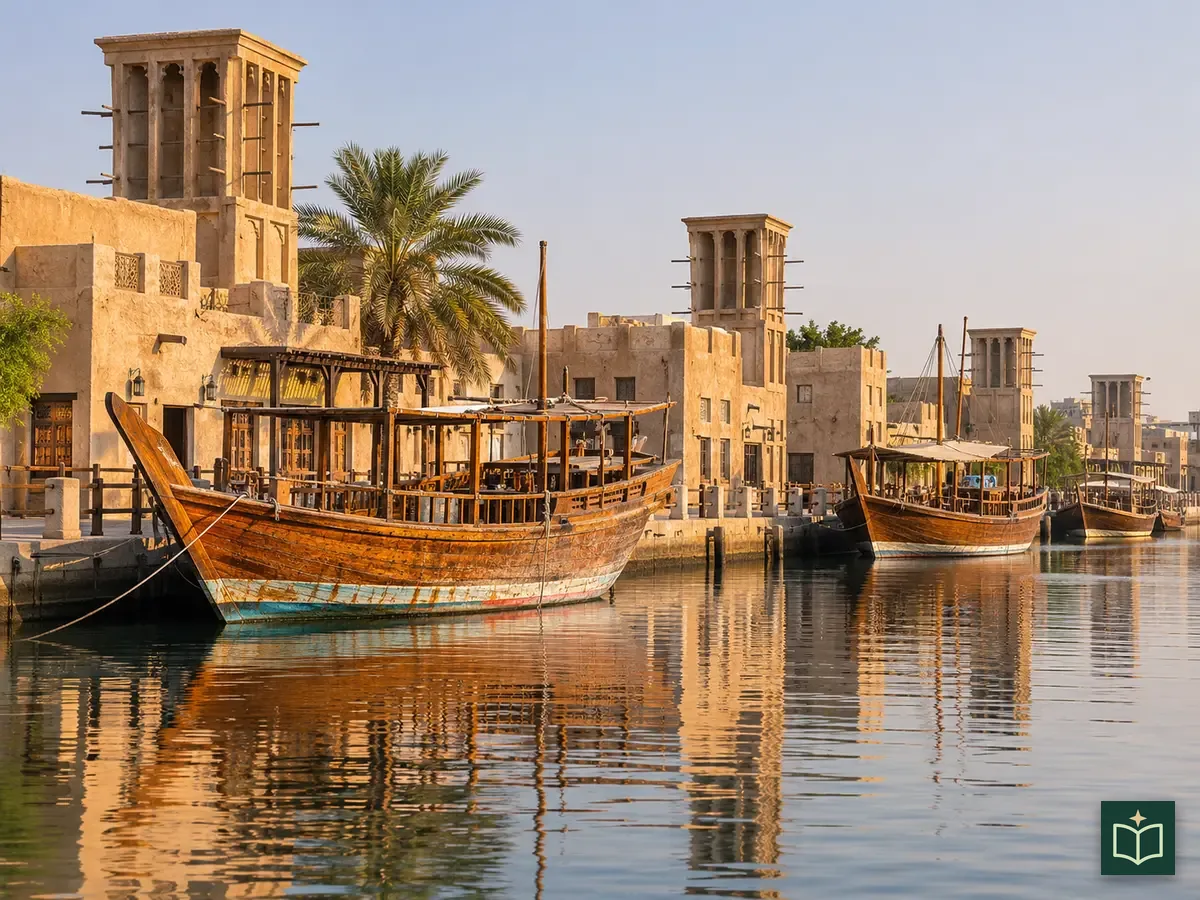
The Gulf’s historic towns illustrate these principles. Settlements grew where sheltered creeks offered safe anchorage for dhows, fresh water could be drawn from wells, and fishing grounds and pearl banks lay offshore. Dubai developed along its creek, a natural inlet that served traders from Iran, India and East Africa; from 1959 the creek was dredged so that larger vessels could reach its wharves, a decision that helped set the town on its path as a trading hub. Abu Dhabi grew on an island where fresh water was found. In the twentieth century, oil and later aviation, shipping and finance transformed the situation of Gulf cities, linking them to global networks.
When advantages change
A city’s situation is not fixed. Changes in technology, trade routes and politics can raise some places and sink others. Bruges declined in the fifteenth century as its access to the sea silted up, while Antwerp rose. Railways, then motorways and airports, created new hubs and bypassed old ones. The opening of the Suez Canal in 1869 reshaped shipping patterns between Europe and Asia. Resource towns can boom and fade with mines or oil fields. Some cities have reinvented themselves after losing their original advantage, turning former ports into service, finance or tourism centres, while others have shrunk as people and industries moved away.
Why it still matters
Even in a digital age, location still counts. Airports, data centres and container ports cluster where networks meet, and planners choose sites for new cities with water, energy and transport in mind. New capitals, such as Brasília and Abuja, were deliberately placed to encourage development in the interior or to sit between regions. Climate change adds new considerations, since many great cities grew on coasts and deltas that now face rising seas and stronger storms. Understanding why cities stand where they do helps explain their strengths and vulnerabilities, and shows how the choices of early settlers continue to shape the lives of millions.
Sources & further reading
Figures are rounded and widely published; check the linked organisations for the latest editions. These organisations do not endorse this website.