Two great sources
The White Nile emerges from the Lake Victoria basin and flows steadily through South Sudan’s vast Sudd wetland, where much water evaporates. The Blue Nile rises at Lake Tana in Ethiopia and carries most of the river’s water and sediment, swelling dramatically during the summer rains. The two meet at Khartoum in Sudan.
Floods that built a civilisation
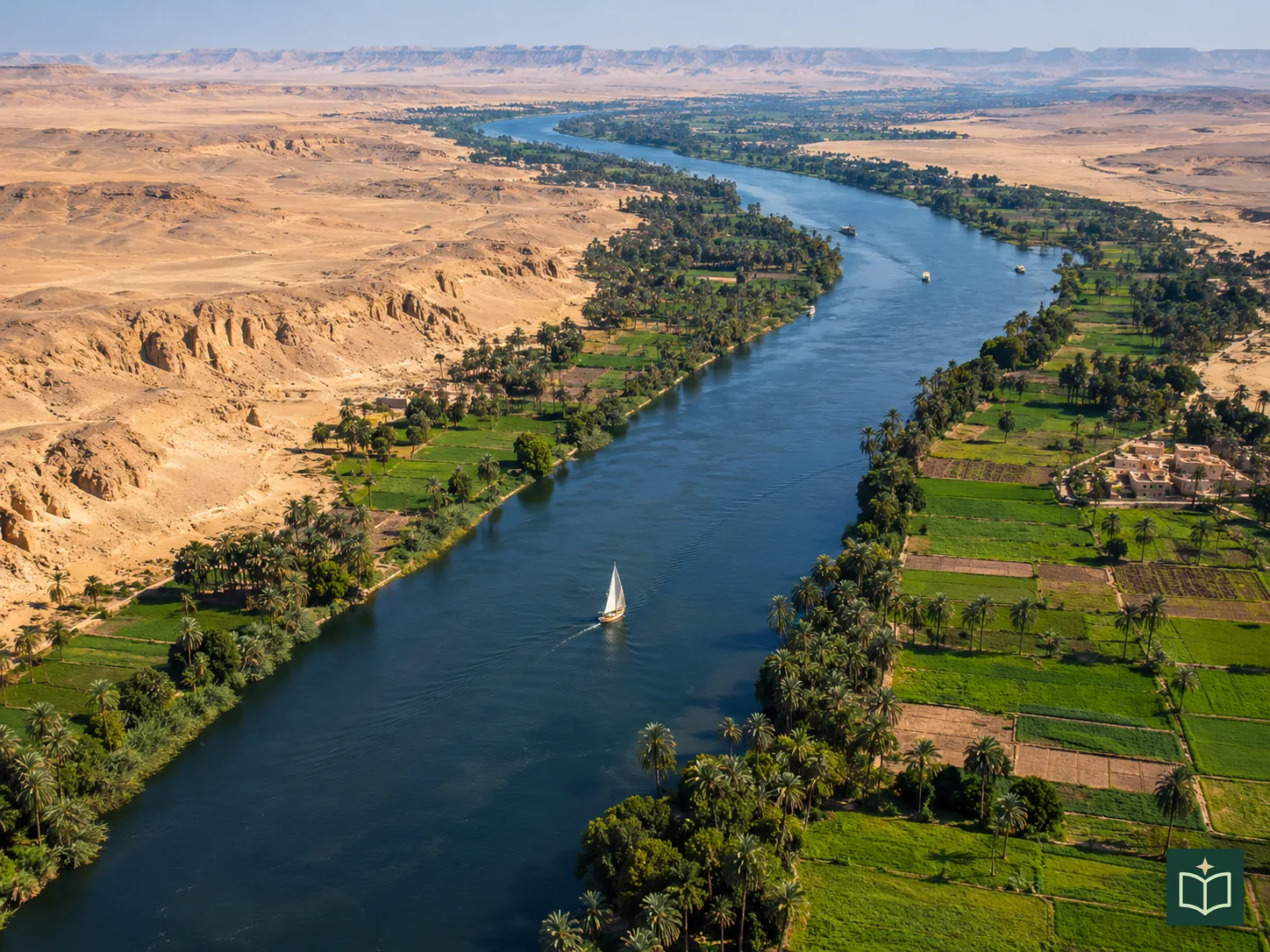
For thousands of years, the annual flood spread fertile silt across the valley. Ancient Egyptians organised their calendar around it, with seasons for inundation, growing and harvest. Nilometers measured flood heights to forecast harvests and set taxes. The narrow green strip contrasted sharply with the surrounding ‘red land’ of the desert.
Taming the flood
The Aswan High Dam, completed in 1970, ended the annual flood in Egypt, storing water in Lake Nasser, generating hydroelectricity and allowing year-round irrigation. It also trapped sediment, so farmers now depend more on fertilisers and the delta coast has eroded in places. Ancient monuments, including Abu Simbel, were relocated to escape the rising reservoir.
Sharing the water
Eleven countries share the Nile basin. Ethiopia’s Grand Ethiopian Renaissance Dam on the Blue Nile, which began generating power in 2022, has prompted long negotiations with Egypt and Sudan over how quickly its reservoir fills and how releases are managed. Population growth and climate change raise the stakes of cooperation.
Sources & further reading
Figures are rounded and widely published; check the linked organisations for the latest editions. These organisations do not endorse this website.