A question with three answers
Ask how many people live in Paris and you may hear about two million or about thirteen million. Both are correct. The smaller figure counts residents of the City of Paris, an administrative unit whose boundaries have barely changed since 1860. The larger counts the wider region whose economy and daily life revolve around it. Geographers use three main definitions to keep this straight: the city proper, the urban area and the metropolitan area. Each answers a different question, and none is the single true size of a city. Problems start only when figures built on different definitions are lined up side by side.
The city proper
The city proper is the area inside a legal or administrative boundary, governed by a single municipal authority. Its borders are set by history and politics, not by where houses stop. Some are tightly drawn: the City of London, the historic Square Mile, has only a few thousand residents because it is mostly offices. Others are vast. Chongqing in China is a municipality covering about 82,000 square kilometres, close to the size of Austria, and its headline population of more than 30 million includes millions of farmers living far from any skyline. Neither figure tells you much about the city as people experience it.
The urban area
The urban area, sometimes called the built-up area or agglomeration, follows physical form instead. It traces continuous development, streets, homes and factories without large gaps, regardless of administrative lines. This captures suburbs that have merged with the core but lie in separate municipalities. Because judging where continuous building ends requires rules about gaps and density, different agencies produce different results. Satellite imagery has made the method more consistent, and the United Nations now endorses a common approach, the Degree of Urbanisation, which uses population grids of one square kilometre so cities in different countries can be compared on equal terms.
The metropolitan area
The metropolitan area is defined by function. It includes the urban core plus surrounding towns and countryside tightly linked to it, usually measured by commuting: if a large share of a town’s workers travel into the core each day, the town belongs to the metro. Greater Tokyo is the classic example. Its 23 central wards hold roughly 9.7 million people, but the metropolitan region of commuters reaches about 37 million, roughly four times as many. For Paris the city proper is about 16 per cent of a metropolitan population near 13 million. Metropolitan figures matter most for transport, labour markets and housing policy.
Why rankings disagree
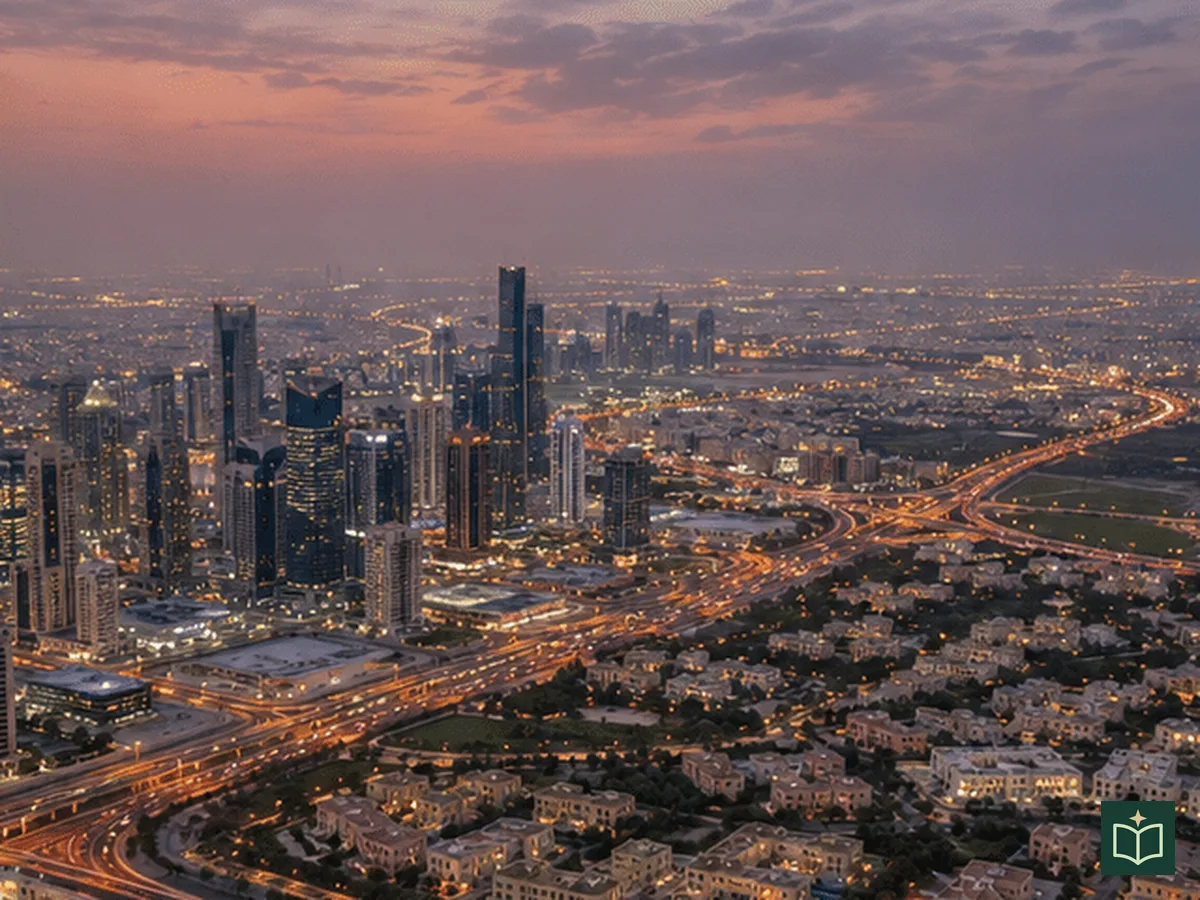
Lists of the world’s largest cities often mix these definitions without saying so, which is why a city can appear first on one list and nowhere on another. Tokyo leads most metropolitan rankings, while lists based on city proper can favour places with very large administrative boundaries. Gulf cities raise their own wrinkle: Dubai is both a city and an emirate, and its urban area now runs continuously into Sharjah and beyond, forming a single built-up corridor across several jurisdictions. Tens of thousands of commuters cross those borders daily, so a functional definition can tell a different story from either emirate’s own statistics.
Which number to trust
The right figure depends on the question. For local taxes, elections and council services, use the city proper, because that is the area governed. For questions about density, sprawl or heat, use the urban area. For jobs, housing markets, traffic and airports, use the metropolitan area, since that is the region people actually live their lives across. When a source quotes a population, look for the definition and the year. National statistics offices usually explain theirs in their published methods, and international comparisons are safest when they draw on one consistent method, such as the UN’s, rather than borrowing each country’s own boundaries.
Sources & further reading
- UN-Habitat · Degree of Urbanisation ↗
- Office for National Statistics (UK) ↗
- Britannica · Metropolitan area ↗
Figures are rounded and widely published; check the linked organisations for the latest editions. These organisations do not endorse this website.