A desert in the open sea
Sunlit surface water is often surprisingly empty. Plankton, the base of the marine food web, quickly use up the nitrate, phosphate and other nutrients near the surface. When those organisms die, they sink, carrying nutrients into the dark depths where nothing can photosynthesise. Much of the open ocean is therefore a clear, blue and relatively barren place. Upwelling breaks this pattern. It lifts cold, nutrient-rich water from tens or hundreds of metres down back into the sunlit zone, where plankton can use it. The result is a sudden bloom of life that can be seen from space as green swirls of chlorophyll.
How the wind does it
The key is a quirk of physics called Ekman transport. When wind blows across the sea, Earth’s rotation deflects the moving water, so that the net flow of the surface layer runs at roughly right angles to the wind: to the right in the Northern Hemisphere and to the left in the Southern. If the wind blows parallel to a coast in the right direction, the surface water is pushed out to sea. Water cannot leave a gap, so colder water rises from below to replace it. The stronger and steadier the wind, the more vigorous the upwelling and the colder the coastal sea becomes.
Peru’s anchoveta coast
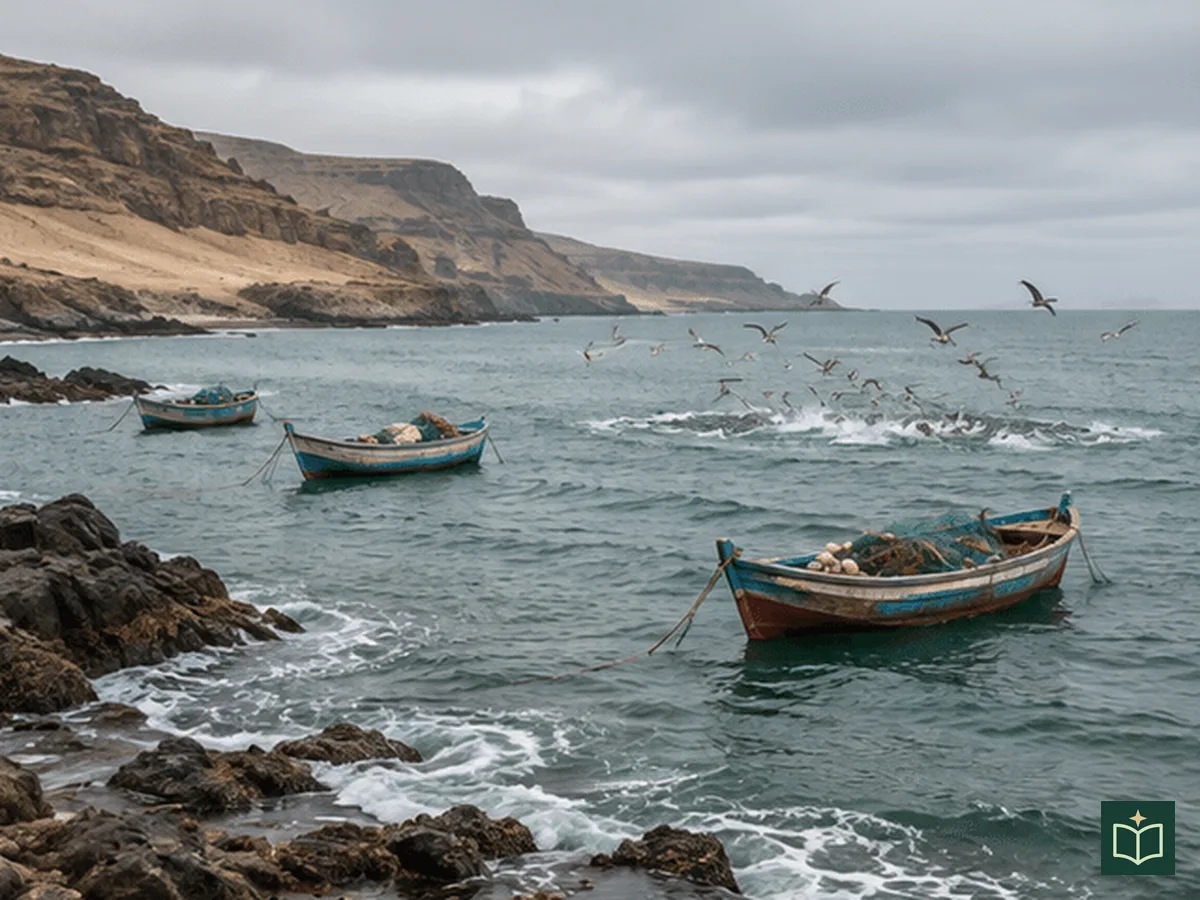
Off Peru and northern Chile, south-easterly trade winds blow along the coast for most of the year, driving strong upwelling in the Humboldt Current system. The cold water supports vast shoals of Peruvian anchoveta, the basis of one of the largest single-species fisheries in the world, much of it turned into fishmeal. Seabirds thrive too, and their droppings built the guano islands once mined for fertiliser. The same cold water chills the air above it, helping to keep the coastal desert of Peru dry. Similar eastern-boundary upwelling systems, with the same cold, fish-rich water, lie off California, north-west Africa and south-west Africa.
Oman’s monsoon sea
The Arabian Sea gives the idea a seasonal twist. From about June to September, the south-west monsoon blows strongly along Oman’s coast, roughly parallel to the shore. In the Northern Hemisphere the surface water is pushed to the right of the wind, which here means offshore. Cold water rises along the coasts of Dhofar and Al Wusta, and sea temperatures can fall several degrees below those of the surrounding ocean in midsummer. The nutrients fuel plankton blooms, sardine shoals and a productive fishery. The cool sea also chills the moist monsoon air, helping to create the low cloud and drizzle of Salalah’s khareef season.
When the wind fails
Upwelling depends on the wind, so changes in the wind ripple through entire economies. During an El Niño, the trade winds over the Pacific weaken and warm water spreads east towards South America. Upwelling off Peru continues but draws on warmer, poorer water, plankton production falls and anchoveta shoals scatter or crash. The collapse of the Peruvian fishery in the early 1970s, during a strong El Niño and heavy fishing, became a textbook example. Upwelling can also bring water low in oxygen to the surface, and in the Arabian Sea this has been linked to occasional fish kills along the coast.
Why it matters
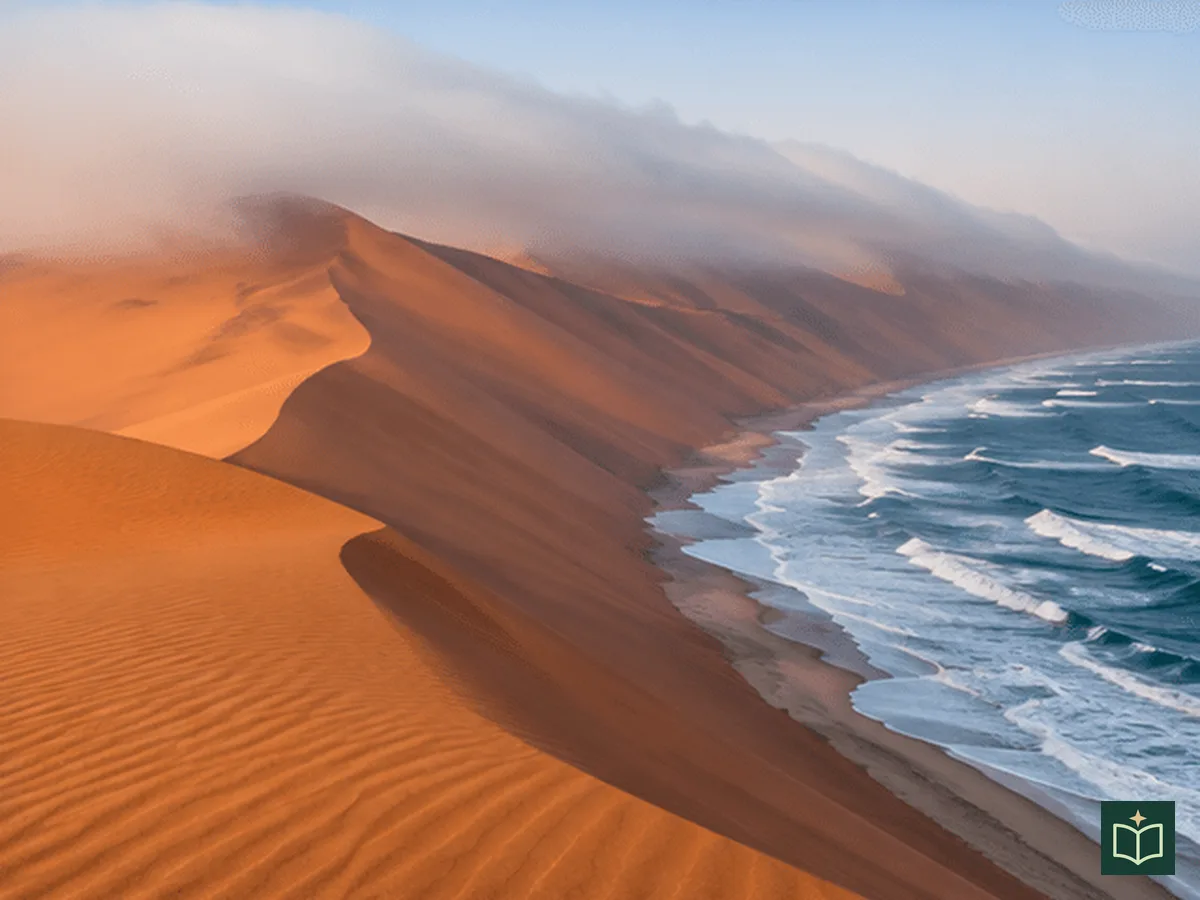
Upwelling zones matter far beyond their small area. They support fisheries that feed hundreds of millions of people, they shape coastal climates, often producing fog and cool deserts, and they draw carbon dioxide-rich deep water to the surface, playing a role in the ocean carbon cycle. Scientists watch how a warming climate may alter the coastal winds and the stratification of the sea that together control upwelling. Satellites track sea surface temperature and chlorophyll daily, so a cold, green streak along a coast remains one of the most reliable signs that the deep ocean is being lifted into the light.
Sources & further reading
Figures are rounded and widely published; check the linked organisations for the latest editions. These organisations do not endorse this website.