A different Sahara
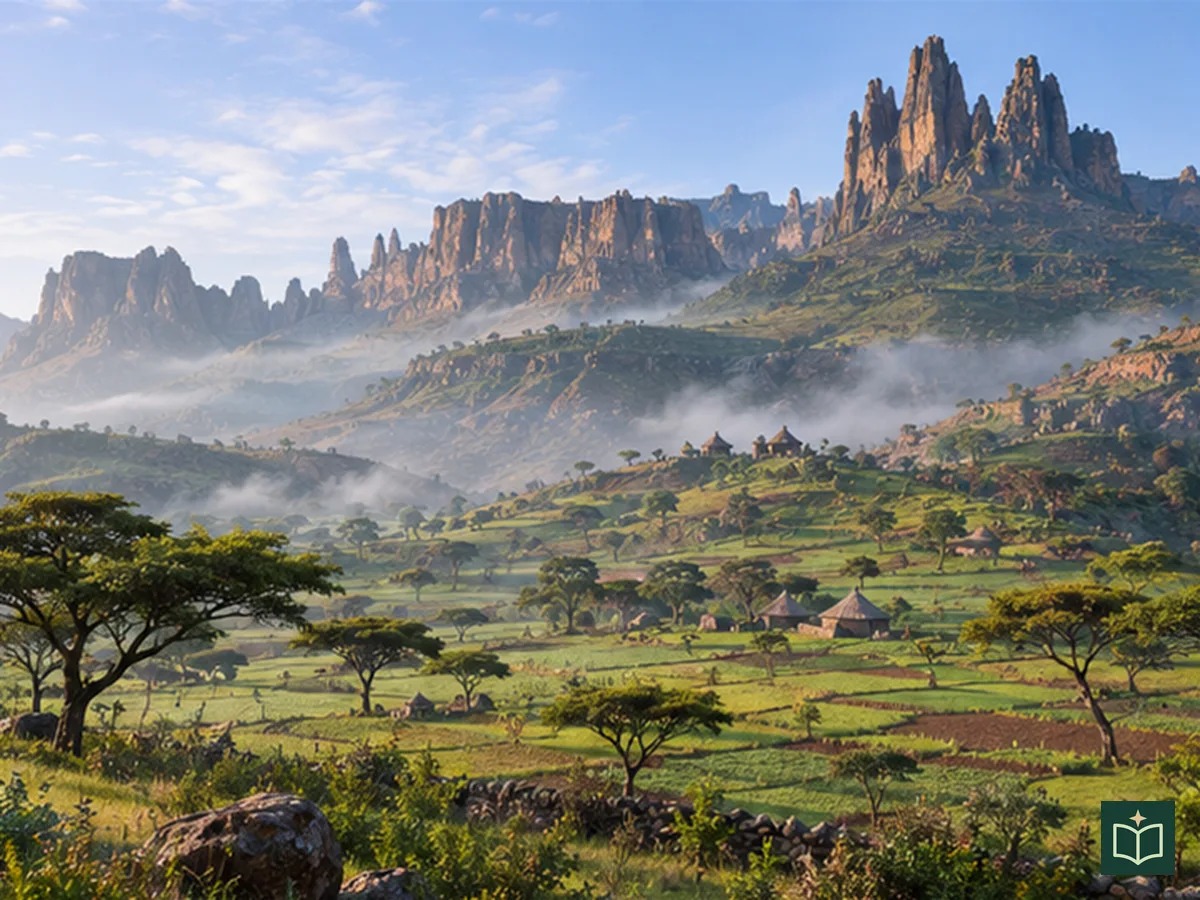
Today the Sahara covers much of northern Africa, with large areas receiving almost no rain. Yet between roughly 11,000 and 5,000 years ago much of it looked very different. Grasslands and scattered trees spread across land that is now sand and rock. Lakes and wetlands dotted the landscape, and rivers flowed where only dry valleys remain. Scientists call this the African Humid Period. Evidence comes from ancient lake beds, fossil pollen, animal bones and dust layers in sediments off the West African coast. Similar wet phases affected Arabia, where lakes once existed in parts of the Rub' al Khali, the Empty Quarter.
The orbital trigger
The cause lies in Earth's orbit. The planet's axis slowly wobbles, like a spinning top, in a cycle of roughly 23,000 years. This shifts the season at which Earth is closest to the Sun. Around 10,000 years ago, that closest approach fell during the northern summer, so the Northern Hemisphere received noticeably more summer sunshine than today. Land in North Africa heated more strongly, drawing moist air from the Atlantic further inland. The West African monsoon, which today brings rain to the Sahel, reached deep into what is now desert. Feedbacks then amplified the change: plants and lakes darkened the surface and recycled moisture.
Lakes, hippos and fishing camps
Lake Chad, now a shrinking lake on the Sahara's southern edge, grew into a vast inland sea that some researchers call Mega-Chad, perhaps comparable in size to today's Caspian Sea. Elsewhere, bones of hippopotamuses, crocodiles, elephants, giraffes and fish have been found in places now far from any water. At Gobero, in Niger, archaeologists found cemeteries of people who lived by a lake, fishing and hunting, with harpoons and pottery. Bone tools and fish remains show that many early Saharan communities depended heavily on lakes and rivers. Later, as conditions changed, cattle herding spread across the region from around 7,000 years ago.
Pictures on the rocks
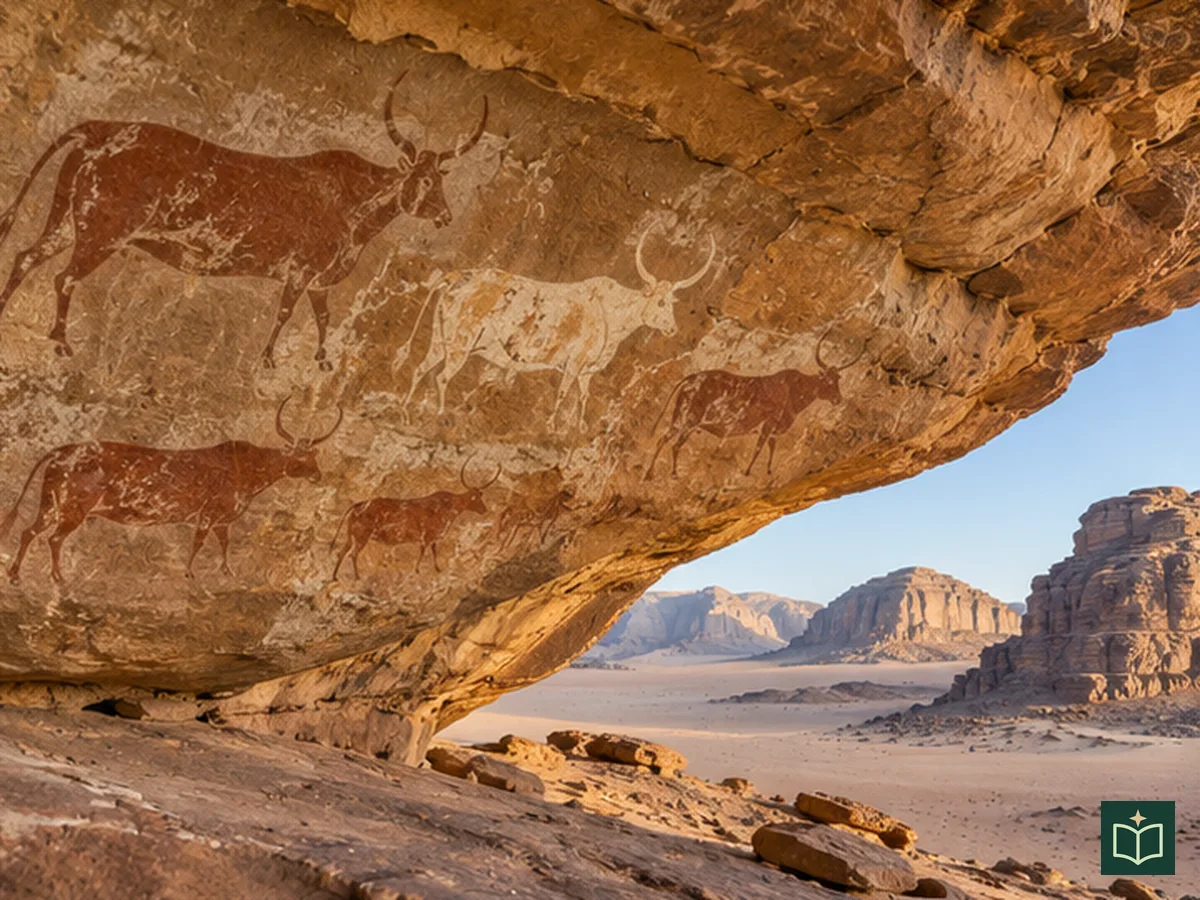
Some of the richest evidence is painted and engraved on rock. The Tassili n'Ajjer plateau in south-eastern Algeria, listed by UNESCO in 1982, holds more than 15,000 known drawings and engravings. The oldest show large wild animals such as elephants, rhinoceroses and giraffes. Later paintings depict herds of cattle, people tending them, dancing and gathering, and scenes of daily life. Still later images introduce horses and chariots, and finally camels, which arrived as the land became desert. Read in sequence, the art seems to record the gradual drying of the Sahara, from abundant wildlife to herding to animals adapted to arid conditions.
How it ended
As the orbital cycle moved on, summer sunshine in the north weakened and the monsoon retreated south. Whether the Sahara dried suddenly or gradually is still debated. Some marine sediment records off West Africa suggest a relatively rapid shift around 5,500 years ago, perhaps as feedbacks reversed and vegetation collapsed. Lake sediments from Chad suggest a slower, more gradual decline in some areas. The answer may vary by region. People responded by moving towards more reliable water sources. Some historians link the drying to the concentration of populations along the Nile, at the time when early Egyptian kingdoms began to form.
Lessons for today
The green Sahara shows how sensitive regional climate can be to small changes in sunshine, especially when amplified by vegetation, dust and water. It is a natural test case that scientists use to check climate models: if a model cannot reproduce a wetter Sahara under the orbital conditions of 6,000 years ago, it may be missing important feedbacks. The orbital cycle will eventually bring wetter conditions back to the region again, but only over many thousands of years. In the shorter term, how human-driven warming will affect rainfall in the Sahel remains an active area of research, with models disagreeing on the details.
Sources & further reading
Figures are rounded and widely published; check the linked organisations for the latest editions. These organisations do not endorse this website.