A measure of the edge
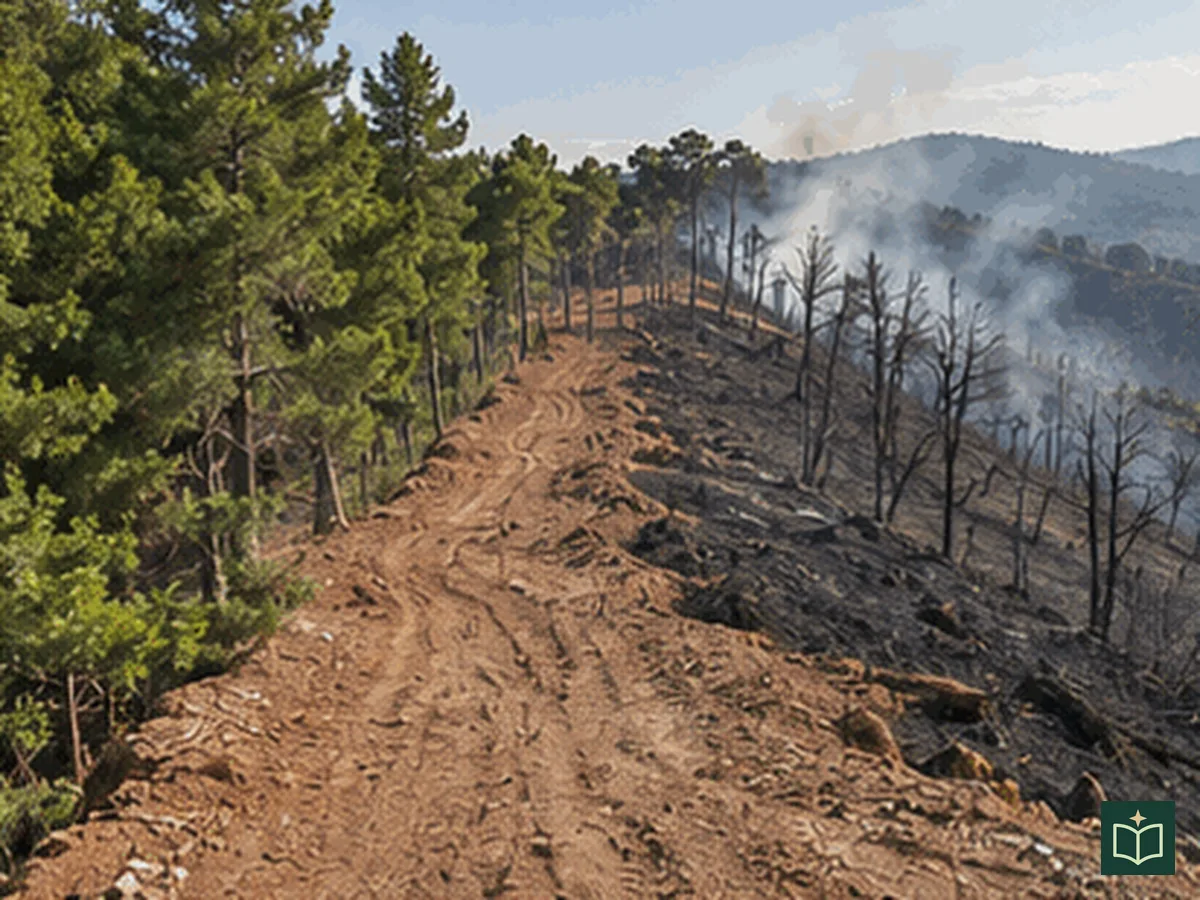
In wildfire reports from the United States and many other countries, containment is expressed as a percentage. It refers to the proportion of the fire's perimeter that is surrounded by a control line which firefighters expect to stop further spread. A control line can be built, such as a strip cleared down to bare mineral soil by hand crews or bulldozers, or it can be natural or existing, such as a river, a rocky ridge, a road or an area that has already burned. The figure says nothing directly about how much of the area inside the line is still burning. It is a measure of the boundary, not of the flames.
Why a fire can grow and be more contained
Because containment is a ratio, both its top and bottom can change. Suppose a fire has a perimeter of 40 kilometres and crews have secured 20 kilometres: containment is 50 per cent. Overnight, wind pushes the fire into new ground and its perimeter extends to 60 kilometres, while crews secure a further 13 kilometres, for 33 kilometres in total. Containment rises to 55 per cent even though the fire has grown by half its edge. The reverse also happens. A fire can jump a line, which makes previously secured sections irrelevant and sends the percentage down. That is why the burned area and the containment figure should always be read together.
Contained, controlled, out
Firefighting agencies use a sequence of terms. In United States usage, a fire is contained when a control line surrounds it, including any spot fires started by flying embers, that can reasonably be expected to stop its spread. It is controlled when the line is complete and the fire has been cooled, with fuel burned out along the edges, to the point where it is not expected to break through. A fire is declared out only when there is no remaining heat or smoke. Other countries use their own labels: in New South Wales, Australia, fires are described as out of control, being controlled or under control.
A familiar example
The Camp Fire in northern California in November 2018 became the state's deadliest wildfire, destroying much of the town of Paradise. During its first days, containment figures stayed low while the burned area climbed rapidly. As weather eased and crews built lines, containment rose steadily, and on 25 November, 17 days after ignition, the fire was reported as 100 per cent contained, helped by heavy rain. Even then, tree stumps, roots and debris inside the perimeter continued to smoulder. Large fires in forests or peat can keep burning inside a fully contained line for weeks. That inner heat is a reason residents may be kept away after a fire is labelled contained.
What the number does not say
Containment is a judgement as well as a measurement. Crews and fire managers decide which sections of line are strong enough to count, and agencies can be cautious, reporting low figures until they are confident. The percentage does not show threats to particular communities, which depend on wind direction and on which part of the edge is still open. A fire that is 80 per cent contained may still be advancing on a town if the open 20 per cent faces it. Containment also does not cover smoke, which can affect air quality hundreds of kilometres away, or the risk of flooding and landslides on burned slopes when heavy rain arrives later.
Reading a fire update
When following a wildfire, read the update as a set of numbers rather than a single figure. Look at the burned area, the containment percentage, the number of structures destroyed or threatened and the size of the response. Compare each with the previous update: rising containment alongside a stable area is good news, while rising containment alongside a fast-growing area is mixed. Check the evacuation orders and warnings, which reflect immediate danger far more directly than containment does. Note the forecast, since wind and low humidity can quickly undo progress. Finally, remember that the official 'out' declaration may come weeks or months after the news has moved on.
Sources & further reading
Figures are rounded and widely published; check the linked organisations for the latest editions. These organisations do not endorse this website.